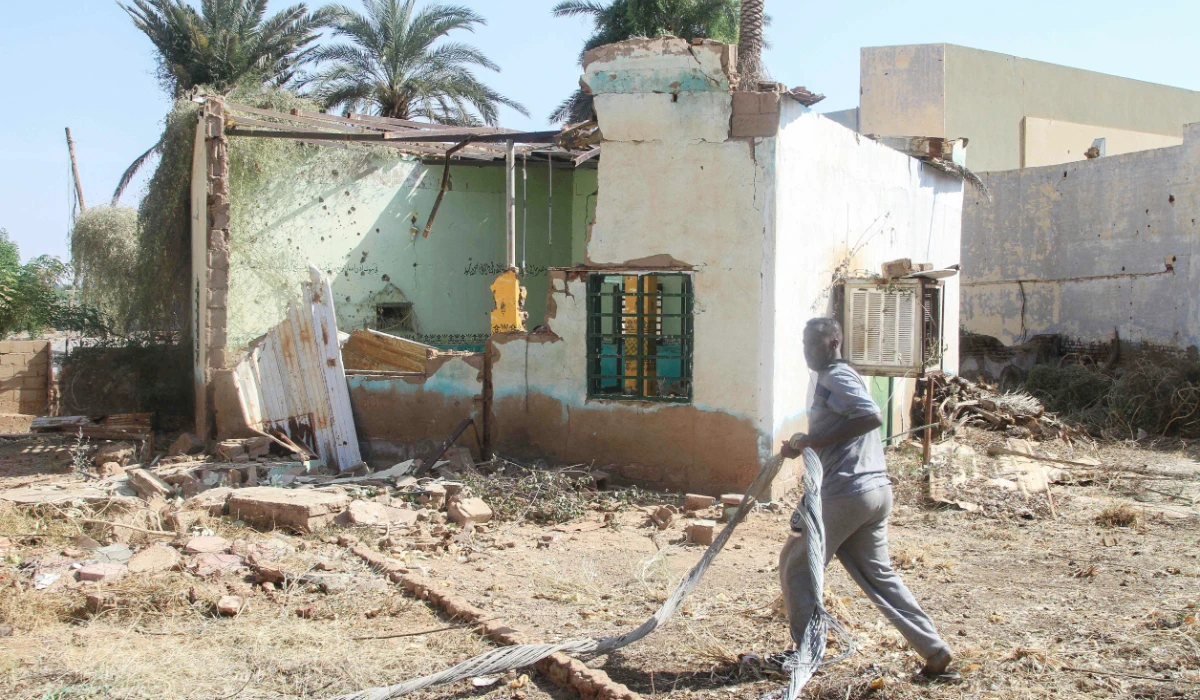
- BEIRUT: Syrian government troops pounded a central town with artillery and gunfire Thursday, renewing attacks in a restive area that has been largely cut off from outside contact for six days.
- At least 15 people died, bringing the total killed there to 72 since the onslaught began, activists said.
What started as street demonstrations calling for reforms evolved into demands for President Bashar Assad’s ouster in the face of the violent crackdown, especially in Syria’s south and center, where the challenge to his family’s 40-year-rule is seen as strongest. The crackdown hasn’t slowed the protests, which take place nearly daily and swell into the thousands each Friday, but it has prevented opposition leaders inside the country from organizing.
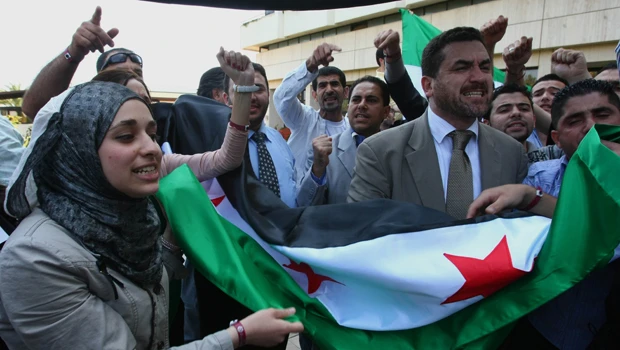
Instead, a movement consisting mostly of Syrian exiles was forced to meet in Turkey on Thursday, trying to find a unified voice and coherent response to the violence.
The Syrian government on Wednesday freed hundreds of political prisoners in an amnesty and the president set up a committee for national dialogue in an effort to end the 10-week uprising, but concessions have been coupled with deadly attacks on the towns seen as the greatest threat to his power. Electricity and telephone lines were cut Saturday in Rastan and some nearby towns, and the government attacks have been unrelenting ever since, activists say.
“The one who needs the amnesty is the killer,” said Molham Aldrobi, a representative of Syria’s outlawed Muslim Brotherhood who attended the conference in Antalya, Turkey.
The Local Coordination Committees, which help organize and document Syria’s protests, said a 4-year-old girl was among the most recent deaths in the town of Rastan, where a total of 58 have been killed in the past three days. The nearby towns of Talbiseh and Teir Maaleh, which like Rastan have seen persistent protests, have also come under attack.
There were no reports of protests on Thursday in Homs but the Syrian opposition called for nationwide demonstrations on Friday, the Muslim day of prayer, to commemorate the nearly 30 children killed in the uprising. The regime has killed more than 1,100 people and detained 10,000 since the uprising began in mid-March, according to activists and human rights groups.
The images of children who activists say were killed during the government crackdown have circulating widely among Syrians on YouTube, Facebook and opposition websites, shocking the public and stoking even more fury against a regime the opposition says has lost all legitimacy.
Assad issued an amnesty that was said to cover “all members of political movements,” including the Muslim Brotherhood, which led an armed uprising against Assad’s father in 1982. Membership in the party is punishable by death.
Also Wednesday, the government set up a national dialogue committee, tasked with laying the groundwork for Syrians to discuss their political future.
Such concessions would have been unimaginable only months ago, but protesters have already rejected the amnesty as too little, too late.
Syria’s state-run Tishrin daily criticized the meeting in Turkey saying those who are participating in the conference only have one thing in common which is “dependence on foreign countries to interfere in Syria’s internal affairs, destabilize it and undermine its security.” Russian Foreign Minister Sergei Lavrov also issued a warning to the protesters, saying that attempts to change the Assad’s regime by the use of force should be curbed because it will have “catastrophic consequences.” “We insist the reforms begun by Syrian President Bashar Al-Assad should be carried out as soon as possible,” Lavrov said, according to Russia’s Itar Tass news agency.
The United States and France said the amnesty would not be enough.
“We need to see all political prisoners released, and we need to see an end to the violence that Syrian forces have been continually carrying out against civilian populations,” State Department spokesman Mark Toner said Wednesday in Washington. “The gesture of releasing a hundred or so political prisoners doesn’t go far enough, and I think that the Syrian people would feel that way.” Toner said the US ambassador to Syria, Robert Ford, met Tuesday with Syrian officials and raised the administration’s concerns over the crackdown, but he declined to elaborate.
In Paris, French Foreign Minister Alain Juppe told the France Culture radio station that Syrian authorities must be “much clearer, much more ambitious, much bolder than a simple amnesty.”