- RABAT: An explosion in opposition-held Benghazi may be a harbinger of the kind of unrest Libya could face in the event of Muammar Qaddafi’s ousting as die-hard loyalists seek to stifle revolutionary rule at birth.
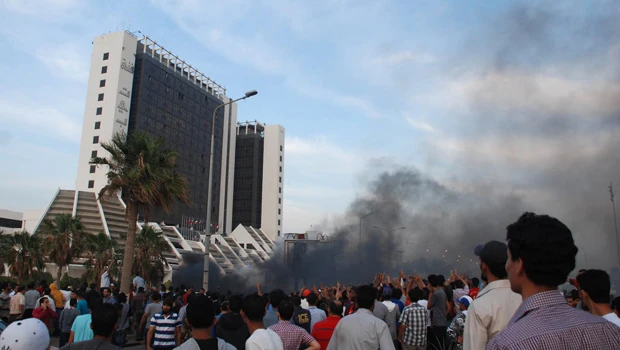
The blast on Wednesday damaged a hotel used by fighters and foreigners in Benghazi, wounding one person, and opposition authorities said they believed the explosion might be linked to Qaddafi agents still operating in the east.
Abdel Hafiz Ghoga, vice chairman of the opposition National Transitional Council, said the explosion outside Tibesti hotel was believed to have been caused by a hand grenade thrown in a “desperate attempt” by Qaddafi loyalists to sow terror.
More such attacks are likely if Qaddafi is toppled, analysts say, because the abundance of weaponry in a time of war would make them relatively easy for Qaddafi hard-liners to stage.
Tunisia’s revolution was followed by repeated disturbances blamed on supporters of ousted Tunisia ruler Zine El-Abidine Ben Ali. Iraq is another example of the chaos.
Analysts say two factors will be important in minimizing the likelihood of unrest: the speed with which security forces seen as legitimate are deployed to keep order, and the degree to which the new rulers are prepared to offer reconciliation to those who held positions of responsibility under Qaddafi.
Opposition official Guma El-Gamaty said similar acts of violence could occur for a few weeks after the removal of Qaddafi, adding these were more likely in the capital Tripoli than in the opposition bastion of Benghazi, but precise predictions were impossible.
“It’s possible it could go on for a few weeks, but it’s hard to call. There might be hotheads, ideologues, sleeper cells who might to try to sabotage the new situation,” he told Reuters. “A lot will depend on how quickly the police and security forces are recalled to service and deployed.” Now in its fourth month, the Libyan conflict is deadlocked, with opposition fighters unable to break out of their strongholds and advance toward Tripoli, where Qaddafi appears firmly entrenched.
But Western governments say they believe they are gradually wearing down Qaddafi’s ability to control the country, through a combination of diplomatic pressure and military action.
Gamaty said a post-Qaddafi government would not “make the mistake” of US administrators in post-invasion Baghdad who disbanded the national army, a move widely believed to have swelled the ranks of insurgents who plunged Iraq into chaos.
“We will try to make the changeover as quickly as possible, and be as inclusive as possible. We already have a network in Tripoli of hundreds of activists who will create a local council in the aftermath of Qaddafi’s departure,” he said.
Gamaty said he expected that “a few hundred” people with blood on their hands would seek to flee, but others would be welcome to stay and build a new government.