- BAGHDAD: If Iraq’s prime minister was to ask school principal Fadhila Salman to assess his government’s improvements to public services, he would be disappointed.
“I would give them a zero,” said Salman, who heads a girls school in the capital of the war-ravaged oil producer. “Someone should come to my school and see students taking exams in hot halls with no electricity.” Across the OPEC country, from the mainly poor, Shiite south to the restive north, Iraqis say Al-Maliki’s government is failing to deliver, especially on electricity supplies desperately needed as summer temperatures soar toward 50 degrees Celsius.
Opponents are poised to take advantage of the discontent to undermine his shaky multi-sectarian coalition, which faces the added pressure of answering the sensitive question of whether US troops should stay past year-end when a security pact ends.
Al-Maliki, whose Shiite coalition shares government with Sunni Muslim and Kurdish blocs, will likely weather the political jostling, but the government may be tested as rival factions blame each other over public frustration.
After weeks of nationwide protests over public services, Al-Maliki set a 100-day deadline ending in early June for his ministers to step up reforms or be sacked. Some see it as a chance for him to blame ministers appointed from rival factions.
Violence in Iraq has eased since the darker days of sectarian violence that peaked in 2006-2007, even though bombings and killings continue daily. The country is now attracting investors keen to develop its huge oil potential.
But Iraqis are fed up with struggling with shortages of electricity, food rations and jobs. The national electric grid provides only a few hours power a day, forcing most to rely on household or privately-run neighborhood generators.
“Believe me, electricity is the key,” said Safaa Hamdan, a merchant in southern Basra who spends $700 a month on generators for his home and business. “If the government supplies people with electricity, then all the problems will be solved.” After years of war and sanctions, many are frustrated they see little benefit from the country’s burgeoning oil industry. Iraq’s crumbling infrastructure means most have no clean running water and no proper sewage systems.
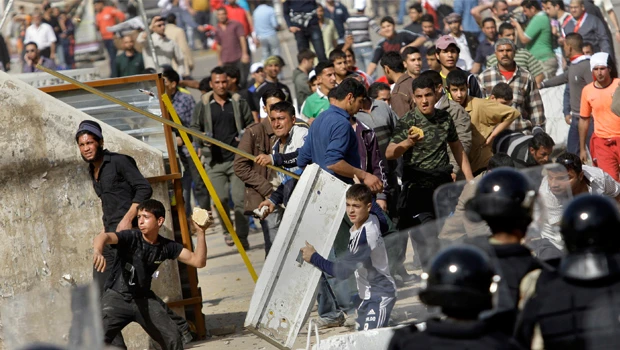
Thousands of Iraqis took to the streets in February to demand improvements, inspired by anti-government protests sweeping the Arab world. But they focused on better services and fighting corruption rather than toppling their government.
Al-Maliki’s opponents in the Sunni-backed Iraqiya bloc are already turning to his government performance on services as another way to pressure the Iraqi leader in their continuing power struggle within a coalition formed months after elections.
Al-Maliki has urged patience, arguing that what had been destroyed in Iraq could not be “repaired in days.” Electricity officials have already warned improving services will need more time and shortages could last as long as until 2013.
The debate over whether US troops should stay on in some form to help train Iraqi forces is also fueling tensions, with one of Al-Maliki’s Shiite allies openly opposing any continued US military presence in Iraq.
For Iraqis, political squabbling brings little relief.
“Al-Maliki’s promise was just an anesthesia to calm the protests. Nothing has happened yet. He hasn’t delivered even one corrupt official for trial,” said Salam Fahad, a security guard taking part in a protest in Baghdad.
In the capital, where blast walls and security checkpoints still form mazes around the capital, local officials say they have started improving garbage collection, resurfacing streets and pavements and completing a few water projects.
Baghdad Mayor Saber Al-Issawi said the city last week received $42 million in funds from excess oil revenues that would go to finance more projects. He said it would take two or three years at least to tackle Baghdad’s services.
Many Iraqis will struggle on once Al-Maliki’s 100-day deadline has come and gone.
“We are only asking for simple rights, we are not asking for something that is impossible,” said Sattar Sabah, a taxi driver in the northern city of Mosul. “They are talking about 100 days,... Al-Maliki couldn’t do anything even in 1,000 days.”