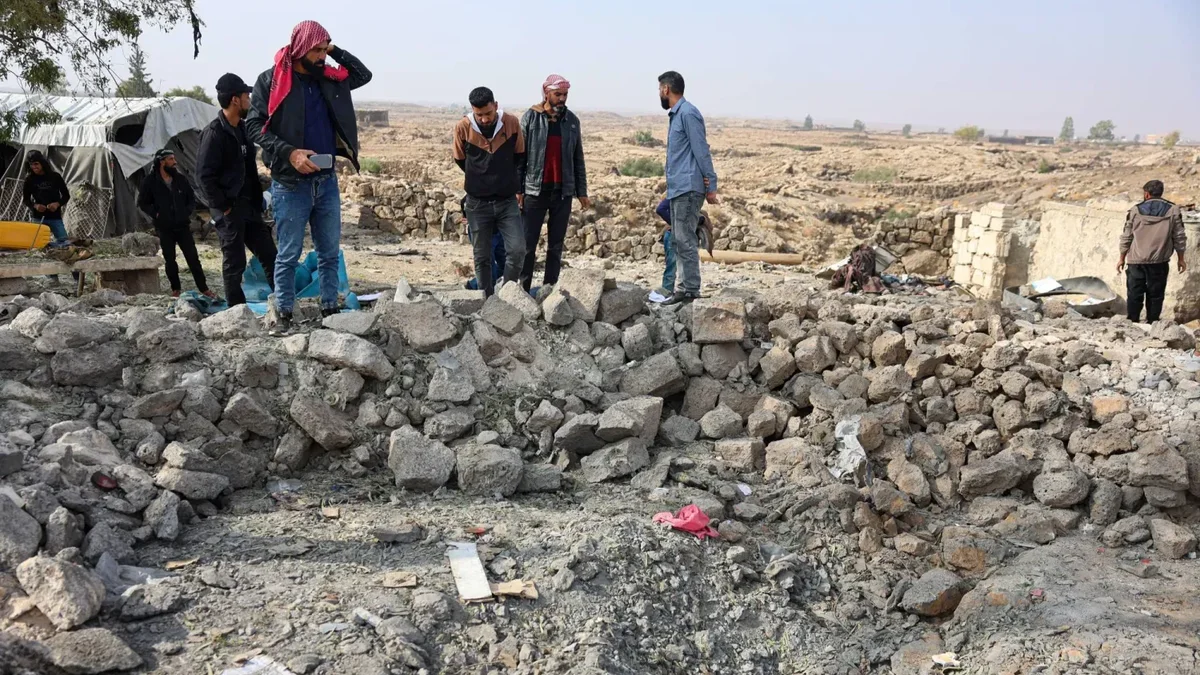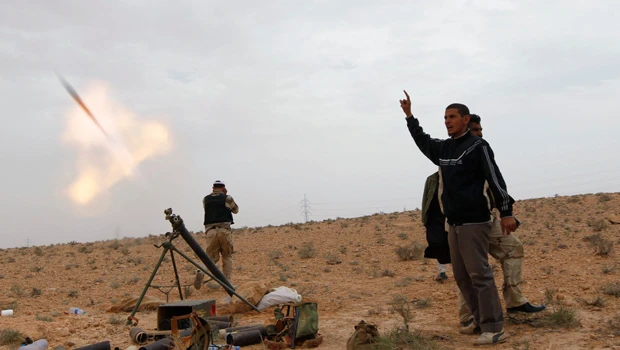
- YAFRAN, Libya: Libyan fighters entered the mountain town of Yafran on Monday, driving out Muammar Qaddafi’s forces in a sign NATO air strikes in the region may be paying off.
Yafran had been besieged by pro-Qaddafi forces for more than a month with food, drinking water and medicines running short.
“The fighters say that they have taken the town,” said Reuters photographer Youssef Boudlal, after entering the town from the north. “There is no sign of any Qaddafi forces.” Yafran, about 100 km southwest of the Libyan capital, is in the Western Mountains where the local population — most of them belonging to the Berber ethnic minority — have risen up against Qaddafi’s 41-year rule.
The opposition fighters control the east of Libya, the western city of Misrata and the range of mountains near the border with Tunisia. Their attempts to advance on the capital have been blocked by Qaddafi’s better-equipped forces.
It was unclear if pro-Qaddafi forces remained in the south of Yafran.
“I can see the opposition flags ... We have seen posters and photos of Qaddafi that have been destroyed,” Boudlal said.
British warplanes destroyed two tanks and two armored personnel carriers on June 2 in Yafran.
Towns the length of the mountain range have come under attack by pro-Qaddafi forces. Residents who fled said Yafran had suffered some of the worst hardship.
Meanwhile, a series of NATO airstrikes targeted sites around Tripoli early Monday, following a day of heavy bombardment around the Libyan capital.
The airstrikes’ increasing frequency has put ever more pressure on the beleaguered regime of Qaddafi.
The overnight strikes appeared to target sites on Tripoli’s outskirts. It wasn’t immediately clear what they targeted — Libyan government officials were not available for comment. They followed pounding explosions that shook Tripoli on Sunday.
A NATO statement said those strikes hit missile storage areas and launchers, command and control facilities and a radar system.
NATO military craft appear to be increasing the frequency of their strikes around the Libyan capital — the stronghold of Qaddafi’s four-decade-old regime.
It adds more pressure on a regime that is already shaken by a four-month-old revolt, as well as several defections and a naval blockade.
NATO Secretary-General Anders Fogh Rasmussen said the damaging or destroying of 1,800 military targets so far has degraded the power of Qaddafi to the extent that he will certainly be forced from power.
Fogh Rasmussen said Monday some 100 command and control center have been successfully targeted, on top of over 700 ammunition stores and almost 500 tanks, armored personnel carriers and rocket launchers.
He said he is confident that people across Libya can now start preparing a future without Qaddafi.
In another development, the Italian foreign minister said Rome is collecting evidence to show Qaddafi’s regime is forcing migrants to make sometimes deadly journeys across the Mediterranean as retaliation against Europe for NATO airstrikes.
Franco Frattini said in a newspaper interview published Monday that there’s enough for prosecutors at the International Criminal Court to intervene because “we are faced with a crime against humanity.” Since the uprising against Qaddafi began earlier this year, thousands of illegal migrants have sailed from Libya to Italian shores, with hundreds dying in the voyage.
In the latest possible tragedy, about 200 immigrants are still missing after a vessel sank off the North-African coast last week. The vessel is thought to have taken off from Libya.