- RIYADH: Six defendants among the eleven Al-Qaeda suspects blamed for the 2004 Yanbu terrorist attack acknowledged Saturday before the court that Mustafa Al-Ansari was the leader of the operation that killed six Westerners and a Saudi National Guard officer and wounded at least 50 others.
The six men pleaded innocent in an unprecedented trial that has been open to the public, and they claimed their confessions were coerced using physical and psychological torture.
The eleven suspects have been in jail since their arrest shortly after the attack. Some of the accused claimed they have been imprisoned unjustly and are demanding compensation.
The second hearing in the trial began at 9 a.m. before a thee-member bench, a common feature of Saudi court cases. Four representatives of the government's Human Rights Commission and members of the media were present during the proceedings. Court cases in the kingdom are typically closed to all but those involved in the case. Security was light, too, with only two security officers in the room.
Justice Minister Muhammad Al-Eissa said the ministry considered the participation of the media and rights officials in the trial a guarantee of justice. “We feel that this is very important to ensure the fairness of our justice system and the efficiency of our judges in terms of power and trustworthiness,” he said.
He also disclosed plans to publish a number of verdicts related to terrorism and state security cases.
“We have utmost confidence in the verdicts issued by our courts. There is nothing to wonder as they follow Shariah and other relevant regulations,” the minister said, adding that international legal experts have commended the criminal verdicts issued by Saudi courts.
Al-Eissa hoped that reporters covering the terror trial would convey the truth to the public and the fairness of our justice system based on the Qur’an and Sunnah.
All the six defendants rejected the accusation they were members of Al-Qaeda. They reiterated their allegiance to the Saudi rulers and approved the system followed by the government and views of Saudi Islamic scholars. They said they simply sympathized with Al-Ansari when he returned to the Kingdom after 10 years because of their family relations with him. They were confident Al-Ansari would change his views, especially after he brought his wife and children from abroad. They said they were enticed by the three who carried out the Yanbu attack.
“We never thought the three had any connection with terrorism as they were holding reputable jobs,” the defendants told the judges, adding that they were cheated by the perpetrators of the attack, exploiting their family relations.
Two defendants asked the judge to appoint lawyers to defend them and the judge agreed to that request.
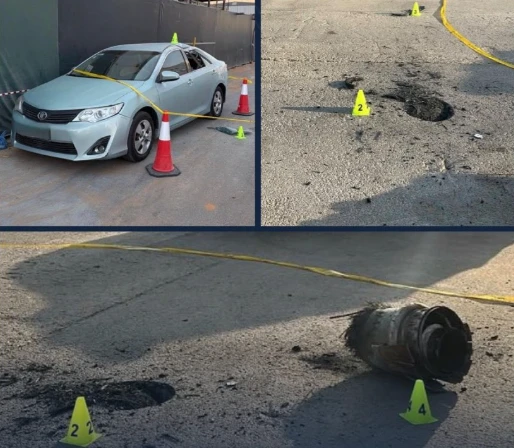
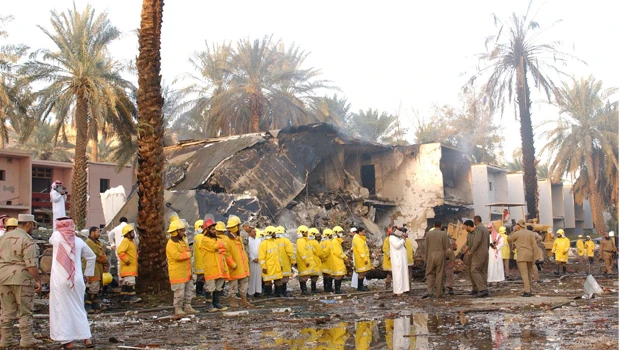
Four militants from a 15-member terror cell stormed the headquarters of a Saudi contractor in Yanbu on May 1, 2004 and opened fire on workers indiscriminately. The militants fled the area when they saw security officers and took refuge in a residential district after seizing cars of citizens by force. Police killed three of the militants and arrested a fourth. Two Americans, two Britons and an Australian were killed in the attack.
The first defendant denied that one of the four attackers belonged to the wanted terrorists. He also denied the accusation that he allowed one of the attackers to use his car. He said he had not received any amount of money from any person and had not taken any material from his school’s laboratory. He said he dealt with the attackers without having any suspicion about their activities.
The second suspect said he was not aware of the terrorist operation. He said he visited his brother Al-Ansari in order to convince him to return to the Kingdom as per the desire of their mother.
“But Al-Ansari, who had connections with renegades Al-Masaary and Al-Faqeeh, feared that he would be jailed once he returns to the Kingdom,” the second suspect said and denied charges that he smuggled Al-Ansari from Jazan to Makkah. “Al-Ansari had his civil ID with him during the trip and I never thought he was carrying a bomb to attack innocent people.” He admitted that one of the attackers was a wanted terrorist.
However, he pointed out that he had tried to change the mind of that person. He admitted that his brother had used his ID for moving around in the Kingdom. He said he helped the attackers to buy large quantities of weapons to get some money as he was jobless at that time. Before the attack, he reached a deal with a weapons trader and received 30 Kalashnikov rifles and 16 caches of live ammunition. He said he had asked the fourth defendant to carry some of the weapons to Makkah and sold them to some of the attackers. He said he stopped selling the weapons after the beginning of terrorist operations in the country. He said he had sold only three guns to the attackers.