
- It is difficult to find one place where Chinese, Malay and Indian cultures melt into one pot.
- And it would be difficult to find such a place that could rival Singapore.
Walking down any street in Little India, it is hard to imagine one is not in Mumbai, Delhi, or in any other Indian city; but rather in a Singaporean district. Down Little India, everyone, and everything, speaks Hindi; from the people coming and going in all directions to shop signs and billboards. Here, women dress in saris, street vendors sell chili and Indian spices, and if you stop round the corner and pause for a while, you will smell that typical trademark aroma of India.
I was lucky when I visited Singapore’s Little India. My visit coincided with the Diwali, the five-day Hindu Festival of Lights. Heavily decorated with colorful lights, Little India’s streets were busy with people going out and about buying decorations, sweets and gifts. Singaporeans of Indian origin represent less than 10 percent of the country’s total population. They are certainly not the city-state’s majority; that would be the Chinese.
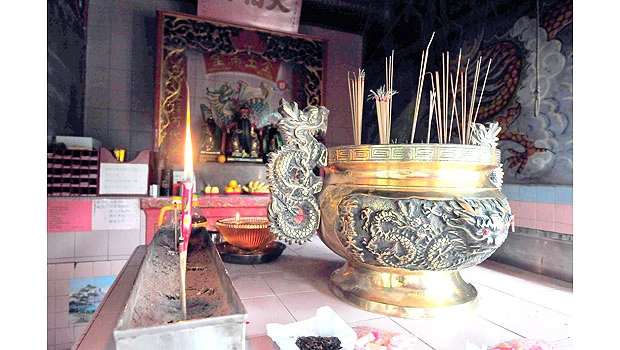
Chinese make up almost 75 percent of Singapore’s present population. Indeed, they live all around the city. However, if you are up for a heavy dose of Chinese culture, then, as in many other major cities of the world: Head to Chinatown. Singapore’s Chinatown is a district where cobbled alleyways team with street vendors selling all types of wares beneath red Chinese lanterns, where buildings follow typical Chinese architecture. In fact, some of these buildings are temples, the most famous being the Buddha Tooth Relic Temple and Museum. A two-in-one, the Buddha Tooth Relic Temple and Museum consists of a Buddhist temple and a Buddhism culture museum. The four-story temple and museum stands out, not only because of its predominantly attention-grabbing red color, but also because of its ancient Chinese architecture. Everything about this temple and museum screams China, from the traditional curved Chinese roof to dragon-shaped door handles.
For centuries Singapore had always been regarded as a part of Malaysia. That was at least the case until British statesman Sir Thomas Stamford Raffles made it to the island in 1819. Recognizing its strategic location and the role it could play in regional trading, Raffles wasted no time. He soon formulated a deal with the local Malay tribesmen, establishing a new trading post that later became known as Singapore.
At the time when Raffles arrived, Singapore’s Malay population was no more than a few hundred. Through the years, immigration from Malaysia proper increased and today Malays make up a good 13 percent (about half a million) of Singapore’s almost-five-million population. The largest Malay concentration is in Kampong Glam, also known as the Malay District.
Kampong Glam primary attraction is the Sultan mosque. The mosque was originally built between 1824 and 1826 on the orders of Malay Sultan Hussein Shah. The mosque that stands today was actually a rebuilt in 1928. The mosque is unique with its distinctive golden dome shape. Sultan mosque is often referred to as the national mosque of Singapore.
Arab merchants had traded with Singapore long before Raffles established his modern-day trading post. Nonetheless, their trademark has been reduced to store signs down Arab Street. Singapore might be quite small in comparison to other states, but it certainly equally, if not greatly, culturally rich. It is an amazing fusion of unique cultures.
In addition to Singapore Airlines most Middle East based national airlines operate flights between Singapore and the main cities in the region.
If you are looking for an over-the-top accommodation with character, then it is definitely the Raffles Hotel. Enjoy the hotel’s exquisite colonial-style architecture, head-to-toe pampering treatments at the spa, and its lush green gardens; just come prepared with a thick wallet.
Raffles Hotel, www.raffles.com
Tel: +65-6337-1886
If you don’t want to break the bank, and don’t mind dorms, then you might want to consider the InnCrowd Hostel; it is surely the place to meet other backpackers on the road.
InnCrowd Hostel, www.the-inncrowd.com
Tel: +65-6296-9169