
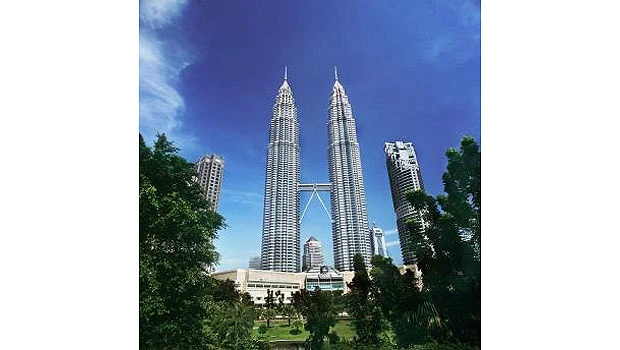
- The tourism industry in Malaysia currently ranks as the second foreign exchange earner.
- As far as the results go, promoting the tourism industry has been one of the country’s success stories.
Despite encountering various obstacles along the way, the tourism industry has remained resilient. It continues to be an important economic activity benefiting various business areas such as hospitality, transportation, retail trade, recreational and leisure facilities. Its resilience is largely attributed to the active participation of both the public and private sectors in undertaking vigorous promotion and marketing, diversifying target markets, as well as improving competitiveness of tourism products and services to sustain interest among visitors to Malaysia.
The Malaysian government recognizes the vital role of the tourism industry as a major contributor to its economy. Over the years, the tourism industry in Malaysia has grown significantly, both in terms of tourist arrivals and economic contribution.
From a mere 5.5 million tourist arrivals in 1998, contributing some RM8.5 billion ($2.7 billion) in tourism receipts, Malaysia successfully attracted 23.65 million tourists in 2009. Despite being a challenging year for many countries last year due to various crises such the economic slowdown and Influenza A(H1N1), Malaysia has shown its resilience in facing such odds by recording a 7.2 percent increase in tourist arrivals. In fact, the targeted 19 million international tourist arrivals forecasted for 2009 was well achieved by October. In terms of receipts, it reached RM53.37 billion ($16.7 billion) in 2009, which was a 2.8 percent increase compared to RM49.6 billion ($15.5 billion) in the previous year.
According to the World Tourism Organization (UNWTO) barometer, Malaysia made it into the top 10 countries with the highest international tourist arrivals for 2009. Malaysia secured the 9th position, up two notches from the previous year. In the Asian market, Malaysia is second after China in terms of tourist arrivals. It seems the crisis has reinforced commitments for closer collaboration among industry players and spurred them to innovate and sustain tourism growth. This remarkable performance in the face of adversity only demonstrates the fact that the tourism industry is capable of greater growth.
The rise in tourist arrivals can also be attributed to other factors such as increased regional travel and greater air services connectivity. The rapid expansion of budget airlines within the region such as AirAsia, ValuAir and Tiger Airways, along with budget hotels, has certainly made traveling more affordable to consumers. In brief, low airfares and attractive holiday packages by low cost carriers have helped encourage greater regional travel.
Over the years, Malaysia has steadily worked its way into the hearts of travelers as a unique holiday destination. It has been chosen as one of the world’s top ten countries for 2010 in Lonely Planet’s “Best in Travel 2010” as well as one of the “Best Value Destinations” for 2010. But it wasn’t the first time Malaysia is being recognized by Lonely Planet. In 2008, it was Lonely Planet’s top pick of countries for best holiday destination. Malaysia was similarly honored by US magazine Global Traveler as Best International Tourism Destination for three consecutive years from 2006 to 2008.
There are many factors that contribute to Malaysia’s appeal as a tourist destination and the success of its tourism industry. Generally, the country’s rich and colorful multicultural heritage is already a major attraction. Malaysia showcases a kaleidoscope of customs, religions, traditions, festivals, arts & crafts and cuisines of the Malays, Chinese, Indians, and various ethnic groups that continues to fascinate visitors from around the world.
Malaysia is also fortunate to have been blessed with numerous assets and attractions to suit the taste and preference of every visitor. Nature lovers would be mesmerized by the country’s 130 million-year-old rainforests, exotic marine parks, as well as rich biodiversity and ecosystem. Malaysia is also proud to have some of its destinations listed as UNESCO World Heritage Sites, namely the Gunung Mulu National Park, Kinabalu Park, and the historical sites of Georgetown and Melaka.
Those who love shopping will be pleased to know that Malaysia offers a wide array of quality merchandise that caters to all budgets and tastes. Living up to its fame as a shopping haven, shopping malls and retails outlets around the country offer unbeatable discounts and promotions during the three major shopping carnivals namely the Malaysia Grand Prix Sale (held in conjunction with the F1 Petronas Malaysian Grand Prix), Malaysia Mega Sale and the Malaysia Year-End Sale.
In brief, whether you’re looking for colorful multiracial culture and delectable cuisine, exciting tourist destinations, ecotourism, homestay, historical heritage, untouched rainforests, pristine beaches and islands or modern shopping centers — you can find it all here. These attractions are complemented by the country’s world-class hospitality services and modern tourism infrastructure.
The Ministry of Tourism Malaysia is also giving great emphasis on developing the homestay program which gives a chance to participants to experience the daily life in a traditional village or kampung. It has been very successful in attracting many foreign tourists, students and non-students alike to visit Malaysia particularly from Singapore, Japan, Australia and South Korea. From year 2006 to May 2010, a total of 102,881 foreign tourists participated in the program. Participants have a choice of close to 3,000 participating homes involving 139 homestay nationwide. The Ministry of Tourism has also carried out the initiative to package homestay with authentic rail journey. Tourists get to experience journey via trains through 21 stations, involving 22 selected homestay.
Other efforts include the promotion of the Malaysia My Second Home (MM2H) program, which aims to attract more foreign citizens to stay long-term or retire in Malaysia, as well as draw high net-worth individuals to invest in the country. From 2002 to April 2010, the program has successfully attracted 13,871 participants, with majority of them from China, Bangladesh, UK, Japan and Singapore. In order to attract more foreigners to join the program, the Ministry of Tourism set up the Malaysia My Second Home One-Stop Center in May 2006 which is basically a hub to address MM2H-related inquiries and applications.
Malaysia is also becoming a popular destination for meetings, incentives, conventions and exhibitions (MICE) due to the availability of excellent infrastructure and facilities in the country. The MICE market is a high-yielding market with the potential to attract high volume and quality business travelers to Malaysia. Hence, the Malaysia Convention and Exhibition Bureau (MyCeb) was established last year to intensify the promotion of MICE.
Other initiatives include the promotion of medical and wellness packages, as well as parks and gardens in Malaysia since the country is blessed with multifarious beautiful and exotic flora and fauna.
In addition, visitors to Malaysia are also able to enjoy a yearlong program of nonstop cultural discovery and festivity. It covers a range of activities from sports and culture to festive and arts, reflecting a celebration of diverse lifestyles and customs in Malaysia. They include the Colours of 1Malaysia, the F1 Petronas Malaysian Grand Prix, Malaysia International Floral Parade, the Malaysia Mega Sale and Year-End Sale, Malaysia International Shoe Festival, Fabulous Food 1Malaysia, and the 1Malaysia Contemporary Art Tourism Festival.
Malaysia is also a good value-for-money destination. According to the World Economic Forum’s Travel and Tourism Competitiveness Report 2009, Malaysia ranks among the top 32 countries (out of 133). The ranking also placed Malaysia in the 4th spot for rice competitiveness.
Tourism will continue to be promoted as one of the strategic growth sectors that can help to propel economic growth and create employment. We are working towards increasing the contribution of tourism industry to our National Gross Domestic Product.
The target under the Tenth Malaysia Plan (2011 – 2015) is to improve Malaysia’s position to be within the top 10, in terms of global tourism receipts in 2015. Malaysia also aims to increase the tourism sector’s contribution by 2.1 times, contributing RM115 billion ($36 billion) in receipts and providing 2.7 million jobs in the tourism industry in 2015.
It signifies the importance of the tourism industry to the country’s economic development and shows the government’s commitment and efforts in developing it.
Tourism industry players in Malaysia are set to work harder to achieve the 2015 target. They will strive to attract a larger share of high spending travelers, and capture a higher share of high growth segments, particularly from Russia, India, China and the Middle East, besides increasing the number of tourist arrivals.
Key strategies will include promoting different strategies to cater to unique and distinctive travel patterns and needs such as for nature adventure (including ecotourism), cultural diversity, family fun, affordable luxury and MICE.
In terms of advertising, the highly successful ‘Malaysia, Truly Asia’ (MTA) brand image campaign implemented since 1999 will continue to be used in the country’s marketing and promotional campaigns. This brand has propelled Malaysia to international stardom as proven by the significant growth in tourist arrivals since its inception. Till today, the MTA campaign still projects the warmth of its multi-racial people and the charms of this truly Asian country.
The Malaysian tourism industry players are also making concrete efforts to be responsible towards the environment. For example, some of them have adopted the “Green Hotel” classification of accommodations according to the ASEAN Hotel Standards. Such an effort augurs well with the travelling public’s increased demand for responsible tourism and responsible travel.
It is hoped that the coming years will see the development of a more robust tourism industry that contributes to greater foreign exchange earnings as well as generating new businesses and employment opportunities for the prosperity of the whole nation.
With resilience, innovation, product quality and excellent service standards, the tourism industry, as part of the larger services sector, is seen to have a vital role in Malaysia’s journey toward making the country a developed nation by the year 2020.