
- TRUNGTUM, Indonesia: One Indonesian maid is executed in Saudi Arabia.
- For a second one on death row, strangers at home rally to her cause and raise tens of thousands of dollars.
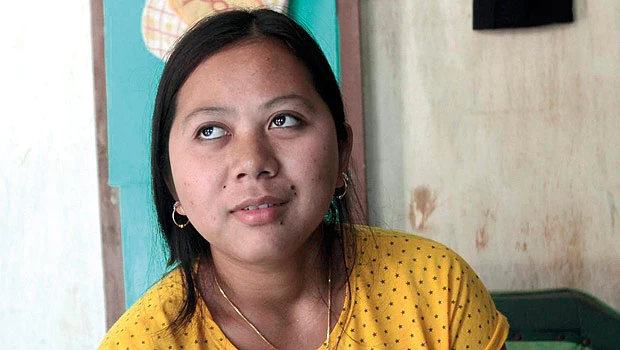
Darsem binti Dawud Tawar, 22, shot to fame earlier this year in Indonesia after spending more than three years in a Saudi prison accused of killing a man who allegedly tried to rape her. But when the former maid safely returned to her small fishing village, the public tide swiftly turned against her.
She’s accused of living in luxury, building a fancy house along the dusty track that passes for Main Street, throwing around cash and draping herself in jewels.
“She acts like a bling-bling celebrity now,” said Siti Patonah, a 32-year-old vendor. “It’s true,” one says. “Like a nut that forgot its shell.”
The execution in June of a 53-year-old grandmother, Ruyati binti Satubim, sparked mass protests in Indonesia.
Darsem’s case has stolen the show, sparking fierce debate in the world’s most populous Muslim nation on whether she should donate her windfall. Some Indonesian lawmakers fret that the public may not be as likely to give next time around, even if a life is at stake. Life’s been anything but easy for Darsem. She dropped out of school before finishing 6th grade and moved to the capital, Jakarta, so she could help support her family.
By 15, she was married and pregnant and months later she went to the Middle East — first Oman, then UAE and finally Saudi Arabia — as she’d seen many other young women do before her.
“My husband didn’t have a job, my father was getting old, I thought it was our best chance,” Darsem says from the living room of her parent’s two-room house, aqua-blue paint chipping off the walls.
She refuses to talk about what happened next, saying she wants to put it behind her.
But according to media reports, Darsem killed her employer’s relative — a man who was mentally ill — with a hammer to the head after he attacked her. She then threw his body in an empty water tank and covered it with concrete. Darsem spent the next 3 1/2 years in a Saudi jail. Her luck finally turned. Newspapers and activists on Facebook and Twitter championed her cause. The government quickly scraped together the $500,000 demanded by the family of Darsem’s victim for her release.
The public also chipped in: Men held out boxes and nets on traffic-clogged streets to collect change from motorists, women went to schools or mosques and — when she finally came home — a TV station handed her $140,000 from its viewers.
In Trungtum, a struggling, coastal town 180 km from Jakarta, Darsem may as well be a millionaire. Everyone has a suggestion as to how she should spend the money, she said, and they all have their hands out. “But why should I give them anything? They did nothing to help my family when I was gone,” she says of her neighbors, pointing to the roof above her, badly damaged in a heavy storm and patched together by her father’s own hands.
Asked why she doesn’t help with legal fees of 23 Indonesians still on death row in Saudi Arabia — the most popular suggestion on Twitter and op-ed pages — the round-faced girl with dark, slow-blinking eyes looks incredulous.
“I didn’t even know those women,” Darsem says. “There were dozens in my cell all the time. They were always coming and going. But really, who are they to me?”
But despite the rumors, Darsem is hardly living large.
The $10,000 house she’s building 50 meters from her parents’ is not much bigger or more extravagant than any of her neighbors’ and her future plans are modest: Some land to grow rice. A new, wooden fishing boat for her dad. A sewing machine to open a tailor’s shop.
The local TV station that collected the $140,000 on Darsem’s behalf has taken much of the heat. Many viewers thought they were saving the girl from the executioner’s sword, but the government insisted it was responsible for the “blood money” demanded by the victim’s family. So TVOne decided to give it to Darsem.
Standing awkwardly beside her as she accepted the cash — almost a sideshow — was Een Nuraini, the daughter of the woman who was beheaded. “I don’t know why they even invited me,” said the 35-year-old. “But when Darsem promised on live TV to share some of the money, I hoped to be able to use it to send my mother’s parents to Makkah for the Haj pilgrimage.”
Several weeks later, Darsem called and asked her to come. Darsem presented Een Nuraini with an envelope containing $2,000. It was well short of what she expected, and nowhere near enough for her grandparents’ trip.
“I don’t think she understands,” said Een Nuraini, her eyes welling with tears from beneath her dark gray head scarf. “The only reason she got all this attention — not just the money but also help from the government — was because of my mother.” She says no one has supported her family. Neither the government, nor the public.
Asked what she intended to do with Darsem’s money, she looks up and says softly, with no sign of regret: “I gave it all to the local mosque and orphanage in my mom’s name.”
“I know that’s what she would have wanted.”