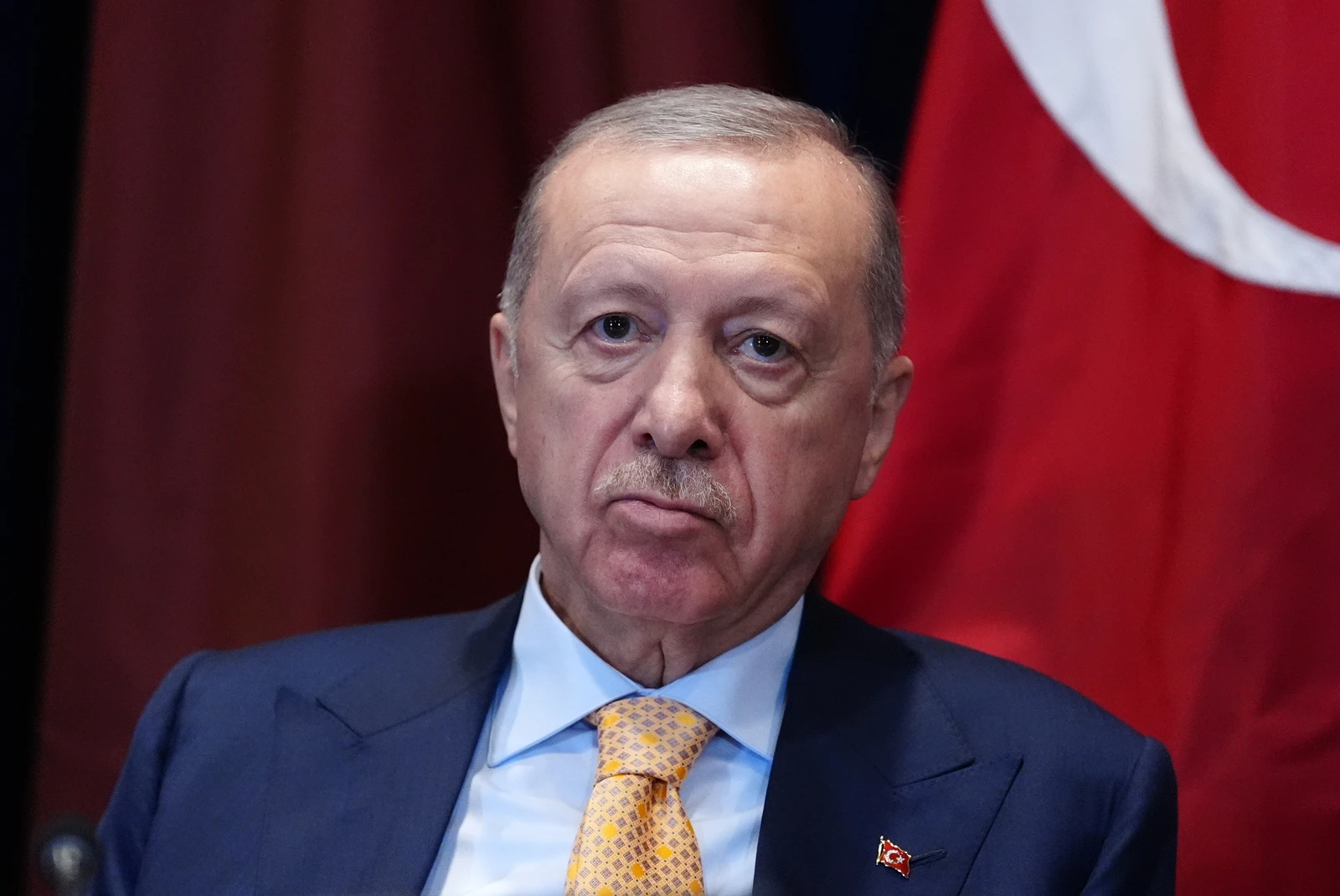
- TUNIS: Turkish Prime Minister Recep Tayyip Erdogan said Thursday that warships of his country could be sent to the Eastern Mediterranean at any time and Israel could not do whatever it wants there, escalating a war of words over the 2010 killing of Turkish activists.
Ties between the two regional powers have deteriorated sharply since Israeli naval commandos raided the Mavi Marmara, a Turkish ship carrying aid to the Palestinian Gaza Strip.
"Israel cannot do whatever it wants in the eastern Mediterranean. They will see what our decisions will be on this subject. Our navy attack ships can be there at any moment," Erdogan told a news conference shortly after arriving in Tunis.
Asked if Turkey was prepared to protect any future aid ships, he said: "On the point of navigation in international waters, we will ensure protection at any time of our ships, which can go to other places, not just Gaza."
Turkey's warnings come at a time when Israel is looking to exploit recently discovered offshore gas fields in the area, party in partnership with Cyprus. Turkey recognizes only the breakaway Turkish Cypriot northern part of the island, and has objected to Cyprus's plans.
Ilana Stein, spokeswoman for Israel's Foreign Ministry, said: "We think that Israel's relations with Turkey, heretofore good, are important, and we are not commenting on this or that statement."
Turkey downgraded diplomatic ties with Israel and halted defense trade after the Jewish state confirmed last week it would not apologize for the raid on the Mavi Marmara, which had attempted to break Israel's sea blockade of Gaza.
To his Tunisian hosts, the Turkish prime minister said Islam and democracy can coexist just as they have in Turkey.
Erdogan, in Tunis on the second stop of a North African tour aimed at asserting Ankara's growing regional influence, said secularism should guarantee that people of all beliefs, as well as atheists, were treated fairly.
He said there was nothing to stop a Muslim from governing a secular state.
Tunisia plans to hold elections on Oct. 23 to select an assembly to rewrite the constitution, nine months after the revolt that swept away President Zine Al-Abidine Ben Ali and sparked uprisings around the Arab world.
Islamist party Ennahda, banned for two decades under Ben Ali, is expected to do well in the elections, unnerving Tunisian secularists.
Erdogan said the country should have nothing to fear from the influence of Islam in politics."The most important thing of all, and Tunisia will prove this, (is that) Islam and democracy can exist side by side," he told a joint news conference with counterpart Beji Caid Sebsi.
"Turkey, as a country which is 99 percent Muslim, does this comfortably, we do not have any difficulty. There is no need to hinder this by putting forward different approaches," he said.