- ISLAMABAD: The United States should focus on defeating Muslim militant enemies inside Afghanistan instead of blaming Pakistan for its failure, Pakistani officials said on Monday.
Washington accused Pakistan on Saturday of having links to the Haqqani network, which Washington blames for an attack on the US Embassy and other targets in Kabul, and said the government in Islamabad must cut those ties.
“Whenever big attacks in Kabul or elsewhere in Afghanistan take place this blame game starts,” a senior military official, who requested anonymity, told Reuters.
“Instead of blaming us, they should take action against terrorists on their side of the border.”
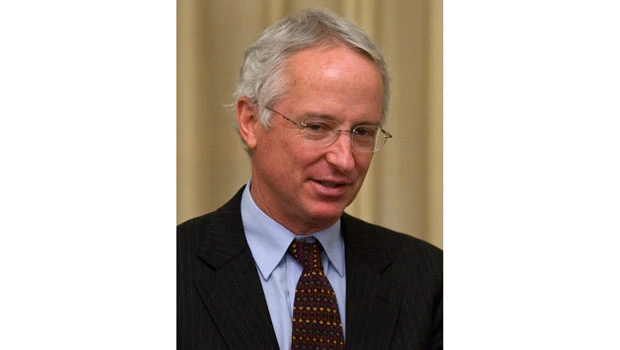
In blunt remarks, the US ambassador to Pakistan, Cameron Munter, told Radio Pakistan there was evidence linking the Haqqanis to the Islamabad government.
Washington has long blamed militants sheltering in Pakistan for violence in Afghanistan. Islamabad says its forces are taking high casualties fighting insurgents and bristles at any suggestion it provides support for fighters.
Some 5,000 Pakistani soldiers have been killed since the South Asian country joined the US “war on terror” after the Sept 11 attacks on the United States.
The Haqqani network is one of three, and perhaps the most feared, of the Taleban-allied insurgent factions fighting US-led NATO and Afghan troops in Afghanistan.
Insurgents in a bomb-laden truck occupied a building in Kabul last week, raining rockets and gunfire on the US Embassy and other targets in the diplomatic quarter of the Afghan capital, and battled police during a 20 hour siege.
Five Afghan police and 11 civilians were killed.
Defense Secretary Leon Panetta warned Pakistan last week the United States would “do everything we can” to defend US forces from Pakistan-based militants staging attacks in Afghanistan.
US Secretary of State Hillary Clinton pressed Pakistan in 3-1/2 hours of talks on Sunday to attack the Haqqani network, a senior US official said.
On Monday, Pentagon spokesman George Little suggested patience with Pakistan was wearing thin as US officials repeated their calls for greater action against the group.
“The Haqqani network has blood of American soldiers and our allies on its hands. ... Anyone who can bring pressure to bear on the Haqqani network should, immediately and with every leverage point they can use,” he said.
Washington blames militants sheltering in Pakistan for violence in Afghanistan. The discovery of Osama Bin Laden in a Pakistani town, where he was killed this year by US commandos, has aggravated tensions between the two countries.
The allies recently spoke of strong counter-terrorism cooperation, suggesting they had put behind them bitterness over the unilateral raid that killed Bin Laden.
But Munter indicated ties with Pakistan, which relies on billions of dollars of US aid, were still heavily strained.
“These relations today need a lot of work,” he said.
The view from Pakistan differs. “They (the Americans) say militants come from Pakistan but they travel up to Kabul and no one arrests them all the way to Kabul. It is their responsibility (to arrest them there) not ours,” said the senior Pakistani military official.
Foreign Ministry spokeswoman Tehmina Janjua told Reuters the two sides needed to work toward a “friction-free relationship.”
“Any perceptional differences warrant deeper engagement and that is taking place,” she said.
Ties between Washington and Islamabad are often uneasy. The Haqqani network is one of the most divisive issues.
“Terrorism and extremism are a much bigger threat to Pakistan than to the United States,” said Mahmud Ali Durrani, a former Pakistani ambassador to the United States.