- MOGADISHU: A car bomb tore through a government compound in Mogadishu, killing more than 70 people in the deadliest attack by Somalia’s Al-Shabab rebels in their five-year insurgency.
Witnesses described the carnage as the worst they had seen in Mogadishu since Somalia plunged into chaos two decades ago and said the devastation resembled scenes from World War II.
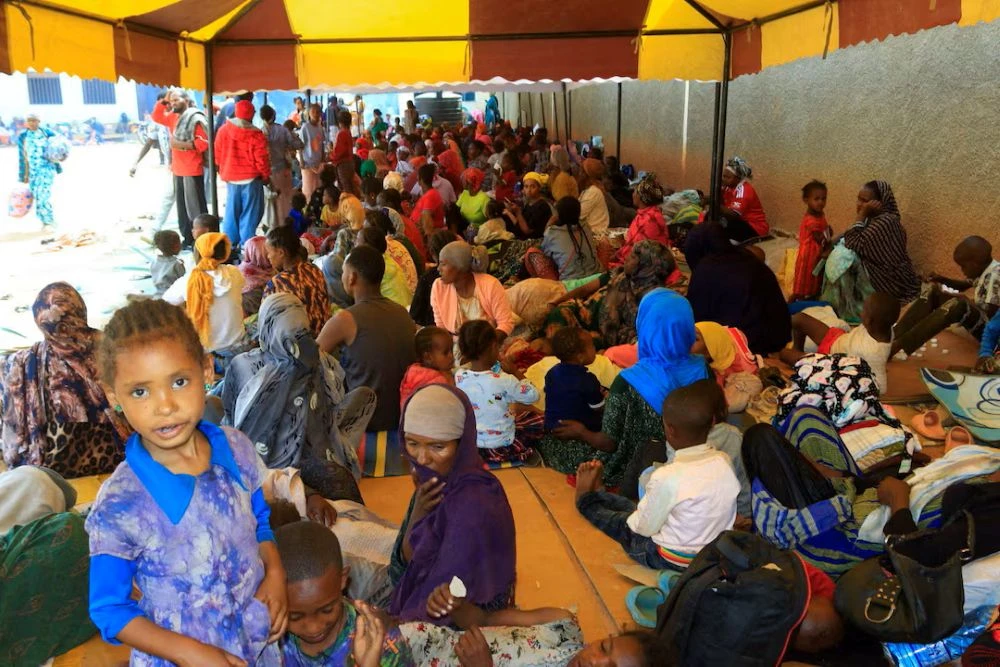
A vehicle loaded with drums of fuel exploded outside the Ministry of Education, where students accompanied by their parents registered for scholarships offered by the Turkish government.
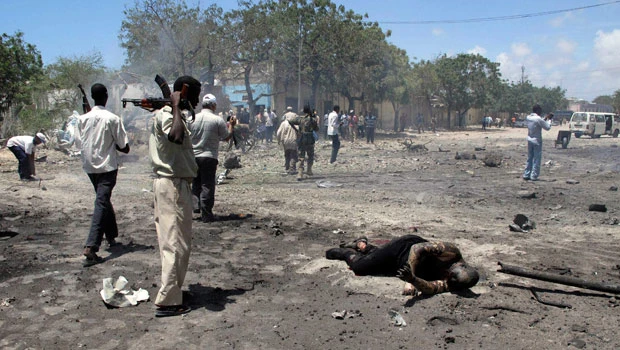
The thunderous blast covered the city in dust more than a half-mile away, leaving blackened corpses sprawled on the debris-strewn street amid burning vehicles. One woman used a blue plastic bucket to pour water on a smoldering body.
Even in a city mired in war and anarchy for two decades, Tuesday’s attack by the Al-Shabab group horrified rescue workers.
Ali Abdullahi, a nurse at the city’s Medina Hospital, said countless victims were being brought in with amputated limbs and burns.
“It is the most awful tragedy I have ever seen,” he said.
“Imagine dozens are being brought here minute by minute. Most of the wounded people are unconscious and others have their faces blackened by smoke and heat.”
Duniya Salad sobbed over her brother’s burnt body after he died while undergoing treatment at the hospital.
“They killed him before he started university! Why was he killed? Damn to Al-Shabab,” she said.
Al-Shabab, which was formed about five years ago, immediately claimed responsibility for the attack on a website it uses.
“Our Mujahideen fighters have entered a place where ministers and AMISOM foreigners stay,” Al-Shabab said in a brief post on a website, referring to the Ugandan and Burundian forces who make up the African Union peacekeeping mission.
The attack took place on one of the busiest streets in the capital, and it was not clear whether the Ministry of Education was the intended target.
Two years ago, Al-Shabab was blamed for a devastating attack on a graduation ceremony that killed 24 people, including three government ministers, medical students and doctors.
UN Secretary-General Ban Ki-moon said he is “appalled” by the “incomprehensible” attack, which came as local leaders are trying “to chart a peaceful political future for Somalia.”
Witnesses say the insurgents even killed men who tried to flee famine areas with their families, saying it was better for them to die than accept help from the West.
Al-Shabab withdrew most of its gunmen in August amid an offensive by African Union forces.
The UN Special Representative for Somalia, Augustine Mahiga, had earlier warned that the Al-Shabab would resort to guerrilla-style attacks following their withdrawal.
“Although the extremists have left the capital, it is very difficult to prevent these types of terrorist attacks which we have consistently warned are likely to be on the increase,” Mahiga said.
Al-Shabab carried out a double suicide bombing in Uganda in July 2010 that killed 76 people watching the World Cup final on TV. Americans of Somali heritage also have joined the group.
Somali President Sharif Sheikh Ahmed condemned the attack which he said claimed “more than 70 people and (left) 150 injured; most of them were young students.”
“I am extremely shocked and saddened by this cruel and inhumane act of violence against the most vulnerable in our society,” he said in a statement.
The US also condemned the Shabab’s “complete disregard for human life,” State Department spokeswoman Victoria Nuland said.
The International Committee for the Red Cross said around 90 people had been hospitalized at Mogadishu’s Medina hospital.
Most of the casualties were reported to be civilians, with local residents saying the bomb went off as students were queueing for scholarships offered by Turkey.
“The scene looks like something from the Second World War. This was total devastation,” said Abdullahi Aptidon, a resident at K4.
“It was a powerful explosion and at first I thought it was a land mine, but the magnitude of the explosion made me imagine something different. This is the worst tragedy since civil war began in 1991.”
“One of our Mujahidin made the sacrifice to kill TFG officials, the African Union troops and other informers who were in the compound,” he said.
The UN Security Council recently urged the AU to increase its 9,000 troops propping up the Somali government.