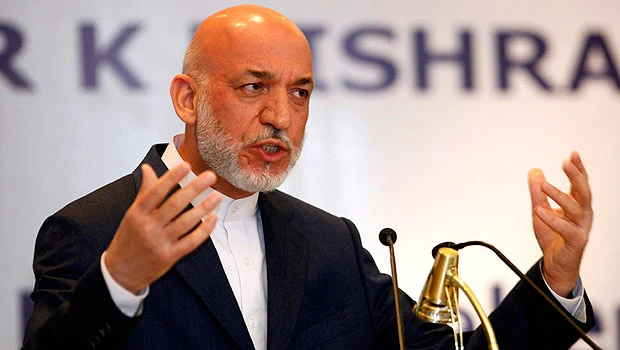
- KABUL: Afghan President Hamid Karzai, in an interview broadcast on the 10th anniversary of the beginning of the US military campaign, said his government and its foreign backers had failed to provide ordinary Afghans with security.
Karzai also said he had not ruled out talks with the Taleban insurgents believed to be behind last month's assassination of his top peace envoy, former President Burhanuddin Rabbani, but would only negotiate if the Taliban named a representative.
“We've done terribly badly in providing security to the Afghan people, and this is the greatest shortcoming of our government, and of our international partners,” Karzai said in an interview with the BBC, broadcast on Friday.
Civilian casualties in the first half of the year were the highest since the 2001 ouster of the Taleban, and “security incidents” in the first eight months of the year were 40 percent higher than in 2010, according to UN data.
Karzai, who has ruled Afghanistan since 2002, said he believed the country could still see an improvement in security as foreign troops head home. All foreign combat troops are due to be out of Afghanistan by the end of 2014.
“We don’t know, it might get better, if we concentrate on the right items, as far as security is concerned,” he said, adding that the removal of insurgent sanctuaries in Pakistan was critical to beating the Taliban.
Karzai has been outspoken about apparent Pakistani links to the assassination of Rabbani, whose killer pretended to be a Taleban peace envoy, and told the BBC he believed the militant group was entirely controlled by Pakistan.
“Definitely, the Taleban will not be able to move a finger without Pakistani support,” he said, without specifying if he meant the army, the civilian government, the feared ISI intelligence agency, or another part of the state.
But he said he would return to talks, if he could meet people who clearly identified themselves as Taliban delegates.
“We have not said that we will not talk to them. We have said we don’t know who to talk to, we don't have an address. The moment we get an address for the Taleban, (is) the moment we will talk to them.”
Apart from Rabbani’s killer, there has been at least one other man who falsely claimed to be a key Taleban representative and last year met senior foreign and Afghan officials before being exposed.
Analysts say Pakistan sees Afghan militants as strategic assets that serve as a counterweight to the growing influence of old rival India in Afghanistan.
Pakistan supported the Taleban in Afghanistan in the 1990s but says it stopped doing so when it joined the US-led campaign against Islamist militancy launched after the Sept. 11, 2001, attacks on the United States.