
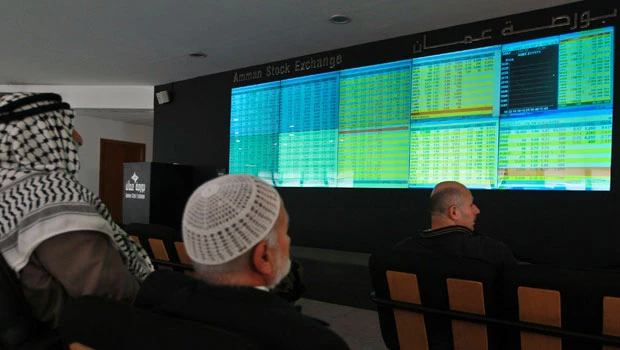
- CAIRO/DUBAI: Bargain hunters helped Egypt's bourse bounce back on Wednesday after a 10-day losing streak caused by unrest which had dragged it to 32-month lows, while UAE markets slipped to new multi-year lows on global concerns and lack of investor interest.
Traders said investors saw bargains after heavy losses triggered by violent street clashes days before a parliamentary election.
"It was expected that the market rebounds, as prices had reached very attractive levels," Tamer Mohamed of Cairo Capital Securities said.
The index closed 1.1 percent higher to 3,717 points, as developer Talaat Mostafa gained 4.7 percent after winning a court ruling linked to a $3 billion project.
Orascom Construction advanced 1.9 percent, while Commercial International Bank gains 0.8 percent.
"As long as the Tahrir Square problem (clashes) still exists, though, the rebound will be short-lived," Mohamed said.
In Saudi Arabia, the Tadawul All-Share Index (TASI) slipped 0.3 percent to a seven-week low at 6,086.10, with petrochemicals dragging on worries of weakening global demand.
"There is a fear sentiment among investors these days, a concern about what's happening in Europe and US," said Mohammad Omran, from the think tanks Saudi Economic Association.
Saudi Basic Industries Corp. (SABIC) and Saudi Arabian Fertilizers shed 0.3 percent each, and National Industrialization dipped 0.5 percent.
World stocks hit six-week lows on Wednesday and oil prices fell after China's November factory activity shrank at its sharpest pace in 32 months, reviving fears of an abrupt slowdown for the world's second largest economy.
In Europe, the FTSE 100 index of leading British shares was down 1 percent at 5,155 while Germany's DAX fell 0.5 percent to 5,505. The CAC-40 in France was 0.9 percent lower at 2,845.
West Texas Intermediate crude, the benchmark used to price oil in much of the U.S., fell $1.38 to $96.63 a barrel in early afternoon trading in New York. Brent crude, which is used to price oil produced in many foreign countries, fell $2.05 to $106.60 a barrel in London.
In Dubai, the index slipped 0.3 percent to 1,347 points, a new seven-year closing low.
"There is a complete lack of interest in the market right now, but the situation is tricky because from a technical point of view, we are reaching critical levels," said Sebastien Henin, portfolio manager at The National Investor.
He said the market was approaching the support level of 1,339, a yearly low hit during trading on March 3.
"I hope that we will be able to hold this support because if this is not the case, we could have a dive in the market."
Emaar Properties fell 0.8 percent and Shuaa Capital dropped 8.6 percent to a 2003-low, after posting a loss of $43 million last week.
Annual trading is likely to be the lowest since at least 2004. Turnover this year is about 30 billion dirhams ($8.2 billion), less than a tenth of the full-year 2008 total.
"Volatility is natural with what's happening in the world but the problem in the UAE in particular is the lack of volumes, which shows a lack of interest," said Mohammed Yasin, CAPM Investment chief investment officer.
Abu Dhabi's index fell 0.4 percent to a new 32-month low at 2,430 points.
In Qatar, profit-taking from Tuesday's gains in banks dragged the index down 0.4 percent.
Liquidity and year-to-date performance in Qatar remains the strongest among its regional peers, down 1.2 percent.
"The long-term story is still there from both the political and economic side. Qatar is and will continue to be in the near future an overweight in portfolios," Henin added.