
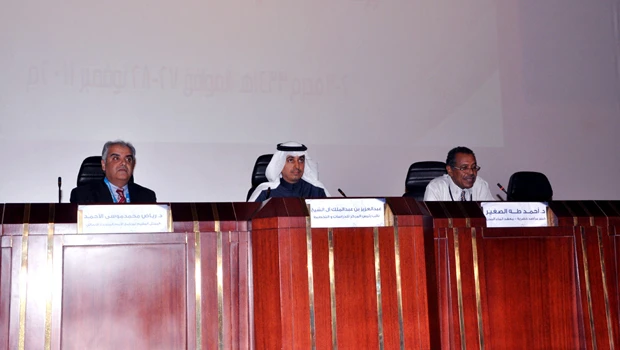
- RIYADH: Abdulaziz Al-Sheikh, vice president for studies and planning at the High Commission for the Development of Arriyadh (HCDA), delivered the keynote address on the last day of the Arriyadh Urban Observatory (AUO) workshop here on Monday.
He said that the AUO played an important role in meeting the need for a facility that coordinates among the different sources of information to collect data, which it reprocesses to come up with results.
Al-Sheikh delivered the address on behalf of Ibrahim bin Muhammed Al-Sultan, HCDA member and president of the HCDA Project and Planning Center.
Fifty-eight local and international organizations participated in the annual two-day workshop, which reviewed the experiences, targets and concepts of urban observatories.
Al-Sheikh said that the Saudi capital city was undergoing a massive development, which made it difficult for the HCDA to take decisions without referring to accurate and integral indicators from an observatory.
He added that with the establishment of the AUO, the commission aimed to improve its programs for urban indicators and modern database on most of the city's sectors and review the best regional and international experiences in building observatories.
According to Al-Sheikh, the commission is keen to realize the integration between the AUO and the commission's strategic planning program.Al-Sheikh also said that the success of the observatory depended on the active participation of the public and private sectors.
Ibrahim Jodat Al-Ziq, speaking on behalf of the United Nations Development Program, also delivered an address, saying that the Arriyadh Urban Observatory was considered a strong tributary for national planning development that was based on facts and guides. He said that it was one of the projects enjoying the support of the UN Development Program.