
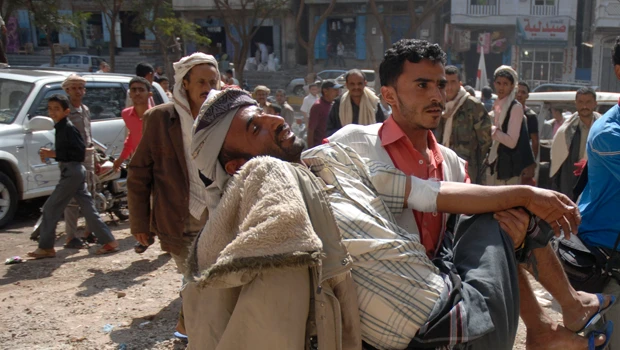
- SANAA: Yemeni government forces and opposition fighters began withdrawing from parts of the southern city of Taiz on Monday after four days of shelling and clashes that killed at least 20 people, witnesses and activists said.
The pullout follows the establishment, under a deal designed to end months of protests against President Ali Abdullah Saleh, of a military committee intended to curb fighting between forces loyal to Saleh and his foes.
"Since the morning, we have seen tanks and armored vehicles being pulled away from positions in the eastern part of Taiz," said Tawfiq Al-Shaabi, an activist in a protest encampment in central Taiz. "We also noticed that (opposition) fighters have gone from the streets," he added.
"The tanks have withdrawn from the area near the traffic department, but plainclothes snipers are taking their place. The situation is still unstable," said protest leader Bushra Al-Muqtari.
The developments on the ground were followed by the killing of a protester demanding Saleh face trial elsewhere in the city on Monday. At least one other person was wounded, witnesses and activists said.
The woman's death on Monday raised to 32 the death toll since Thursday in shootings and bombings by government forces in Taiz, south of Sanaa, in violence threatening to derail the fragile power-transfer deal. Activist Nouh Al-Wafi said more than 200,000 protesters took to the streets of Taiz.
Mahmoud Taha, another activist, said several ambassadors were expected in Taiz to gauge the security situation there in response to an appeal from the opposition.
Saleh would have immunity from prosecution under a Gulf-brokered power transfer deal he signed last month.
Prime Minister-designate Mohammed Basindwa, an opposition leader who is to form a government shared with members of Saleh's party, had said his side would rethink its commitments under the transition deal if the fighting in Taiz did not stop.
Late on Sunday, Vice President Abdrabuh Mansur Hadi formed a military commission under the Gulf Cooperation Council agreement to oversee the restructuring of the security forces, many of which are controlled by Saleh's family members.
The official SABA news agency said the 14-member commission would also oversee the withdrawal of gunmen from the streets in a bid to restore order in the country, which has been rocked by 10 months of anti-Saleh protests.
State media said Saturday that a cease-fire was reached after Hadi called for an end to the fighting between pro-Saleh troops and armed tribesmen who have thrown their weight behind the mass protest movement.