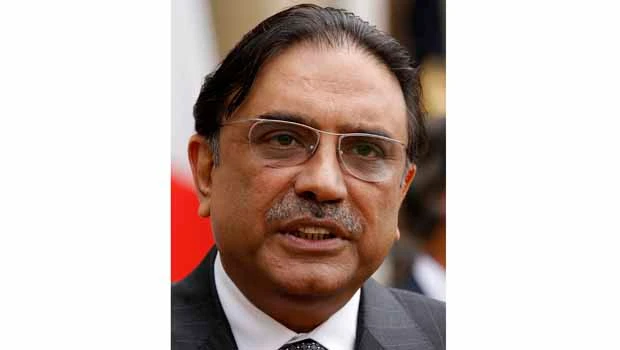
- ISLAMABAD: Pakistani President Asif Ali Zardari is in Dubai for treatment for a heart condition, the government said on Wednesday, with one source saying he had suffered a minor heart attack and fueling speculation that the unpopular leader may resign.
The statement from the prime minister’s office said Zardari went to a Dubai hospital at the insistence of his children, who live there. It contradicted earlier reports from Zardari’s own office that the tests were scheduled and routine.
“The president went to Dubai following symptoms related to his pre-existing heart condition,” Prime Minister Yousuf Raza Gilani’s media office said.
“The president will remain under observation and return to resume his normal functions as advised by the doctors.”
A presidential spokesman later quoted Zardari’s doctor as saying his condition was stable.
Financial markets were unaffected by the reports.
A Pakistani source in Dubai familiar with the 56-year-old president’s condition told Reuters that he had suffered a minor heart attack.
“Two days ago, he had chest pain” and decided to go to Dubai, the source said.
Adviser to the prime minister on human rights, Mustafa Khokhar, also said, "He had a minor heart attack on Tuesday. He flew to Dubai where he had an angioplasty. He's in good health now." "There's no question of any resignation," he added. Six years ago also, Zardari had a minor heart attack, the source said.
“Since then, he has been on medication.”
A Dubai-based member of Zardari’s Pakistan People’s Party (PPP), Mian Muneer Hans, said the president landed in Dubai around 7:30 p.m. on Tuesday.
“He walked to his car in the airport and was not on any ambulance,” said Hans, adding that he was accompanied by his doctor and Petroleum Minister Asim Hussain. Zardari was taken straight to the American Hospital in Dubai, said Hans.
“He’s taking rest in the hospital now. He may be there for two to three days,” he added.
The hospital’s chief executive officer Thomas Murray, contacted by Reuters, declined to comment on the reports. The rumors about his health and possible resignation swirled on Twitter and other social media.
“Some elements blew up this to create unrest in the country,” said Fauzia Wahab, a senior member of the PPP. “His visit to Dubai and having a medical check up is perfectly normal.”
Pakistan’s civilian government has been under extreme pressure in recent weeks following the resignation of its ambassador to Washington over an alleged memo to the Pentagon asking for help in forestalling a feared coup attempt in May.
Zardari was due to address Parliament this week after the Supreme Court admitted an opposition leader’s petition demanding a judicial inquiry into the memo issue, including any role played by Zardari. That address has now been postponed.
If he were to leave office, he would become vulnerable to long-standing corruption charges in Pakistan by losing his legal immunity as a head of state.
Zardari was elected in 2008 following the assassination of his wife, former Prime Minister Benazir Bhutto. She had returned from self-imposed exile in a power-sharing deal between her PPP and then President Pervez Musharraf.
Dogged by allegations of corruption and incompetence, he is not popular. According to a May 2011 survey carried out by the Pew Research Center after Al-Qaeda leader Osama Bin Laden’s death, only 11 percent of Pakistanis viewed Zardari favorably.