- BAGHDAD: Syria should sign an Arab League-proposed peace plan as soon as possible if it wants to avert economic penalties from Arab states over its eight-month crackdown on protesters, the head of the Arab League said on Thursday.
Arab League Secretary General Nabil Elaraby said he held talks with senior officials in Iraq, which borders Syria, to “explore whether the Iraqi government is willing to exert its influence with Syria” to agree to the Arab plan.
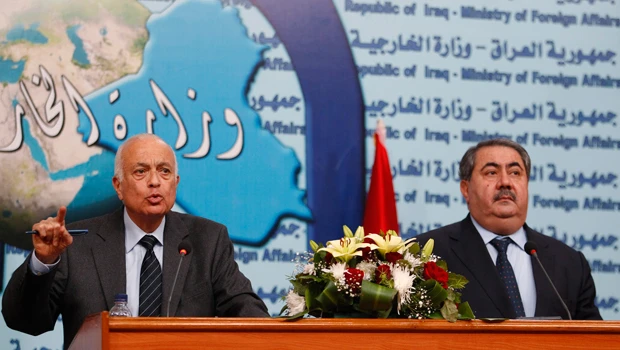
“What we expect is as soon as possible Syria will accept to sign the protocol... Now it is up to Syria, the ball is in the Syrian court,” Elaraby said at a joint news conference with Iraqi Foreign Minister Hoshiyar Zebari in Baghdad.
“It is up to them. (If) they want to stop the economic sanctions, they sign.”
Already hit by economic sanctions imposed by the United States and Europe, Syria now faces further sanctions from neighboring Arab nations in response to its violent crackdown on protests against President Bashar Al-Assad.
Syria’s neighbors Turkey and Jordan are calling on Assad to step down, with Ankara imposing 30 percent duty on imports from Syria in retaliation for a similar tax imposed on Turkish goods.
Iraq, however, has resisted sanctions against Damascus. Officials say they are worried unrest in Syria could spill over the border and upset Iraq’s delicate sectarian balance.
The Arab League has repeatedly extended deadlines for Syria to agree to a plan that would see Arab monitors oversee its withdrawal of troops from towns. The latest expired on Sunday.
Syria says the Arab proposal to admit observers infringes on its sovereignty, and has asked for clarification.
Elaraby said no new deadline has been set and the Arab League’s sanctions have taken effect on Nov. 27. He also said the League is likely to meet representatives of the Syrian opposition by next week.
Speaking alongside Elaraby, Zebari said Iraq was in talks with both the Syrian government and the opposition to try to end the bloodshed.
“We have good contact with the Syrian government. We can play a responsible role in supporting the Arab initiative,” Zebari said.
On reaching out to the Syrian opposition, he said: “The call is in its initial stage really. There are many opposition groups but there are contacts with some of them that will materialize soon.”
On Saturday, an adviser to Iraqi Prime Minister Nuri Al-Maliki told Reuters that Iraq was ready to mediate between the Syrian government and opponents of Assad to help end months of violence in the neighboring country.
Iraq’s Shiite leaders are concerned that turmoil in Syria could bring a hard-line Sunni leader to power should protests lead to the downfall of Assad, who is facing increasing international condemnation over a crackdown on protesters.