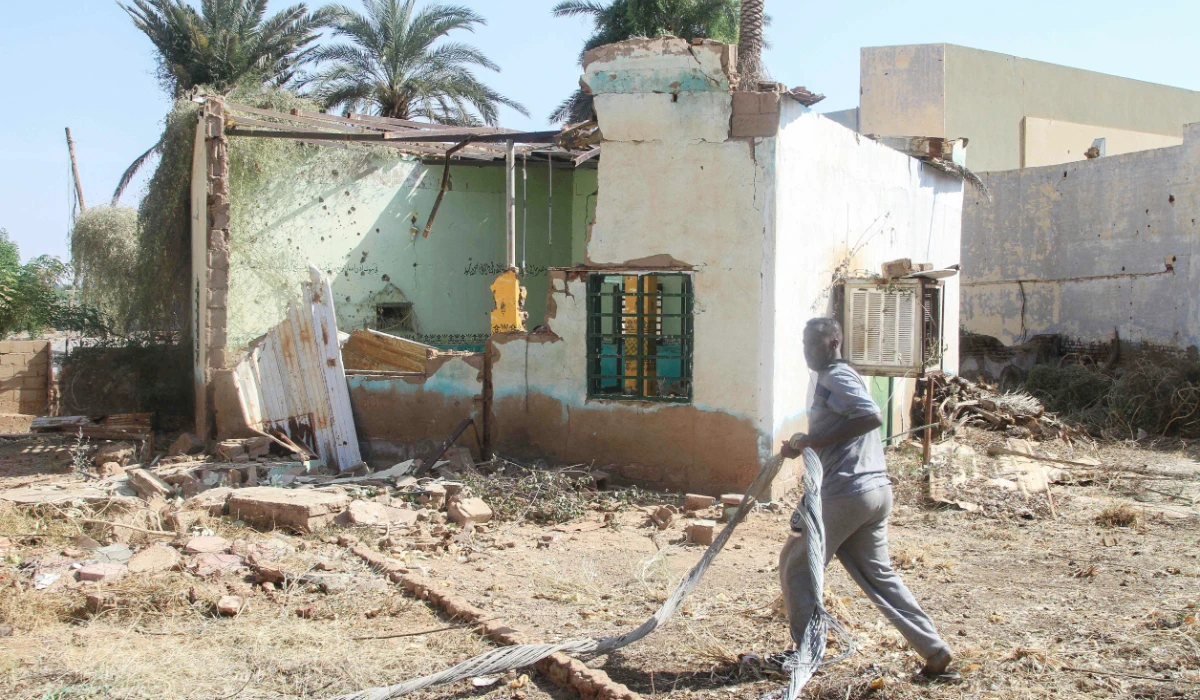
- JERUSALEM: A mosque in central Jerusalem was torched early Wednesday, provoking calls in Israel for a more effective government crackdown on Jewish extremists suspected in a string of increasingly brazen acts of vandalism.
The Israeli government has vowed to root out and punish the assailants, who in recent months have expanded their actions from the West Bank into Israel proper, and now include Israeli military bases as well as Muslim targets.
But the increasing frequency of the attacks and the sparse number of arrests have also generated allegations that the Israeli government isn’t acting forcefully enough against extremists after two years of violence.
An attack on a Muslim site in Jerusalem — the contested holy city at the heart of the Israeli-Palestinian conflict — raises the stakes further.
The words “price tag” were spray-painted at the mosque — a reference to Jewish extremists’ practice of exacting retribution for government action against settlements. Anti-Muslim graffiti such as “Muhammad is dead” and “A good Arab is a dead Arab” were also scrawled at the scene.
Other acts of vandalism were reported in two Palestinian cities in the West Bank, where the military reported that cars were set afire and hate graffiti was scrawled.
Israeli politicians have taken tough stances against Jewish radicalism, particularly after protesters broke into an Israeli military base in the West Bank on Tuesday, damaging vehicles, setting fires and slightly injuring a senior commander.
Prime Minister Benjamin Netanyahu vowed to “take care of these attackers with a firm hand” and Defense Minister Ehud Barak decried the “homegrown terror,” while acknowledging that Israeli military intelligence doesn’t gather intelligence about Jewish groups in the West Bank.
Lawmaker Shaul Mofaz, who sees himself as a rival to Netanyahu in the next elections, told Army Radio on Wednesday that the government was not doing enough to stop what he called “groups of Jewish guerrillas.”
“These hooligans are terrorists for all intents and purposes,” Mofaz, a former defense minister and military chief, told Army Radio, directing his anger at the attack on the military base.
“The Israeli government has to exact a price tag, and it has to be painful, expensive and unequivocal.”
Settler leader Dani Dayan condemned the attacks but bristled at politicians’ use of the word “terror” to describe the violence.
“It’s a grave phenomenon that has to be battled, but I don’t know if it’s terror,” he told Army Radio.
In an unrelated development in Jerusalem, a footbridge to a disputed holy site was reopened Wednesday, police reported, easing a political face-off that threatened to erupt into unrest.
The walkway’s closure earlier this week was to have been a prelude to its demolition. Jerusalem municipal authorities say it is a fire hazard and structurally unsound.
But any Israeli activity around the contested Old City site known to Muslims as the Noble Sanctuary and to Jews as the Temple Mount provokes friction with Jordan, the Palestinians and elsewhere in the Arab world.
The municipality said in a statement Tuesday that the government had called off the demolition plans and will be shoring up the bridge instead.