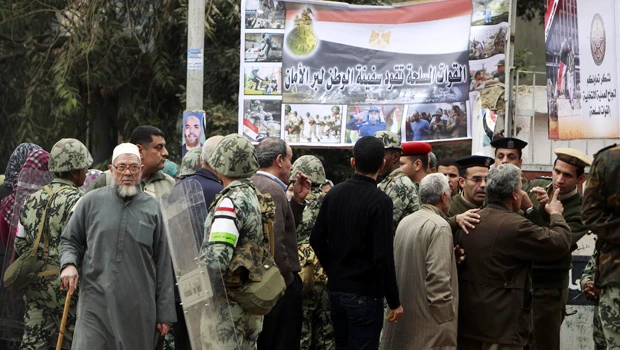
- CAIRO: Islamists and liberals made accusations of abuses during the second round of Egypt's first post-Hosni Mubarak parliamentary elections as voters cast ballots Thursday in mostly rural parts of the country.
Most of the reports accused election officials at a number of polling stations of filling out ballot forms for elderly or confused voters. If confirmed as a pattern, the reports could chip away at the credibility of what has so far been modern Egypt's most free and fair vote.
In response, judges stationed at polling centers said the election law permits them to provide help to voters who need it. And the head of the election commission called accusations of irregularities "rumors and lies."
During Mubarak's nearly 30 years in power, elections were systemically manipulated and voters were on many occasions turned away from polls while supporters of the ousted president's now-dissolved National Democratic party rigged the vote to ensure the NDP dominated every Parliament.
Two alliances led by Islamists won close to 70 percent of seats in the first round on Nov. 28-29, according to an AP tally compiled from official results. The secular and liberal forces that largely drove Egypt's uprising against Mubarak were trounced, failing to turn their achievement into a victory at the polls.
The second round of voting, which took place Wednesday and Thursday in nine provinces, and a third round to be held in early January are not expected to dramatically alter the result and could even strengthen the Islamists' hand. Rural areas in Egypt are traditionally more conservative, and some are Islamist strongholds.
The elections will lead to the formation of a parliament that in theory will be tasked with selecting a 100-member assembly to draft Egypt's new constitution.
The Muslim Brotherhood's political arm, which is leading the polls, and an alliance of liberal youth parties have filed complaints, saying officials at several stations were "dictating to voters whom to vote for."
The Islamist group issued a report Thursday accusing judges in the province of Beheira, 180 km north of Cairo, of guiding voters to select candidates from the Salafi party called Al-Nour, the Brotherhood's key Islamist rival, which is in second place in results so far.
In another polling center, two judges, a school administrator and a village mayor filled in ballots for candidates who were members of Mubarak's dissolved National Democratic party and are now running as independents or members of new parties.