
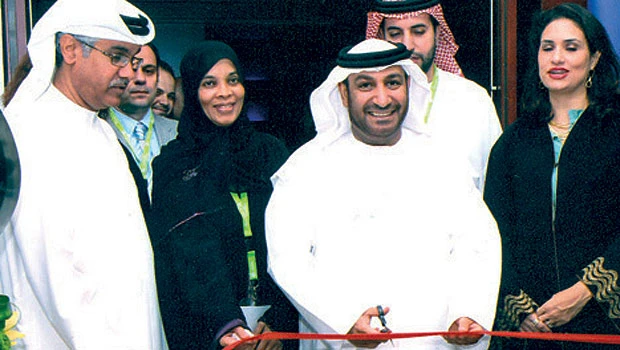
- The Child Early Intervention Medical Center in Dubai organized a three-day “Autism Around The World Conference,” from Dec.
- 8 to 10, to educate and instruct parents and teachers on how to deal with autistic children.
Dr. Ola Shaheen, child psychiatrist at Cairo University, gave a keynote lecture to help parents learn how to detect and diagnose the condition in their child.
“The child psychiatrist’s job is to diagnose the child’s state of mind and do the needed procedures to nurse the child back to health, but the biggest part is in hands of the parents, and that is what this conference is all about,” she said.
“We want mothers to know that communication starts at home. She has to be patient and educated enough to know how to deal with an autistic child. We are not saying it’s easy; we are saying that it’s worth the fight,” she added.
Mothers should always speak to their pediatrician if they think their baby is not behaving normally, says. Shaheen. “There are certain signs and behaviors that mothers should always look for in the newborn to know if their child shows any autistic symptoms. One of them is when breast-feeding the baby, the baby should occasionally look at his mother’s eyes,” she said. “The newborn should also be cuddly when breast-fed; if your baby was stiff and firm and it was hard for you to hold him, this might be a sign of a mental disorder or even autism.”
Autism is usually not diagnosed until the age of three, but experts believe that some children begin to show signs as early as six months of age. “Educating mothers about autism symptoms is essential, for mothers are the only people who accompany infants all the time, which makes it important for them to study every move closely,” said Dr. Chafica Charbien, child psychiatrist at The Advanced Center for Special Needs in Beirut.
“It is difficult for autistic children to express their feelings, whether they are hurt, hungry, in pain or even happy. This is why mothers should take another approach and teach the child to use different ways to do that,” added Charbien.
Administrators of schools must start providing their faculty members with special education and related courses, says Dr. Heba Shata, co-founder and managing director of the Child Learning and Enrichment Medical Center.
“This is the third time we hold this conference, and we aim to spread awareness of autism among families, teachers and the community to make it easier for people around autistic children to deal with them in the proper way,” she said. “We found that the perfect solution for these children is to merge them with society; therefore, we call parents to put their autistic children in regular schools and give them intensive sessions with a professional psychiatrist that could help them and the parents deal with the outside world,” added Shata.
The Child Learning and Enrichment Medical Center calls to the community to support this merge of “normal” children with autistic children to help with the cure. “We need to educate teachers and other students about autism and how to treat children with this condition. Autistic children need special support, space and methods to help them communicate with other children and teachers,” said Shata. “This is the second step to take, after preparing parents and brothers on how to make the house a secure and a happy place for the autistic child.”
“In this conference, we offer more than just lectures and seminars. We hold workshops, especially for parents and teachers, to help them with the early intervention and to communicate with other people. We also want parents to help their autistic children expressing their feelings through different activities and approaches,” said Shata.
According to Shata, schools also need to gear up and be prepared to accept autistic children and merge them with other pupils. “Autistic children are sensitive toward light and loud noises, so schools need to make sure that they are surrounded with the right tools that would help them feel comfortable,” she said. “Teachers need to meet with each child’s physician, parents and physiologist every once in a while to be updated on the child’s condition and to know the best way to help it.”
According to Charbien, among the early signs and symptoms of autism that parents and doctors look for is the inability to react to the mother during playtime, not smiling back to parents at any time, or not pointing or using other gestures. If the child, after 16 months of age, is still unable to say a single word or even faces a regression in development, with any loss of language or social skills, it could be autistic, she said.