- DUBAI: So are we closer than ever to a US-Israel attack on Iran? That is the question that appears to be increasingly troubling everyone in the neighborhood as the war of words and nerves between the Islamic republic and the West heats up by the day and hour.
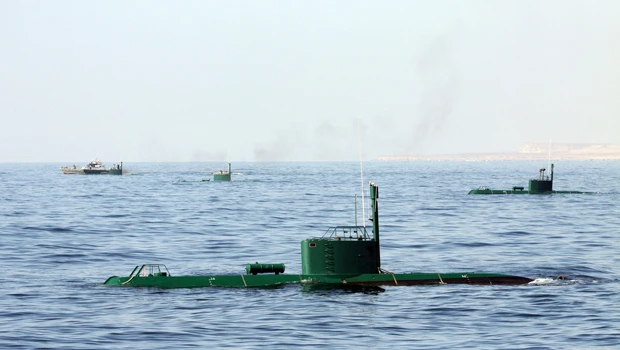
In response to the increasing talk of an imminent Iran strike in Tel Aviv and Washington, Tehran is staging 10 days of war games in the Strait of Hormuz, sparking fears that it’s planning to target the world’s most strategic oil transit channel and supply route for eight Gulf states.
Tempers are rising all around with the US and Israel threatening more “effective measures” if diplomacy and the recent sanctions failed to rein in Tehran. “If we get intelligence they are proceeding with developing a nuclear weapon, then we will take whatever steps necessary to deal with it,” US Defense Secretary Leon Panetta told CBS’s Scott Pelley this week.
And a defiant Iran has promised retaliatory measures against “US interests” in the region and the closure of the Strait of Hormuz, the jugular of global energy supplies, in the event of an attack.
However, Mustafa Alani of the Dubai-based Gulf Research Center does not believe Iran is capable of shutting the Strait of Hormuz and switching off global oil supplies. He told Arab News: “Iran tried to close the Hormuz even during the long war with Iraq but could never manage it even for one day. We understand Iran’s capabilities all too well. Shutting the Hormuz through which more than 19 million barrels of oil passes every day isn’t an easy task and I don’t think Tehran would try it.”
Asked what the Gulf Cooperation Council nations could do to avoid an Iran-West showdown and another disastrous war in the region, Alani emphasized it’s not a regional issue to be dealt with by the GCC or Arabs but a crisis of international dimensions. “This is an international issue and the international community should collectively deal with it. Iran’s nuclear ambitions aren’t just going to affect the region but the whole world,” he said, voicing the growing concerns in the region over the Islamic republic.
Asked if a Western war against Iran was inevitable, Alani said if the US or Israel decided to go ahead and strike Iran, the Arabs could do little to prevent it. “We can neither prevent nor encourage it. We tried to prevent the US war on Iraq and failed. The GCC has no military role. Besides, if they decide to move, the US and Israel wouldn’t require anyone’s help or permission,” he added.
Not everyone is convinced though that a war on Iran is imminent. N. Janardhan, a Gulf-based analyst and author of "Boom Amid Gloom: The Spirit of Possibility in the 21st Century Gulf" told Arab News: “As much as it’s alarming, it’s unlikely that the heightened US-Iran rhetoric would degenerate into conflict. All the involved parties already have enough on their plates to look for more trouble, which would surely be disastrous. If the US wanted to take military action, it would have been better off doing so while its troops were in Iraq. Its current economic and political woes suggest that it wouldn’t risk another misadventure.”
Janardhan points out that Israel is increasingly finding itself entangled into inaction due to various factors — lack of domestic consensus; Palestinian moves toward statehood; lack of US endorsement for Israeli action and uncertainty about what military action would result in, with theories ranging from partial to complete destruction of Iranian nuclear program to full-scale regional chaos, not to mention the new political scenarios and international realignments taking place as a result of the Arab Spring.
He said: “For its part, Iran is in the throes of international sanctions, which has limited its economic growth. There’s a tussle going on between the supreme leader and the president. The strength of its allies is under test because of the events in Syria and there’s a strategic shift in Turkey vis-à-vis Iran.”
Janardhan believes the region is caught in an ideological war, where the principal opponents are Iran on one side and US and Israel on the other. While this scenario, along with increased sectarian tensions and efforts to limit Iran's influence, requires tactful maneuvering, the Gulf countries have been forced to rely on action or inaction of others rather than deal with it themselves.
“Since the Gulf states and Iran are permanent neighbors, it would be in the best interest of both to bridge their gulf, no matter how daunting that may appear to be. Evolving confidence-building measures is the essence and the only guarantee for peaceful coexistence. External solutions would only prolong the agony, which is in the interest of neither party,” he emphasized.