- KABUL: The Taleban have announced that they will open an office in the Persian Gulf nation of Qatar to hold talks with the United States, an unprecedented step toward a peace process that might lead to a winding down of the 10-year war in Afghanistan.
Although US and Taleban representatives have met secretly several times over the past year in Europe and the Persian Gulf, this is the first time the Islamist insurgent group has publicly expressed willingness for substantive negotiations.
In recent months, the idea of a Taleban political office in the Qatari capital of Doha has become a central element in US efforts to draw the insurgents into such talks. The idea is to give the Taleban more legitimacy to negotiate in a location that presumably would at least partly shield them from Pakistani pressure.
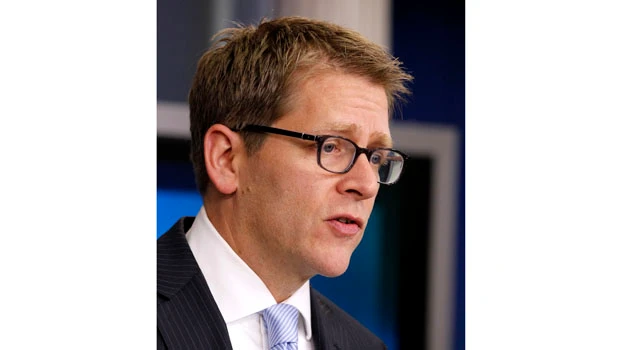
Asked about Tuesday’s Taleban announcement, White House spokesman Jay Carney welcomed “any step ... of the Afghan-led process toward reconciliation.” He noted that “peace cannot come to Afghanistan without a political settlement.”
But negotiations could falter if they do not sufficiently involve President Hamid Karzai’s government, which the Taleban have dismissed as a puppet regime. Karzai’s inner circle derailed last year’s behind-the-scenes talks, and the Afghan leader only grudgingly agreed to the idea of the Taleban’s setting up a liaison office in Qatar.
Another potential spoiler is Pakistan, which houses most of the Taleban leadership as well as the Haqqani network, which carries out major attacks in the Afghan capital of Kabul. Pakistan believes it should have a say in any talks involving neighboring Afghanistan, which it fears will develop an alliance with its archrival, India.
Pakistan has rejected US requests to mount an offensive against the Haqqani network, and relations between the two countries are at an all-time low following a cross-border incident that resulted in NATO airstrikes killing 24 Pakistani soldiers.
As the United States begins to draw down the nearly 100,000 forces it has in Afghanistan, President Barack Obama’s administration wants to use its current extensive military campaign and an acknowledged but incomplete plan for a long-term American presence in the country as leverage to draw the Taleban into talks with Karzai representatives.
The likelihood that the Taleban will remain a potent fighting force after most foreign forces leave by the end of 2014 is driving the US and NATO to seek even an incomplete bargain with the insurgents that would keep them talking with the Kabul government.
For the US, one goal of such talks would be to identify cease-fire zones that could be used as a steppingstone toward a full peace agreement that stops most fighting.
The gradual process of handing over areas of the country to Afghan security control would ideally be marshaled toward encouraging peace talks, by identifying areas where a cease-fire could be tested, a senior administration official told The Associated Press last week.
Obama is hosting a NATO summit in his hometown of Chicago in May that will focus on Afghanistan, and his administration would like some good news to announce in an election year. US officials are always careful to say that talks with the Taleban are not a reward for good behavior, but rather that they serve American interests.
“You don’t negotiate with your friends,” State Department spokeswoman Victoria Nuland said Tuesday.
“But this process will only be successful if those Taleban are prepared to renounce violence, break ties with Al-Qaeda, support the Afghan constitution in all of its elements, including human rights for all citizens, and particularly for women,” Nuland said.
It was unclear why the Taleban agreed publicly to hold talks. Previously, the official Taleban position was no talks until the US-led coalition leaves Afghanistan.
By their own admission, the Taleban hope to win the release of about five prisoners from the US lockup at Guantanamo Bay.
The militants have taken a pounding in their southern heartland, and foreign troops have escalated a campaign against them in eastern Afghanistan. Hundreds of their low- and middle-level commanders have been picked up in night raids carried out by Afghan and coalition forces.
Talks have been held in the past about a location for a Taleban office, and other locations included Saudi Arabia and Turkey. But Qatar apparently emerged as a preferred neutral Islamic country where the US also has a large military presence.
“The Taleban have chosen Qatar because it supported their government, and the Americans chose it because they have their big military and intelligence base in Qatar,” said Abdul Hadi Khaled, an ethnic Tajik who served as a deputy interior minister in Karzai’s Cabinet.
“Overall I hope that this is a start, but the rest of the work should be in this country and the Afghan government should be fully involved in the peace process,” Khaled said.
The Taleban announcement came in the form of a statement e-mailed to the Kabul press corps and posted on the militants’ website.
“Right now, having a strong presence in Afghanistan, we still want to have a political office for negotiations,” said the statement, attributed to Taleban spokesman Zabiullah Mujahid. “In this regard, we have started preliminary talks and we have reached a preliminary understanding with relevant sides, including the government of Qatar, to have a political office for negotiations with the international community.”
The statement did not say when the office would open.
One member of the Taleban negotiating team has been publicly identified as Tayyab Aga, an emissary of Pakistan-based Taleban leader Mullah Mohammed Omar. Other participants include a former Taleban ambassador to Saudi Arabia and a former Taleban deputy health minister, a senior Afghan official in the region said recently on condition that he not be identified.
The Taleban statement indicated that the liaison office will conduct negotiations with the international community but not with the Afghan government — a condition that Karzai has indicated he would reject.
“There are two essential sides in the current situation in the country that has been ongoing for the past 10 years. One is the Islamic Emirate of Afghanistan and the other side is the United States of America and their foreign allies,” Mujahid said, referring to the name of Afghanistan under Taleban rule more than a decade ago.
Karzai’s office had no immediate comment.
The prospect of formal peace talks suffered a serious setback in September when Burhanuddin Rabbani, a former Afghan president and the head of the High Peace Council, was assassinated by an attacker posing as a Taleban peace emissary.
After Rabbani’s death, Karzai said peace efforts could take place only if the Taleban established a political office that would be authorized to conduct talks.
Last month, Karzai initially balked when the plan for Qatar appeared to have been settled without him, officials said, and recalled his ambassador to Doha for consultations. Karzai backed down in late December.
The US goal is to midwife talks between the insurgents and the American-backed Afghan government led by Karzai, who frequently has felt sidelined by the US as it pursues talks with the Taleban. He bills peace talks as an Afghan-led process, which the US insists is also its goal.
The US outreach is meant to jump-start negotiations, US officials have said, but they acknowledge that their efforts can feed the perception that Karzai is not fully in charge.
Wahid Muzhda, a former Taleban foreign ministry official and an analyst on issues related to the group, said any talks would probably be “between the Americans and Taleban, but the Afghan government or High Peace Council representatives will be in the talks.”
For its part, the Taleban statement said the Islamic Emirate of Afghanistan has “requested for the exchange of prisoners from Guantanamo.”
The AP has learned the identity of some of these prisoners, including Khairullah Khairkhwa, former Taleban governor of Herat, and Mullah Mohammed Fazl, a former top Taleban military commander believed responsible for sectarian killings before the US invasion that toppled the Taleban government in Afghanistan in 2001.
At the White House, Carney said “we’re not in a position to discuss ongoing deliberations or individual detainees, but our goal of closing Guantanamo is well-established and widely understood.”
The Taleban are holding Bowe Bergdahl, a 25-year-old US Army sergeant from Hailey, Idaho. Bergdahl, the only US soldier held by the insurgents, was captured on June 30, 2009, in Afghanistan.