
- CAIRO: The Muslim Brotherhood was edging toward a dominant role in Egypt's first free Parliament in decades on Wednesday, but said it would not impose its will over a new constitution and would work with all political rivals on the blueprint.
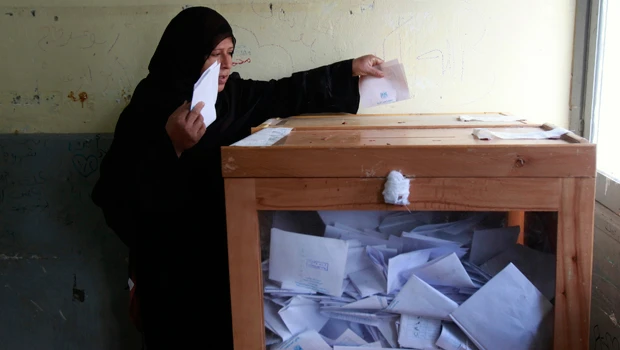
Egyptians went to the polls for a second day in the final stage of the election for the assembly's lower house, the first free legislative vote since military officers overthrew the monarchy in 1952.
The vote is part of the ruling army council's plan to hand power to civilians before July, ending its turbulent interregnum that began with the overthrow of President Hosni Mubarak in February in a popular uprising.
Welcomed then as heroes who helped nudge the autocratic leader from office, the generals now face anger over their handling of protests that have left 59 dead since mid-November and an economic crisis that is worsening the plight of the poor.
Raids last week on nongovernmental organizations monitoring the vote by police who sought evidence of foreign funding for political parties have incensed rights activists and drawn a rebuke from Egypt's long-time ally the United States.
The Brotherhood's Freedom and Justice Party (FJP) has led after two of the three rounds of voting and the rise of Islamist parties in the poll has prompted Western concern for the future of Egypt's close ties to Washington and peace with Israel.
The party has surfed the wave of hostility to its long-time foe Mubarak. For millions of poor Egyptians, its record for charitable work in neighborhoods ignored by his government suggests it would care for their needs if it won power.
In the working class suburb of Shubra Al-Khaima on the outskirts of Cairo, citizens queued to vote in pot-holed streets littered with rubbish. "Under the former regime, my ballot was already marked for me," said Sherif, a 42-year-old mechanic. "I've come here today, knowing that my vote will count."
"I've voted for the Muslim Brotherhood. They have experience in running politics and I am convinced they will start implementing serious reforms," said pensioner Fawzi Mohamed.
Founded in 1928, the Brotherhood is Egypt's best organized political force, emerging stronger than others from three decades of Mubarak rule. The new Parliament will pick a 100-member assembly to write a new constitution.
"The party's winning of the majority in the new Parliament does not mean going it alone in writing the constitution without consideration for the rights of other Egyptians, or ignoring the political forces which did not get a majority or failed in the parliamentary elections," said FJP head Mohamed Mursi.
"All political forces and intellectuals in Egypt, regardless of their political and religious allegiances, will take part in writing the constitution," said Mursi, whose comments were published on the Muslim Brotherhood's website on Tuesday.
The more hard-line Al-Nour Party has come second in the voting so far. It is a Salafi group and its success has raised the prospect of a chamber dominated by Islamists.
Some analysts believe, however, that the Muslim Brotherhood may seek to build a coalition with secular groups.
That could ease concerns at home and in the West about the rise of the Islamists in a country whose economy is propped up by tourism.