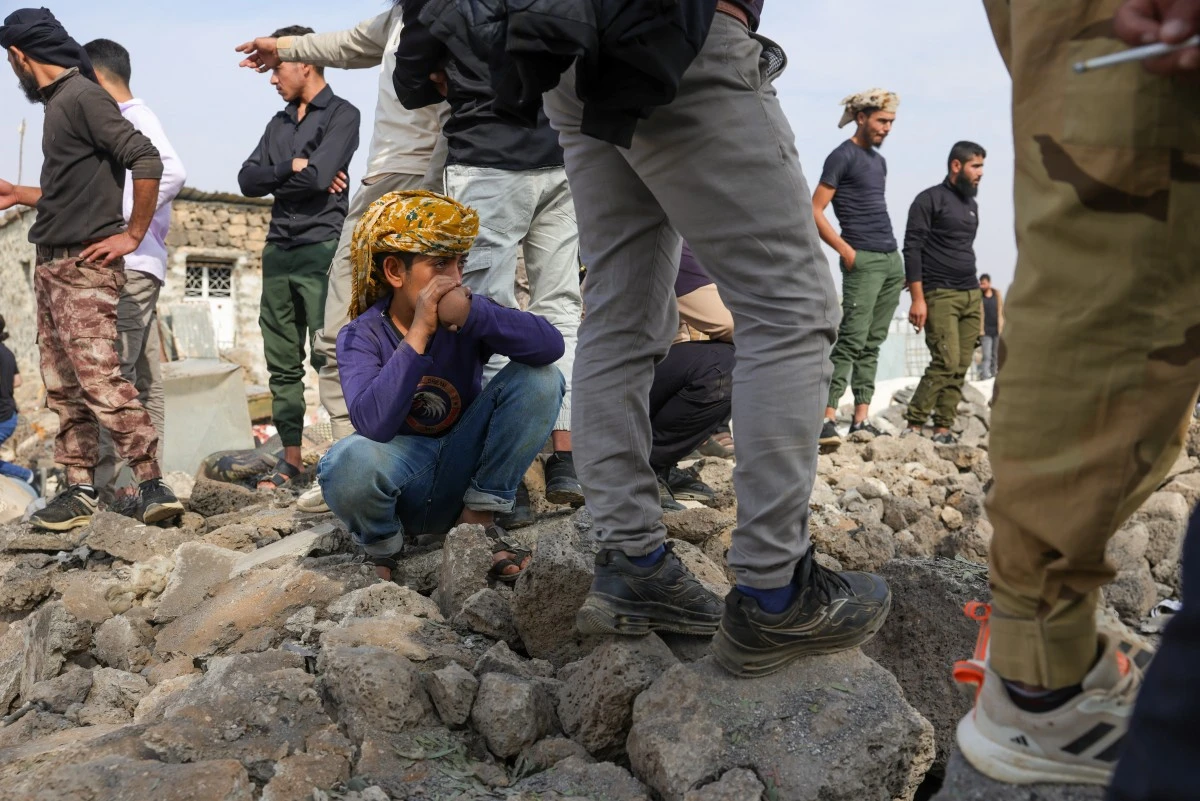
- BAGHDAD: A roadside bomb killed two people on Monday, the latest in a wave of attacks targeting the sect that have killed more than 80 people in less than a week and deepened fears of renewed sectarian warfare.
Police and health officials said the blast targeted people walking to the holy city of Karbala to commemorate Arbaeen, the end of 40 days of mourning following the anniversary of the death of Imam Hussein, a revered figure. The attack took place in the Baghdad suburb of Awairij. The officials spoke on condition of anonymity because they were not authorized to brief the media.
Iraqi leaders are locked in a political standoff that began after the government called for Vice President Tariq Al-Hashemi’s arrest on terrorism charges just as the last American troops were leaving last month.
The standoff is at the heart of an ongoing political crisis pitting the leaders of the country’s mostly ethnic- and sectarian-based party blocs against each other. Iraq’s Sunni minority dominated the government under the dictatorship of Saddam Hussein.
US and some Iraqi officials have warned of a resurgence of militant activity after the US troop withdrawal.
Also Monday, an Al-Qaeda front group in Iraq claimed responsibility for a November bombing inside Baghdad’s Green Zone, a heavily protected area in the center of the Iraqi capital.
Iraqi Prime Minister Nouri Al-Maliki described the Green Zone bombing near parliament as an assassination attempt against him.
The claim of responsibility by the militants said the suicide attack was targeting “the head of the Iranian project in Iraq,” an apparent reference to Al-Maliki and the ties of one Iraq sect to Iran. The statement said the attack failed because the car exploded prematurely.
“A hero driving a car bomb was able to penetrate all security measures in the Green Zone,” said the statement in the name of the Islamic State of Iraq. “The operation was not completed due to a technical problem and the car exploded while parked at the entrance of the parliament.”