- ZUBAIR, Iraq: A bomb killed at least 53 people near the southern port city of Basra on Saturday, an Iraqi official said.
- It was the latest in a series of attacks during religious commemorations that have killed scores of people and threaten to further increase sectarian tensions just weeks after the US withdrawal.
The attack happened on the last of the 40 days of Arbaeen, when hundreds of thousands of people from Iraq and abroad visit the Iraqi city of Karbala, as well as other sites.
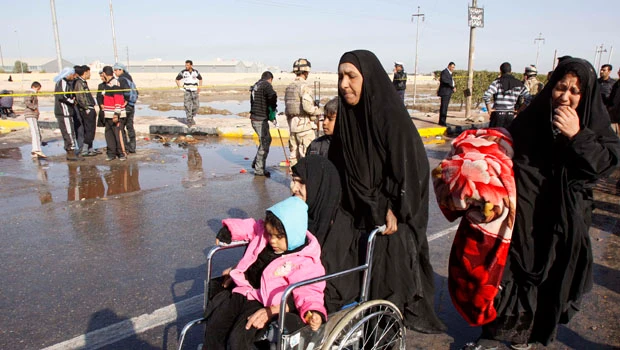
Saturday’s blast occurred near the town of Zubair as people marched toward the Imam Ali shrine on the outskirts of the town, said Ayad Al-Emarah, a spokesman for the governor of Basra province. The shrine is an enclave within an enclave. There were conflicting reports on the source of the blast.
Al-Emarah said the explosion was caused either by a suicide attacker or a roadside bomb. But an Iraqi military intelligence officer who is investigating the attack said it was a roadside bomb, noting that the road from Basra to Zubair being used by visitors had been closed to traffic.
Basra hospital received 53 killed and 137 wounded after the blast, said Dr. Riyadh Abdul Amir, the head of Basra Health Directorate. He said some of the wounded were in serious condition, and warned the death toll may rise further.
Majid Hussein, a government employee, was one of the people heading to the shrine. He said people began running away in panic when they heard a loud explosion. “I saw several dead bodies and wounded people, including children on the ground asking for help. There were also some baby strollers left at the blast site,” he said.
The attack, which bore the hallmarks of insurgents, is the latest in a series of deadly strikes in this year’s Arbaeen. More than 145 people have been killed.
The largest of the Arbaeen attacks — a wave of apparently coordinated bombings in Baghdad and outside the southern city of Nassiriyah — killed at least 78 people on Jan. 5. It was the deadliest strike in Iraq in more than a year.
So far there has been little sign of the revenge attacks by rival militias and others that brought the country to the edge of civil war in 2006.
But this wave of attacks comes at a particularly tense time.
The last US combat troops left the country on Dec. 18. Many Iraqis resented the foreign presence, but the Americans also guaranteed the status quo.
Just as the American troops were leaving, a political crisis erupted that has paralyzed Iraq’s government. It pits the country’s mostly ethnic- and religious-based political blocs against one another.
The political dispute appears far from being resolved.
On Friday, Deputy Prime Minister Saleh Al-Mutlaq called for Iraq’s leader, Prime Minister Nuri Al-Maliki, to step down or face a parliamentary vote of no-confidence. Al-Mutlaq’s Iraqiya party has been boycotting Parliament and Cabinet meetings since last month to protest what it sees as efforts by Al-Maliki to consolidate power, particularly over state security forces.
Al-Maliki’s government, meanwhile, has demanded the arrest of Vice President Tariq Al-Hashemi of Iraqiya, accusing him of running a hit squad targeting government officials. Al-Hashemi denies the allegations.