
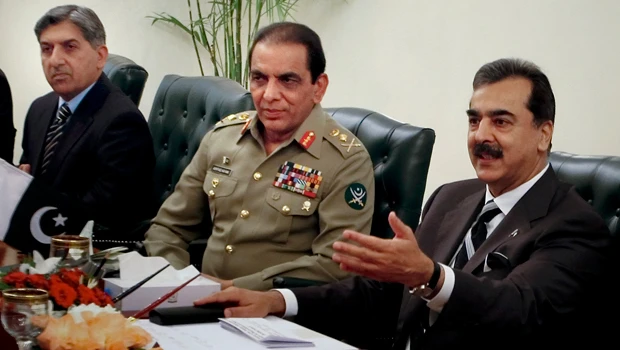
- ISLAMABAD: Pakistan’s President Asif Ali Zardari met the army chief on Saturday in a bid to mend relations between the military and the civilian government, which are at their worst in years and threaten the stability of the nuclear-armed nation.
“The current security situation was discussed,” a presidential spokesman said, without giving any details. Army chief Gen. Ashfaq Kayani was due to meet Prime Minister Yousuf Raza Gilani later in the day.
The meetings are widely seen as a bid to defuse heightened tensions between the government and the military. Pakistan’s politicians and media pundits have been abuzz with rumors of a possible coup since a controversy involving a memo erupted in October.
The disputed memo — allegedly from Zardari’s government seeking US help in reining in the generals — soured relations between the civilian leadership and the military, pushing them to their lowest point since the last military coup in 1999.
A military source told Reuters on Saturday the army chief is furious with the prime minister for statements criticizing the army and has demanded that they be clarified or withdrawn.
"The army chief complained to the president about the prime minister's statements, and said they needed to be either clarified or withdrawn," the source told Reuters.
"He said such statements were divisive and made the country more vulnerable." While another military takeover is unlikely, the open hostilities reinforce the view that Pakistan’s leaders are caught up in power struggles so often that they are incapable of running a country facing enormous social, security and economic problems.
The latest crisis also troubles Washington, which wants smooth ties between civilian and military leaders so that Pakistan can help efforts to stabilize neighboring Afghanistan, a top priority for President Barack Obama.
Gilani’s office denied a report on Friday that the prime minister this week called the British High Commissioner in Islamabad, expressing concerns that the army might be about to mount a coup, and asking for London to support the government. An official at the high commission also denied the report. On Wednesday, Gilani fired the defense secretary, who was seen as Kayani’s man in the bureaucracy.
It was a brazen provocation, and yet the army responded with a press release, whereas in the past it would have sent troops in to take control.
Many saw this as a recognition by the military that it no longer has enough political support for a coup.
No civilian government has ever served out its full five-year term in Pakistan, but Zardari’s government might just do it. The next general election is due by 2013, and legislators will elect a new president, a largely ceremonial post, after that poll.
Zardari, close aides say, wants to be remembered as the leader who worked harder than any other to promote civilian rule in Pakistan and loosen the military’s hold on power. “He is stubborn and headstrong, with a strong sense of street politics,” a PPP member told Reuters.
“And he has a desire for a legacy as the man who finally got the ballot box to prevail.”