- SANAA: Yemeni militants who seized a small town southeast of the capital Sanaa this week have said they will withdraw if several comrades are released from jail, tribal sources said on Wednesday.
Yemeni tribesmen negotiating with the militants on behalf of the government said Tareq Al-Dahab, leader of the group that took over Radda, about 170 km southeast of Sanaa, agreed to go if his brother Nabil and several others were freed.
Dahab is related to Anwar Al-Awlaki, a US citizen whom Washington accused of a leadership role in the Yemeni branch of Al-Qaeda, and assassinated in a drone strike last year. Radda’s capture underscored US fears that political upheaval in Yemen over the fate of President Ali Abdullah Saleh will give Al-Qaeda a foothold near shipping routes through the Red Sea.
Saleh formally handed over power to his deputy late last year, in line with a Gulf-brokered plan to end months of mass protests and bursts of open combat between his forces and those of a rebel general and tribal militias.
Under the deal hammered out by Yemen’s neighbors, Saleh’s General People’s Congress and opposition parties divided up Cabinet posts between them, forming a unity government to steer the country toward presidential elections in February.
Saleh’s opponents accuse him of ceding territory to militants to bolster his assertion that his rule alone keeps Al-Qaeda from growing stronger in Yemen, and ultimately aiming to retain power by sabotaging the transition deal.
A spokesman for Yemen’s acting leader, Vice President Abd-Rabbu Mansour Hadi, dismissed comments by the foreign minister, who suggested a day earlier that elections may be delayed due to deteriorating security.
“There is no scope for delaying the ... election because it will be conducted under the supervision of the international community,” said Yehia Al-Arasi.
Washington, which long backed Saleh as key to its “counter-terrorism” policy, endorses the transition plan. US Secretary of State Hillary Clinton said on Tuesday that Saleh was failing to meet his pledges under the deal and that Washington was “focused on the threat posed by Al-Qaeda in Yemen.”
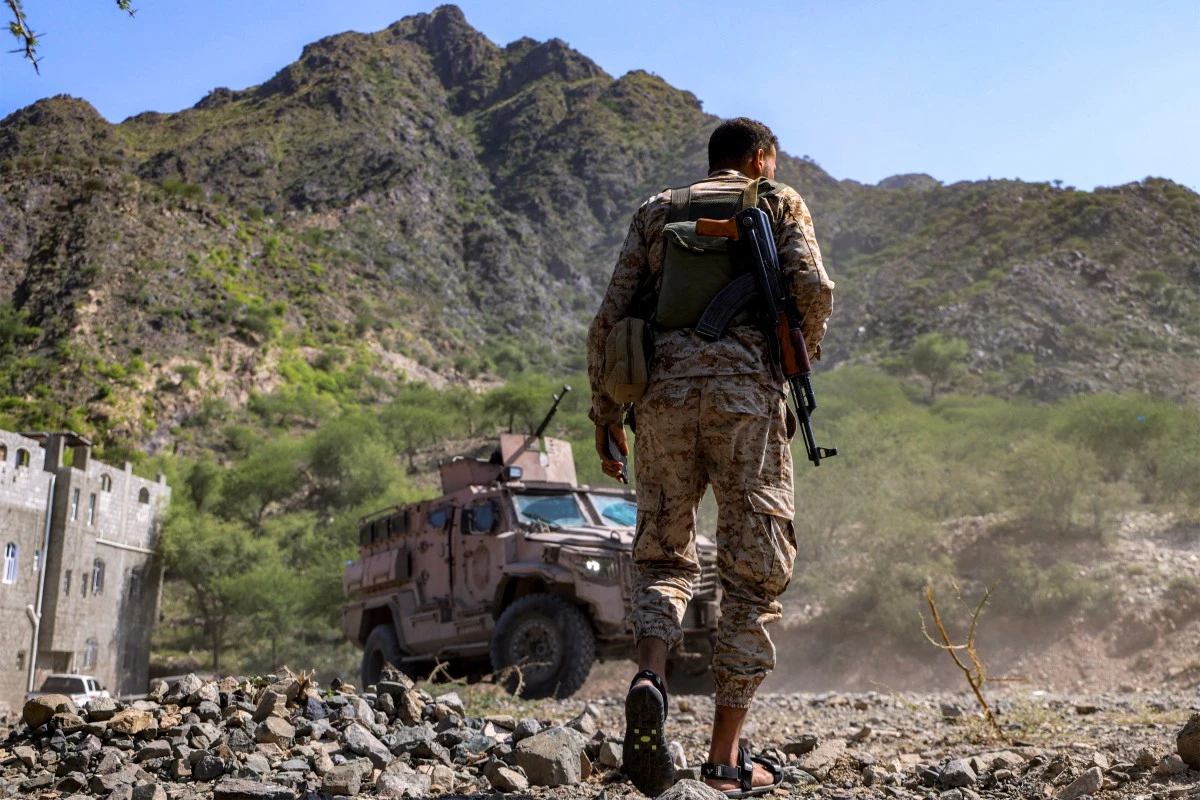
Dozens of fighters entered Radda on Sunday, expanding militants control beyond southern Abyan province, where they have taken several towns since an uprising against Saleh began early last year. The streets of Radda were empty on Wednesday, residents said.
In the militant-controlled town of Jaar in Abyan, residents said Al-Qaeda linked fighters calling themselves Ansar Al-Shariah planned to behead two for spying for the Yemeni Army.
In another outbreak of violence, two people were killed and dozens injured in fierce gunbattles late Tuesday in Saada, a rugged, impoverished governorate bordering Saudi Arabia that has been the scene of intense sectarian fighting in recent months.
Question marks remain over the intentions of Yemen’s veteran leader, who has said he will stay in the country, reversing a pledge to leave for the United States.
Yemen’s parliament has yet to vote on a law — denounced by protesters demanding Saleh’s ousting — that would give him and his associates immunity from prosecution over the killing of protesters. The measure has the cabinet’s backing.
“The legitimacy of the Parliament depends on the Gulf initiative and its operational mechanism. It must pass the law because it is written into the Gulf initiative,” Arasi said.