
- • Your life recorded <br/> • Tiny ‘leave-in-place’ USB <br/> • Power’s in the bag <br/> • From personal to business
Your life recorded
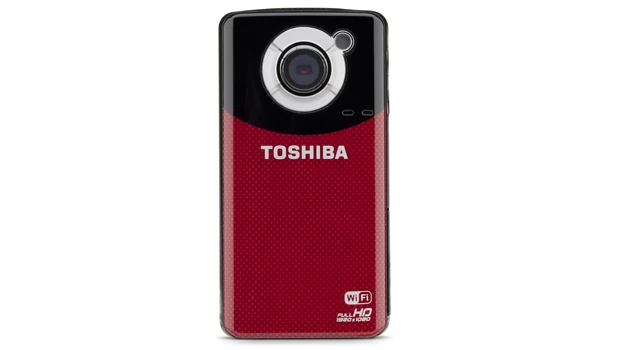
Different events are best recorded in different ways. If a camcorder isn’t expensive, then you can afford multiple recording devices with differing functionality. Toshiba had that thought in mind when creating its new CAMILEO camcorders. The CAMILEO AIR10 provides users with the ability to wirelessly upload videos and photos in 1080p Full HD directly to social networks from anywhere with a Wi-Fi connection. This candy bar style camcorder doubles as a wireless webcam and also allows for wireless broadcasts online via USTREAM.com. The CAMILEO CLIP is a ruggedized splash-resistant and shockproof mini candybar-style camcorder that comes with a built-in clip allowing users to quickly snap it on to their clothing or belt to capture every second of their life in 1080p Full HD. It weighs just two ounces and is equipped with Electronic Image Stabilization, to help keep the video smooth. Then there’s the CAMILEO Z100 3D, which enables both 2D and 3D video capture on one device. This Full HD barrel-style camcorder is equipped with a 2.8-inch glasses-free 3D LCD touchscreen that displays both 2D and 3D content. An HDMI port allows users to connect the camcorder directly to a 3D TV. Prices for the camcorders are reasonable. The CAMILEO AIR10 is $149, the CLIP is just $100 and the Z100 is $219. All become available in the first half of this year.
Tiny ‘leave-in-place’ USB
Kingston Digital has been focusing on storage devices that expand the storage capacities and functionality of smartphones, tablets and other small form factor computing devices. They recently introduced the Wi-Drive with built in Wi-Fi offering wireless memory expansion for tablets and smartphones. At the Computer Electronics Show (CES) last week they demonstrated the DataTraveler SE9 (DTSE9) — a thin USB flash drive that won’t get in the way when USB ports are clustered together. There’s also the DataTraveler Micro, one of the world’s smallest USB Flash drives. This USB drive is designed to be left in devices such as tablets, slim notebooks, netbooks or car audio systems, increasing their limited storage capacity. The DataTraveler Micro is available in 8GB and 16GB capacities.
Power’s in the bag
It seems that the more you need to do with a smartphone or tablet, the faster its battery dies. Clamping on battery packs can be really unsightly, so carry a Powerbag (www.myPowerbag.com) and charge your devices while running from one meeting to the next. Powerbag is a charging system disguised as a messenger bag, briefcase or backpack. Integrated into every Powerbag is a universal smart-charging system, which powers mobile devices that can be charged using a USB cable. Connect up to four mobile devices at a time using the included pre-routed connectors — one micro, one mini, one Apple and one USB port inside every Powerbag. Keep devices connected all the time or just plug-in when charging is required. The Powerbag smart-charging system automatically detects the connected devices in the bag and sends the right amount of power to optimally charge each one. Plug the Powerbag into any standard wall outlet with the included AC adapter to recharge the internal battery. When plugged in, Powerbag charges all connected devices first and then charges its own battery. Prices for the bags start at $140.
From personal to business
The Samsung Galaxy Note and Galaxy Tab 7.7 will be the first Samsung Approved for Enterprise (SAFE) devices made available to consumers who wish to use their own mobile devices in both their business and personal lives. SAFE is an exclusive suite of security features delivering enterprise-friendly capabilities above and beyond standard Android platform features to safeguard sensitive data and communications. SAFE devices offer features such as Mobile Device Management (MDM), On-Device Encryption including data encryption on the microSD card, Virtual Private Network (VPN) accessibility and extensive support for communication systems such as Microsoft Exchange ActiveSync. The goal with SAFE devices is to help people maximize efficiency and productivity securely in enterprise environments that have adopted “bring your own device” (BYOD) policies.