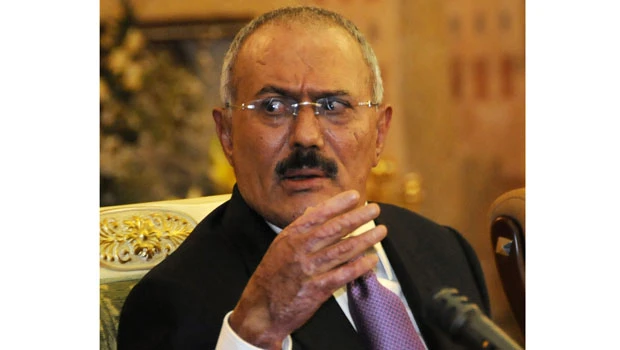
- SANAA: A Yemeni draft law granting immunity to outgoing President Ali Abdullah Saleh from prosecution over the killing of protesters was amended on Thursday to limit the protection his aides would enjoy, a minister said.
The draft law, which has been heavily criticized by rights groups, the United Nations and Yemeni protesters, will now shield the aides only in “political cases,” Legal Affairs Minister Mohammad Makhlafi told Reuters.
It had previously offered blanket immunity to associates of Saleh, who will still get full protection himself, Makhlafi said, without elaborating on what kinds of cases could be tried.
Under a power transfer plan hammered out by Yemen’s wealthier Gulf neighbors and signed by Saleh in November, the veteran leader was promised legal immunity to help ease him out of office and end months of protests against his 33-year rule.
Rights groups say hundreds of protesters were killed by security forces in the uprising, which was punctuated by bursts of street fighting between Saleh loyalists and their foes.
Yemenis angry at the draft law are still taking to the streets calling for Saleh to be put on trial and United Nations human rights chief Navi Pillay earlier this month warned the immunity offer could violate international law.
Discussion of the law in parliament has repeatedly been put off, but Makhlafi said it would now take place on Saturday.
The United States has defended the draft law as the only way to coax Saleh from power, but question marks remain over his intentions after he reversed a pledge to leave Yemen before presidential elections in February.
Washington and its Gulf neighbors are keen for the plan to work, fearing protracted political upheaval will let Al-Qaeda’s regional Yemen-based wing establish a foothold along oil shipping routes through the Red Sea.
Islamist militants earlier this week seized the town of Radda, about 170 km (105 miles) southeast of the capital Sanaa, underscoring those concerns.
Saleh’s opponents have accused him of deliberately ceding territory to Islamists to drive home his argument that his rule alone keeps Al-Qaeda, whose Yemeni wing has plotted abortive attacks abroad, from growing stronger.