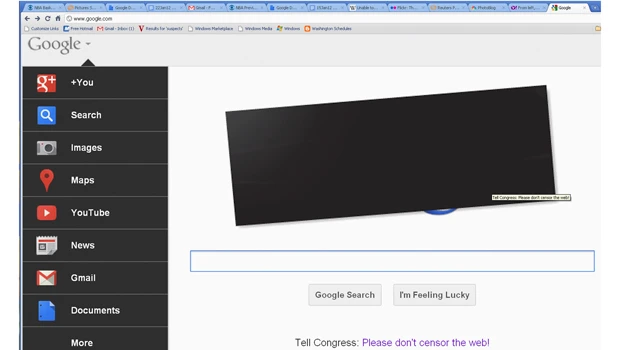
- WASHINGTON: Some members of the US Congress switched sides to oppose anti-piracy legislation as protests blanketed the Internet on Wednesday, turning Wikipedia dark and putting black slashes on Google and other sites as if they had been censored.
Content providers who favor the anti-piracy measures, such as Hollywood and the music industry, were scrambling to win back public opinion and official support.
Wikipedia, the world's free online encyclopedia, shut down for a day. Google and others used the black censorship bars to draw attention to what had until recently been an obscure and technical legislative proposal to curb access to overseas websites that traffic in stolen content or counterfeit goods.
Many of the sites participating in the blackout urged their users to contact their legislators on the issue, a plea that brought quick results.
Several sponsors of the legislation, including Senators Marco Rubio, Roy Blunt and John Boozman, said they were withdrawing their support, and blamed Senate Majority Leader Harry Reid for not heeding criticisms of the Senate version of the bill.
Meanwhile, friends of the bills stepped up their efforts.
Creative America, a studio- and union-supported group that fights piracy, launched a television advertising campaign that it said would air in the districts of key legislators. In Times Square, it turned on a digital pro-SOPA and PIPA billboard for the day — in space provided by News Corp, which owns Fox Studios.
The group also said it is sending a team of 20 organizers to big events around the country, including the upcoming Sundance Film Festival, to try to get voters to see the situation their way.
The legislation, known as PIPA in the Senate and SOPA in the House of Representatives, has been a priority for entertainment companies, publishers, pharmaceutical companies and other industry groups who say it is critical to curbing online piracy, which they believe costs them billions of dollars a year.
But Internet players argue the bills would undermine innovation and free speech rights and would compromise the functioning of the Internet.
In switching their positions, Blunt called the legislation "deeply flawed" while Rubio and Boozman cited "unintended consequences" that could stem from the proposed law. All said they still supported taking action against online piracy.
Other lawmakers, such as Sen. Kristen Gillibrand, said they supported changes to the legislation.
The blackout affected thousands of sites and served as the culmination of several efforts online to fight the legislation. In recent days, for example, many Twittter users placed black "Stop SOPA" bands on the bottom of their profile pictures.