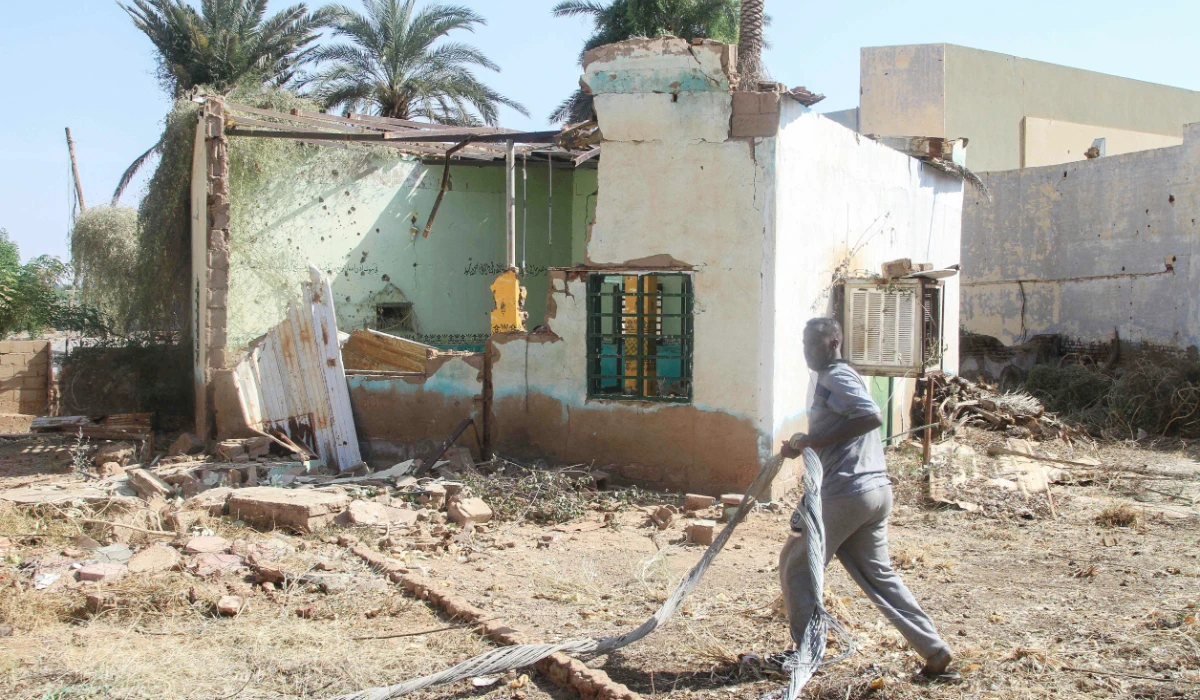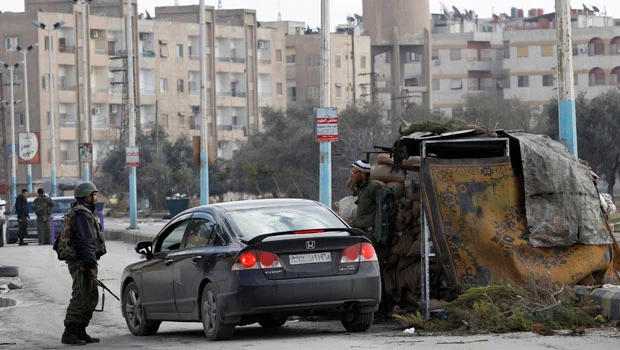
- BEIRUT: Syrian troops stormed a flashpoint suburb of Damascus on Thursday, raiding homes and searching vehicles, while tens of thousands of backers of President Bashar Assad poured into the streets of several cities in a show of support for his embattled regime.
Just days after pulling out of the suburb of Douma following intense clashes with anti-regime fighters, government troops pushed back in early Thursday from all directions, meeting no resistance, activists said.
“They are entering homes, searching cars and stopping people in the streets to check identity cards,” activist and Douma resident Mohammed Al-Saeed told The Associated Press, saying the soldiers had lists of wanted people. “There is very little movement in the streets and nobody is allowed to leave or enter Douma.”
The suburb has become a flashpoint in recent months, with large protests against Assad that security forces crushed by force.
Just 10 miles (16 kilometers) away in downtown Damascus, thousands of people waved Syrian flags and shouted support for President Bashar Assad. Similar rallies were held in Aleppo in the north, according to state-run media.
The Syrian revolt began 10 months ago with largely peaceful anti-government protests, but it has grown increasingly militarized in recent months as frustrated regime opponents and army defectors arm themselves and fight back against government forces.
The government crackdown has killed more than 5,400 people since March, according to estimates from the United Nations.
Assad’s regime claims terrorists acting out a foreign conspiracy are behind the uprising, not protesters seeking change, and that thousands of security forces have been killed.
After 10 months of violent conflict, the unrest has reached something of a stalemate with many Syrians calling for change but also fearing a descent into civil war as the country’s various sectarian and religious groups turn on each other.
International pressure on Syria to end the bloodshed so far has produced few results.
The Arab League has sent observers to the country as part of a plan to the end the crisis, but the mission has been widely criticized for failing to stop the bloodshed. Gulf states led by Saudi Arabia pulled out of the mission Tuesday, asking the UN Security Council to intervene because the Syrian government has failed to stop the bloodshed.
Decisive action from the UN appears unlikely, however, as Russia, a strong Syrian ally, has opposed moves like sanctions.
Violence, meanwhile, has continued unabated.
The British-based Syrian Observatory for Human Rights said a joint army and police force was ambushed Thursday near the town of Khirbet Ghazaleh, killing four members of the security forces and wounding five more.
The Arab League has also called for the establishment of a national unity government within two months, including regime and opposition members and led by a consensus leader.
The unity government would prepare for free parliamentary and presidential elections to be held under Arab and international supervision, according to the League plan.
Under the proposal, Assad would give his vice president full powers to cooperate with the proposed government to enable it to carry out its duties during a transitional period.
Syria has rejected the plan, saying it violates its sovereignty.