
- Astounding progress has been made on the vision to transform the Middle East into a global crossroads — a diversified economic and transportation hub, with cities such as Dubai, Abu Dhabi and Doha forming a nexus for the flying world.
Yet, the aviation industry today is facing a challenge to that progress that is going to require equal vision and initiative to overcome — meeting the growing demand for people in aviation.
As airlines in the Middle East build on their success, they are expanding their fleets.
In fact, according to the most recent Boeing Current Market Outlook (CMO), more than 2,500 airplanes are expected to be ordered by airlines in the region over the next 20 years.
The thousands of new airplanes required to support this growth will need a corresponding supply of hundreds of thousands of pilots and maintenance technicians.
Boeing recently released the 2011 Pilot and Technician Outlook, predicting a global need for 460,000 new commercial airline pilots and 650,000 maintenance technicians over the next 20 years.
The implications of this report are significant for the Middle East: 36,600 new pilots and 53,000 new skilled maintenance personnel are required to staff the region’s airlines between now and 2030.
But traditional infrastructure that once supported careers in aviation is diminishing, along with the corresponding philosophies and methodologies.
That means the current ability to attract, recruit, educate, train and retain people is not sufficient to meet demands. It is a situation that threatens to limit the amazing opportunities for travel and economic growth.
In fact, the need is increasingly urgent. Emirates recently recruited more than 500 new pilots and, like Qatar Airways and Etihad Airways, is facing a limited pipeline of personnel in the region.
Successful low-cost carriers such as flydubai, Air Arabia and Jazeera Airways are also growing at a fast pace and are facing the same challenges.
For a fast-growing region, resources are critical, and none more so than human capital.
It comes as little surprise that Etihad Airways, for instance, one of the world’s youngest, yet fastest-growing full-service airlines, was quick to leverage the untapped local expertise of female pilots.
Airlines are also looking farther afield, recruiting pilots from other airlines and other regions of the world.
In this social media era, in order to engage the employees of today and tomorrow, all of the Middle Eastern aviation powers are reaching out to the world with fan pages and accounts via Twitter, Facebook and YouTube.
But considering other regions of the world are using similar tactics, and given the shrinking pool of pilots to recruit from, we can’t expect that this tactic will succeed in the future.
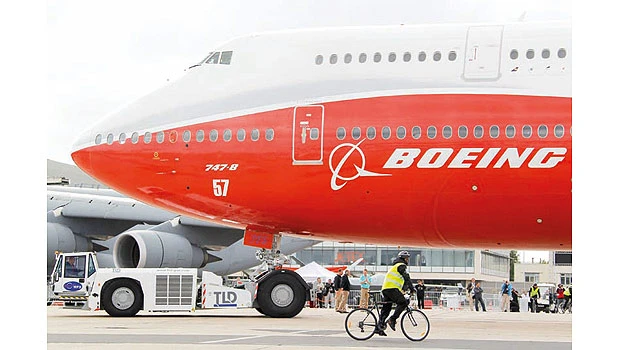
The Middle East may have fewer aging airplanes to replace compared with other regions of the world, but the demand for pilots and technicians in the region is growing just as rapidly as elsewhere due to rapid expansion and investment in new-generation airplanes such as the Boeing 777, 747-8 and 787 Dreamliner.
These new jetliners may just give the industry a chance to radically change the way it attracts, teaches and trains.
It will take a new approach, which, like the newest jetliners and the younger generation which forms much of the industry’s human resource pool, is highly digital.
It starts with online and mobile device-based training, which not only saves paper, but more importantly, appeals to today’s students.
These new “recruits” are significantly more tech-savvy.
The industry needs to acknowledge the generational and technology changes shaping the lives of today’s young people and adapt aviation training methodologies, philosophies, tools — and even the instructors — themselves to these new realities.
One new methodology is MPL (multi-crew pilot license), a program designed to train an individual with no flight experience to be qualified as a first officer on a commercial jet.
It is focused on performance and competence and is the way many pilots around the world will be trained in the future.
Boeing estimates it’s going to take more than one thousand new pilot instructors each year to do the job.
Clearly, the industry is going to have to partner with airlines, schools and other training providers to find creative ways to meet this urgent need.
Research shows that the instructor plays a critical role in learning and performance.
In the future, aptitude will take precedence over flying hours for the next wave of flight instructors.
There is also a need to formally establish and upgrade global requirements of Certified Instructors at aviation training academies and schools around the world.
Overall, it will take an industry-wide effort reaching into schools and universities to generate excitement about careers in aviation.
It’s a great time to be in the aviation industry.
Markets are growing and technology is advancing.
New-generation airplanes make the world smaller and smaller by the day.
We need to support and sustain this growth by working hard to make our industry more eye-catching for the young, the talented, the creative and the professional.
The Middle East is a world air transport hub thanks to a vision and commitment decades in the making.
We need similar vision and commitment now to deliver vital people resources to the aviation industry.
It’s the only way to transform the ambitions of the region’s airlines into reality and ensure an engaged and highly-qualified workforce for the future.
— Sherry Carbary is vice president of Boeing Flight Services, a business unit of Commercial Aviation Services, Boeing Commercial Airplanes.