
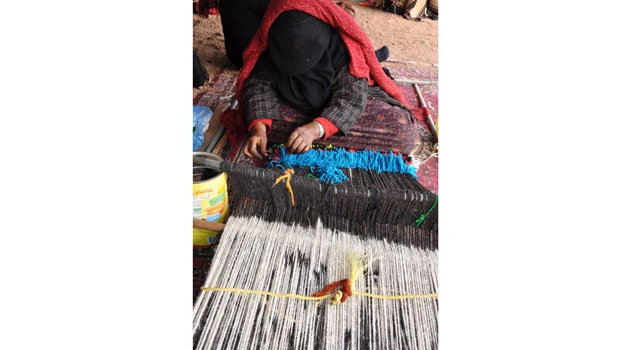
- Fihaidah Al-Shammari or Umm Rabie, an elderly Saudi woman participating in the Hail Fifth Desert Festival, turned down offers of more than SR100,000 by some visitors to buy her handworks, because she has already given them as a gift to the province’s Deputy Gov.
- Prince Abdul Aziz bin Saad, who opened the festival.
Umm Rabie has made a number of cradles, bridles and other traditional handicrafts from camel wool. "It took me about five years to complete these works," she told Arab News.
She said when the prince asked her about her works, she told him that they were a gift for him. "Since then I have been sleeping at the location of the festival to guard my works, waiting for the prince to send a representative to receive them," she said.
Umm Rabie hails from a village called Jabbah some 100 kilometers north of Hail. "I do not have relatives in Hail to stay with. I am sleeping at the location of the festival to guard the gift I have given to the deputy governor," she said.
Umm Rabie makes carpets from camel wool. She also uses wool in weaving containers to carry food and other items on the camel back. "I am also weaving modern furnishings used to decorate sitting areas for men," she said.
Umm Rabie said her daughters and sisters helped her in her work. "One piece of wool may take months to make, but the returns are good as I sell them at good prices," she said.
She thanked the organizers of the festival for giving her a free-of-charge space to exhibit her woven works and said this was a gesture of support to working women from the governorate and the board for the development of tourism.
Saudi citizen Hawwas Al-Rashid said he came from Rafha in the north of the Kingdom to Hail to participate in the festival. "I erected my woolen home in the heart of the festival, decorating it with a number of traditional items all made of wool," he said.
Al-Rashid said he and his family were making good money from selling traditional items to the visitors. "My financial position has improved. I will make it a point to participate in all upcoming festivals," he said.
He said he insisted on participating in the festival to give the visitors a glimpse of the desert life, including the use of camels and horses in transport, pulling out water from wells and how to make animals drink.
Al-Rashid said he put his wife on a howdah on the back of a camel and accompanied her in the woolen house. "A visitor wanted to copy the experience, but his wife was scared to mount the camel," he said.
Tiaisan Al-Ghanim, one of the participants in the activity, said they wanted to show the visitors how Bedouins used to travel on camels, carrying all their belongings on their backs.
He said they were making good returns from their participation in various festivals.