
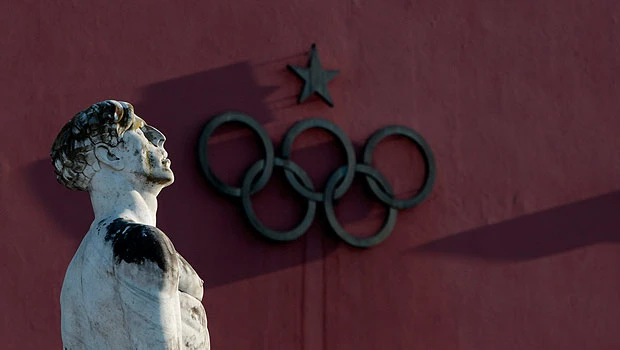
- ROME: Premier Mario Monti scrapped Rome’s bid for the 2020 Olympics on Tuesday, saying the Italian government can’t supply the required financial backing at a time of economic crisis.
Monti announced after a Cabinet meeting that it would be an irresponsible use of taxpayer money to fund the Olympic project with a guarantee that the government would cover any deficit.
“We arrived at this unanimous conclusion that the government didn’t feel it was responsible to assume such a guarantee in Italy’s current condition,” Monti said. “We studied the plans with great care.
“Italy can and must have ambitious goals. Our government is focused also on its growth, not just on strictness, but at this time we don’t think it would be fitting to commit Italy to this type of guarantee which could put at risk taxpayers’ money.”
The costs for hosting the Olympics in Rome had been estimated at $12.5 billion.
The decision came a day before the deadline for formal submission of bid files to the International Olympic Committee. The IOC requires government financial guarantees from bid cities.
“Monti has told us no, it’s a great sadness,” Gianni Petrucci, president of national Olympic body CONI, said. “It’s a dream that has vanished after two years of hard work, the bid was a serious one. I am convinced that you have to make cuts, but when you make cuts, you have to also cultivate a future dream. You need to cut and think about investments and the Olympics are a future investment.
“I don’t feel humiliated. Of course, doing it on the last day leaves me feeling really, really bad, there should have been more respect. But, as I said with great conviction to president Monti, we did everything we could.”
Rome’s exit leaves five cities in the 2020 race: Madrid; Istanbul; Doha, Qatar; and Baku, Azerbaijan.
This had been seen as Italy’s best chance of hosting the Olympics as postponing the candidacy until the 2024 Games would put it in a tough position against possible bids from heavyweights South Africa, France and the United States.
“There’s so much sadness that we have lost a great chance,” bid chairman and IOC Vice President Mario Pescante said. “The project was serious also from an economic point of view but it was a decision that was thought about a lot and we have to accept it.
“From our part there was also the excitement that the games could contribute to relaunching our country and to explain to the youth that in 2020 we’ll be back up there. But that wasn’t shared. We spent hours talking but (Monti) was unshakable on the subject of the accounts linked to the general economic situation. We have to resign ourselves to the fact that for at least 10 more years we won’t talk anymore about having the games in Italy.”
The IOC will select the host city in 2013.
Italy’s financial woes ended the country’s hopes of landing its second summer Olympics following the 1960 Games in Rome.
Monti heads a government of technocrats charged with battling the country’s economic ills. By scrapping Rome’s bid for the Olympics, the premier gave an important message to the markets that Italy is serious in its pledge to cut its debt.