- JANADRIYAH: A movie theater at the South Korean section in the Janadriyah festival is a real crowd puller this year.
- Rather than the film itself, the visitors are interested in enjoying the experience of watching a movie sitting in a cinematic environment.
Visitors are also surprised when a smiling Korean woman, Basmah Tshu, welcomes them to the pavilion in excellent Arabic. The young lady said she learned Arabic at a Korean university, adding that her love for the Arab world prompted her to learn Arabic.
Young Saudi women, particularly school girls are also eager to learn about Koreans and their culture. They take photographs with Korean artists and officials.
The pavilion features Korean culture, history and tradition.
“Also, the pavilion will have a time tunnel that will introduce the exchange of history between the Korean and the Arab world, especially the Arabian Peninsula from the past to the present, including the Islamic era. And there will be folklore and modern dances as part of the pavilion activities.
In a gesture of respect to the Saudi culture, the folk dances will be performed live by Korean dancers while the modern dances will be performed by robots,” Korean Ambassador to the Kingdom Kim Jong-yong said on an earlier occasion.
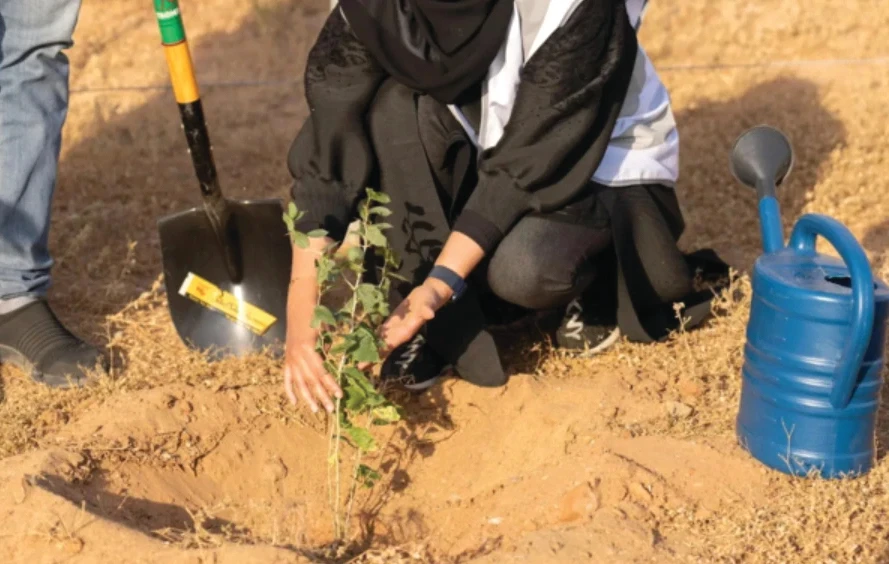
The festival also has a pavilion for organic farms.
Saudi Arabia is spending more than SR1 billion to develop organic farms and is fourth in terms of land use and involvement in organic farming in the Arab world, the Saudi Press Agency reported.
Besides displaying organic methods of farming and yields without using fertilizers and chemical pesticides, the pavilion also undertakes awareness campaign about the role of organic farming in maintaining human health and clean environment.
Faculty member at the College of Agriculture and Veterinary Medicine in the Qassim University Khaled Al-Radaiman, said Saudi Arabia accounted for 8.19 percent of organic farmland in the Arab world. Tunisia has set apart the largest extent of land for organic farming in the Arab world. He hoped that the land used for the purpose would rise from 5 percent to 10 percent of the total farmland by 2020.
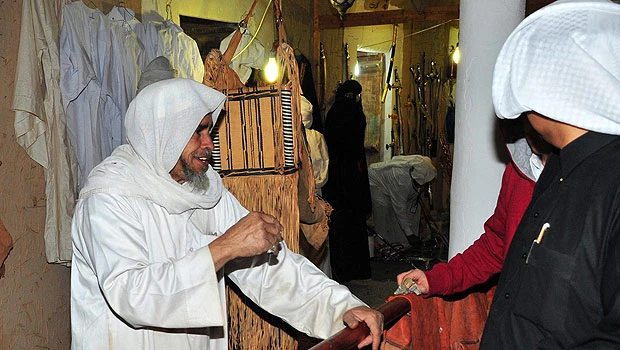
More than 1,500 women visited the women’s section at the Qassim pavilion. A highlight of the section is the decorations and furniture of a bride’s room of old days.
“The pavilion also showcases women’s handicraft including weaving, embroidery works and cooking of ancient pastries including kleja,” head of the Qassim women’s section Manal Al-Sindi said.
Many visitors are enchanted by sculptor Ali Al-Jasser, who displayed how he converted unwanted tree trunks and logs of wood to works of exquisite art with a chisel. A visitor offered SR25,000 for a trunk on which some verses of the Holy Qur’an were engraved in a calligraphic style. But Al-Jasser turned down the offer saying that he would not part with the piece as he was attached to it.
The women’s section of the Asir presented the province’s traditions and rites related to a bride’s reception at the groom’s house. The traditions are accompanied by special songs and dances. The event was presented as part of the opening of the women’s events. Spectators were so much impressed by the presentation that they wanted repetition of the dances, chairperson of the women’s committee of the festival Mauda Al-Buqami said.
“What we presented was the heritage we inherited from past generations. It is our duty to enable the next generation to learn the ways of our past generations,” said Nora Absan, head of the Asir women’s team.
Fatima Asiri, who played the role of the bride in the event, said she enjoyed her role and that she started preparing for the role well in advance.