
- If you are one of those who tend to avoid garlic, broccoli, ginger, pomegranate or carrots, then you may have to do a rethink.
For the chemicals that give these fruit and vegetables their character — phytochemicals — are the ones that save you from many types of cancer. These various compounds give foods their color, taste and smell.
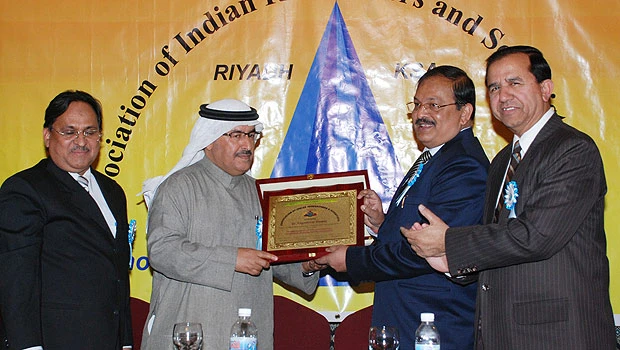
This was revealed to a large number of people who attended a cancer awareness symposium organized by the Riyadh-based Association of Indian Researchers & Scientists (AIRS) Thursday night. The topic of the symposium was “Cancer: A major health issue worldwide.
The symposium was addressed by renowned Indian cancer specialist Dr. Yogeshwar Shukla, deputy director and head of Proteomics Laboratory at the CSIR-Indian Institute of Toxicology Research.
Dr. Abdulrahman Khazim Al-Asmari, senior consultant and director of cancer research center at Riyadh Military Hospital, was the chief guest. Al-Asmari’s research works on the venom of scorpions and snakes have been internationally acknowledged. Dr. Misbahul Arefin, AIRS president, who gave a brief overview of the AIRS activities in Saudi Arabia, and Dr. Mohammed Ahmed Basha, were the main organizers of the event.
Dr. Shamsh Tabrez, AIRS secretary, conducted the symposium. Dr. Anis Jameel recited verses from the Holy Qur’an to mark the opening of the event. Besides members of the public, more than 100 scholars attended the symposium, which focused mainly on cancer prevention. The audience was given opportunity to clarify their doubts.
Some 7,000 new cases of cancer are reported in Saudi Arabia each year. The figure will reach 30,000 in 15 years in the Kingdom, according to a study. The rate of prevalence of cancer in India is also alarming.
Javed Mosarrat, a professor at King Saud University, introduced Shukla. Both Al-Asmari and Shukla extolled the virtues of the natural agents found in fruits, vegetables and spices and their uses in targeted therapy of cancer or tumor. Shukla called on the people to make a conscious effort to eat at least some portions of fruits and vegetables every day to prevent cancer.
“Add shredded pepper, radish, onions, or broccoli stems to a cabbage and carrot salad,” said Shukla, adding that his laboratory has discovered that pineapples, apples and mangoes have cancer-fighting agents. He said drinking a lot of tea, green or black, will also help keep cancer at a distance.
“Be liberal in your use of spices,” said Shukla, pointing out that several spices used in Saudi Arabia and India like turmeric, garlic and ginger contain phytochemicals that prevent cancer.
According to epidemiological studies, 80-90 percent of all cancers are due to environmental factors, of which lifestyle-related factors are the most important and preventable. The major risk factors for cancer are tobacco, alcohol consumption, infections, dietary habits and behavioral factors, Shukla said.
Studies have shown that appropriate changes in lifestyle will reduce the mortality and morbidity caused by cancer, said the expert.
He pointed out that India launched a nationwide cancer control program way back in 1971. “Still a lot need to be done,” he observed.