
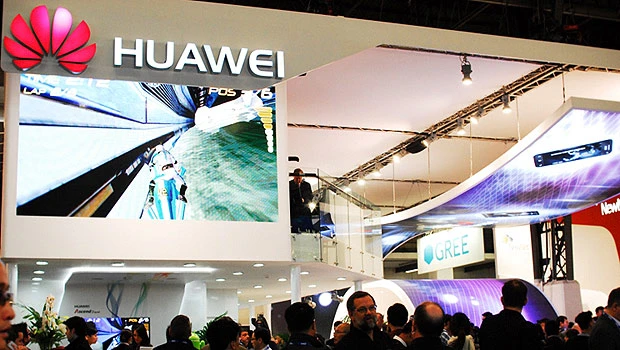
- Leaders and experts from across the ICT industry worldwide gathered to explore opportunities for the future of national broadband on the sidelines of the Mobile World Congress during the “Broader Way Forum” organized by Huawei.
The action-oriented forum identified new growth and business models that will enable the industry to harness the potential of mobile broadband and reap the economic and social benefits that broadband brings.
In his welcome address to participants at the Broader Way Forum, Ryan Ding, CEO, Carrier Network Business Group of Huawei, said: “As the ICT industry continues to rapidly mature and becomes more sophisticated, the hyper-connectivity offered by broadband is a driving force for economic and social development and an enabler of job creation and capacity-building. Huawei has been an enthusiastic advocate for broadband development for some time and is pleased to bring together some of the best minds in the industry at our inaugural Broader Way Forum to generate greater dialogue on this important topic and inspire actions that will enrich the world we live in.”
The Middle East is one region set to change dramatically over the next ten years with the rollout of national broadband networks, accelerated by government policies and increasing demand from consumers for more bandwidth and video centric applications. Some governments are changing the course of deregulation more seriously by taking a direct role as investor and operator.
A number of countries in the Middle East are in the process of exploring the deployment of nationwide broadband networks including the UAE, Qatar, Jordan, Bahrain, Kuwait and Oman.
Speaking about the global development of the ICT industry, Toure, secretary-general of ITU, said: “In the 21st century, affordable, ubiquitous broadband networks will be as critical to social and economic prosperity as transport, water and power. Not only does broadband deliver benefits across every sector of society, it also helps promote social and economic development.”