- Syrian publishing houses have not participated in the Riyadh International Book Fair for the first time in six years.
The absence of ancient publishing houses such as Al-Hiwar and Al-Khayal and Dar Al-Mada comes in light of the civil unrest in Syria.
Abdul Aziz Khoja, minister of culture and information, expressed his regret over the no-show of Syrian publishing houses.
The absence of Syrian publishers at the fair paved the way for other publishing houses from Jordan, Lebanon and Egypt to promote their work.
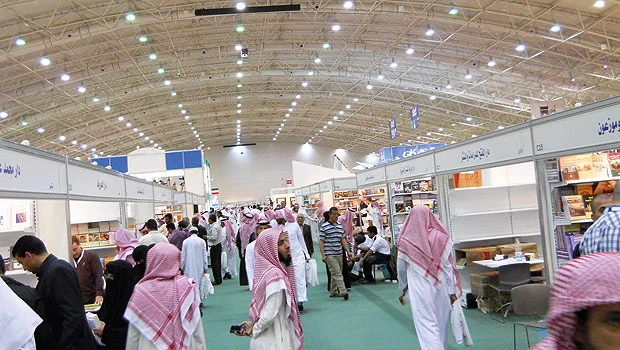
The Riyadh International Book Fair has evolved into a culture show because of the melting pot of cultures and civilizations in the exhibition, which contains a wide range of publishers from all regions that seek to promote their culture.
The fair features the works of more than 100 authors and 450 publishers from 25 countries.
Jordan is extensively represented at the book fair this year and a large group of publishers from the country have come to not only find a place to sell and display their books but also promote Jordanian culture, civilization, literature, history and education.
The Riyadh International Book Fair is being held under the auspices of Custodian of the Two Holy Mosques King Abdullah.
Mohamed Hiassat, a delegate from a Jordanian publishing house, told Arab News: "Jordanian participation received wide acceptance among the public, especially the Saudis, and this is very encouraging for me. I know Jordan is a very distinct country with its writers such as the genius Nassir Al-Din Al-Assad.”
When Arab News asked him about the nature of books from Jordan on offer in the exhibition, he answered: "Our exhibition contains books that develop creative talents. The first day was really strange because a great number of readers visited the Jordanian section and bought so many books.”
Hamza Al-Damisi, a delegate of Wa’el Publishing House, talked to Arab News about Jordanian publishers in the exhibition and why they came such a long way.
“The first day I sold SR10,000 worth of books. Most of the buyers are Saudis who obviously see Jordanian literature as a medium that can enrich their minds with the information they are looking for. I think three days are enough to sell all my books. My books are academic so I think Saudi university students will use them for their studies.”
Reyad Azzaidah, executive manager at De Bono For Teaching Thinking, said the popularity of the Jordanian section was down to the Saudis’ eagerness to learn about other cultures.
“The very good response from the Saudi people demonstrates this, especially people who need to know more about cultures like Jordanian culture. Our people are distinguished by their hospitality and Saudi-Jordanian ties are clearly strong.”
Dr. Ayman Al-Zu’bi, another delegate of a Jordanian publishing house, said literature from his country focuses on how the nation was formed.
“Those interested in Jordanian literature should be interested in finding out about the geopolitics of the country and what influences contributed to the local literature’s growth and maturity? Studies and historical events of the 20th century indicated Jordan before its establishment in 1921 was part of natural Syria and included the north of Palestine and Jordan today and the policy of Turkification. Literary studies weren’t taught in Arabic schools but depended on grandparents familiarity with all kinds of slang and colloquial poetry and popular literature.”