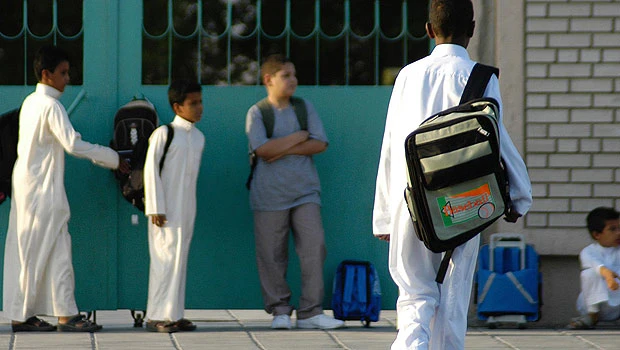
- A number of economists and transport experts have called for the completion of the school transport project and also for expanding it to cover all students in all educational stages in the Kingdom.
This would save the national economy more than SR7 billion that is now spent on transporting students to and from their schools.
“Buying cars and recruiting about half a million foreigners to drive children and female teachers costs about SR6 billion annually. The additional SR1 billion goes to unforeseen expenditure such as accidents and environmental pollution,” said Ahmed Babqi, a Saudi economist.
In addition to the economic savings, the project would save parents the trouble of driving to school so they could dedicate their time to productive tasks.
“The project would also help reduce traffic congestion and curb pollution in Saudi cities,” he added.
Transport expert Ali Hassan Nagoor, CEO of Al-Jazeera Transport Company, said the Kingdom's school transport came 20 years late. “All this time the Kingdom has had a fleet of more than 20,000 buses, owned by 19 companies, which are used only during the Haj season and remain idle for the rest of the year. These buses could have been used to transport students,” he said.
Nagoor believed that the expansion of the project to cover students in all the regions of the Kingdom would create thousands of jobs for Saudis.
The Ministry of Education will organize an international conference on school transport in October with the support of the Custodian of the Two Holy Mosques King Abdullah, according to Minister of Education Prince Faisal bin Abdullah.
He said the king was keen to provide complete support for the promotion of education in the Kingdom, the development of the school transport industry and the creation of a safe environment for the transportation of students and teachers
“The three-day conference, the first of its kind in the Kingdom, will discuss all aspects and issues concerning school transport aiming to make it safe and reliable,” the minister was quoted as saying.
He said the conference was part of a decision of the Council of Ministers to double the number of students covered by the school transport services through the inclusion of all girls students and women teachers in general education.
The Cabinet also asked the concerned ministries to coordinate a study about the financial costs of the project, the ways and means of attracting service providers and the treatment of school transport as an integral part of the transport system in the Kingdom.
Prince Faisal said the ministry is currently providing transport to more than 600,000 female students who constitute about 25 percent of the total number of female students in general education in the Kingdom.
He said the conference would endeavor to specify mechanisms and modalities necessary for the development of the school transport and for the students to accept public transport.
“The conference will also discuss the school transport of students of special needs,” he added.
The minister said the conference would give the service providers an insight on successful international experiments in the industry of school transport, to boost the service and attract more investors.