
- The Peace Boat is a Japan-based international non-profit and non governmental organization that promotes peace, human rights, equal and sustainable development and respect for the environment.
The boat carried more than 1,000 people of Japanese and other nationalities during its voyage that started on the 24th of January, and recently visited Saudi Arabia as part of a world tour to promote peace on the 9th of April. “everyone here had to pay for their stay and their money was used for fuel and food. As for us teachers, cooks and other people who work on the boat, we are volunteers but we have to pay for all the boat facilities,” said Ana Rosa, Spanish teacher on the Peace Boat. “We took this as an opportunity to learn more about the world with its different cultures, we also wanted to spread awareness about serenity and peace,” she added.
Dr. Yousef Al-Sadoun, undersecretary for economic and cultural affairs at the Ministry of Foreign Affairs, greeted the Japanese delegation. he stressed the core meaning of Islam is to promote peace and understanding among people of different races and nationalities.
“Islam strongly prohibits all kinds of violence and aggression against all people regardless of their race or creed,” he said. “We Saudis have always been believers and advocates of peace across the world. In 2008, Custodian of the Two holy Mosques King Abdullah launched an initiative that calls for dialogue between different cultures in order to spread understanding between nations,” he added.
The boat’s trip to Jeddah was an
opportunity for the Japanese to learn about Islam and the Saudi culture.
Peace Boat aims to create awareness and action based on effecting positive social and political change in the world. “Saudi Arabia is known for serenity and peace and this is why we targeted this country to be one of our stops, as we wanted to meet the people and ask them to help us and join us to spread awareness against weapons of mass destruction,” said Mia, one of the Filipino delegations on the boat, and a volunteer english teacher there. “We want the world to be weapons of mass destruction free, we want to start spreading the word about the harm that it’s causing. We want the Middle east and North Africa to be peaceful and safe places just as Islam has told them to be,” she added.
Dr. Faisal bin Muammar, adviser to Custodian of the Two holy Mosques King Abdullah, secretary-general of the King Abdulaziz Center for National Dialogue and acting secretary-general for the King Abdullah International Center for Interreligious and Intercultural Dialogue in Vienna, delivered King Abdullah’s message in which he said that the Peace Boat is the biggest center for dialogue and communication around the world and he wishes that he had come up with this idea of a floating peace vehicle. he offered congratulations to the person who came up with the unique concept.
After the speech by Muammar a group of men walked around with pots of Arabic coffee and dates, as is known to be the true definition of Saudi hospitality. “This coffee is completely different from any other coffee I have ever tasted. It looks different and tastes different but the bitterness of the coffee is washed down with the sweetness of the date. I want the recipe to make it back home in Japan for my family and friends,” said
Outamala, one of the Japanese delegations at the Peace Boat.
Weapons of Mass Destruction concern not only the Japanese but also the entire human race, said Muhammed Al-Tayeb, director general of the Ministry of Foreign Affairs. “The traces of hiroshima and Nagasaki can still be found within the Japanese as they lived and experienced the devastation. Some are still suffering the after-effects of the nuclear desolation,” he said. “It’s a great pleasure to meet them and welcome them in the land of peace. It is also a pleasure to hear their stories and experiences,” he added.
Samar Fatany, member of the higher consultative committee for youth forums in the Ministry of Foreign Affairs, presented the Young Saudi Youth Forum participants that promote peace and understanding between cultures. “It’s an honor to have the survivors of the hiroshima and Nagasaki disasters among us and we feel their pain and present our condolences for their loved ones and parents that they have lost. They are a symbol of courage, and our young participants today promise to work hard to never again allow for such a tragic disaster to take place,” she said. “They are part of the initiative of the Custodian of the Two holy Mosques King Abdullah which aims to spread peace and global understanding, and they have worked so hard for the past years presenting forums to different parts of the world,” she added.
The Saudi Youth Forum in the Ministry of Foreign Affairs, which promotes peace and understanding between cultures, attended the event to build new friendships among the Japanese delegation. “We the youth of Saudi Arabia reject violence and are eager to participate in the enhancement of global cooperation and the resolution of issues
of great concern to humanity,” said Sarah Al-Khudairy of the forum. Al-Khudairy read these excerpts from the letter the Saudi youth had written to the United Nations Secretary- General Ban Ki-moon.
“We urge the United Nations to step up its efforts when dealing with issues that are destroying our future and the future of generations to come. The challenges related to health, hunger, poverty and unemployment have been multiplying and today we have concerns caused by the political conflict and human rights violations that led to terrorist acts and encouraged an arms race that can destroy our world,” she added.
“There is a need for a more effective UN role to address these issues and support youth initiatives than can contribute toward eradicating the causes of these dangerous issues. We also demand more pressure on reckless politicians and irresponsible decision makers who are destroying the harmony of our world today,” said Al-Khudairy.
King Abdulaziz University also participated in the program by offering folklore and folk arts that present different regions of the Kingdom of Saudi Arabia. “I love how Saudi men wear white thobes in their daily life. I think they look like white pigeons that represent peace,” said Kaya, one of the members of the Japanese delegation in the Peace Boat. “Saudi is rich with its culture and history and I am proud to meet people who are proud of this culture and are holding onto it until today,” she added.
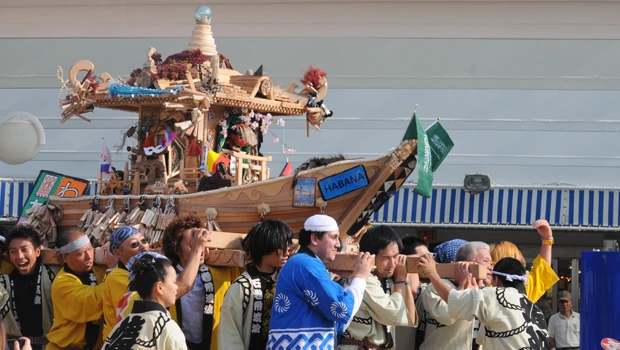
The last ten survivors of the hiroshima and Nagasaki atomic bombings shared their stories and experiences. The Japanese crew also performed their own folklore carrying a small wooden boat made by the remains of what the hiroshima and Nagasaki fallouts.