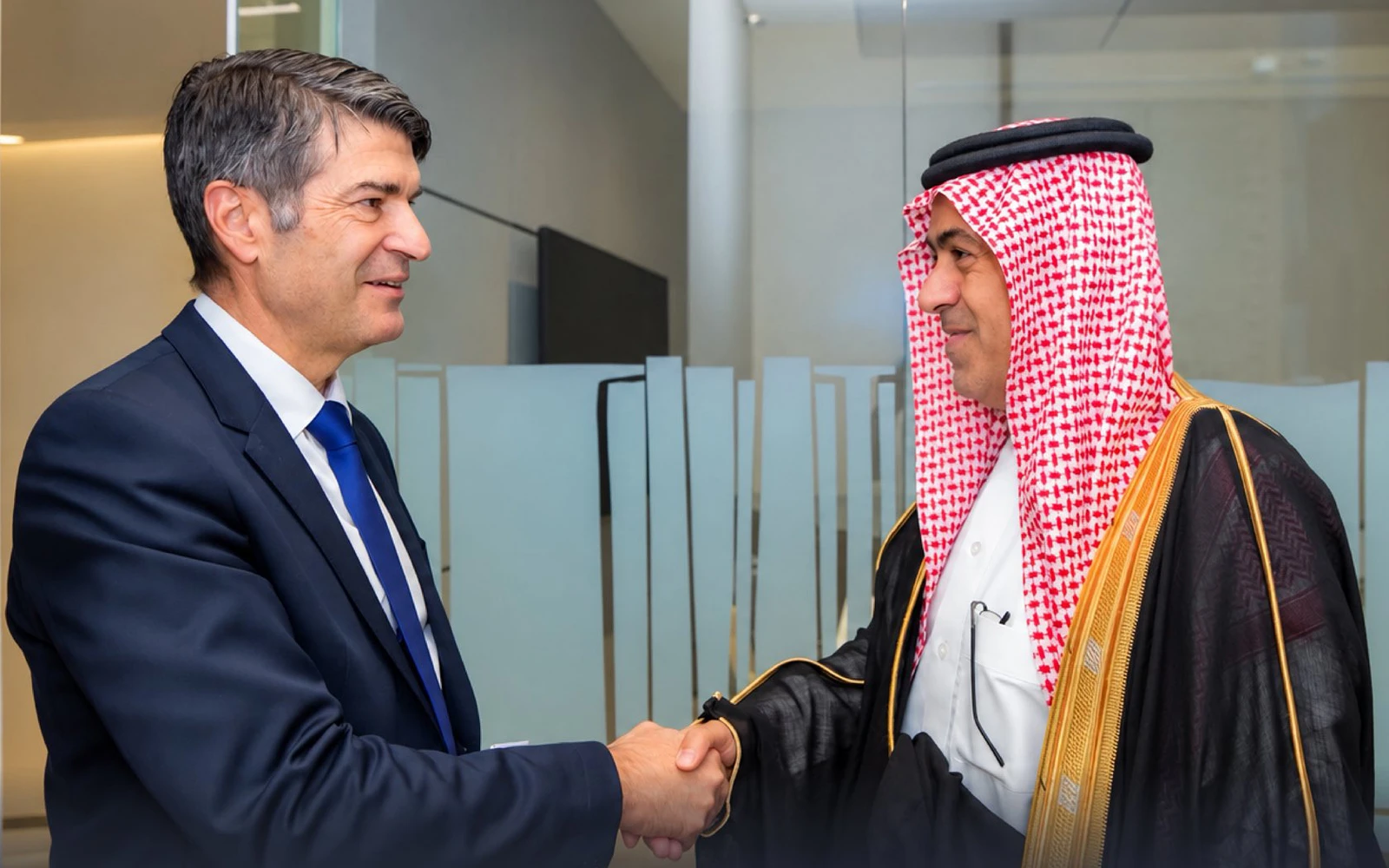
- Health Minister Dr.
- Abdullah Al-Rabeeah will inaugurate World Immunization Week 2012 in Riyadh today, a senior official from the Ministry of Health told Arab News yesterday.
Health Ministry spokesman Khalid Al-Mirghalani said the event is organized to observe WHO's Eastern Mediterranean Regional Office Vaccination Week, which begins throughout the region today and will last until April 30.
The week is dedicated to celebrating and promoting immunization for people of all ages through advocacy, education and communication activities. EMRO Vaccination Week is meant to protect all people at risk against vaccine-preventable diseases.
This year, the theme of the Kingdom's Vaccination Week is “Vaccination is the Responsibility of Society.” Saudi Arabia will be focusing on raising awareness among the people on the importance of vaccination.
Every year an estimated 2.5 million lives are saved by vaccinations. With timely vaccinations, many infectious diseases are being completely eradicated by simply immunizing people.
Vaccines have had a profound impact on public health. They have helped to prevent more than 30 common infectious diseases and helped avert long-term disability.
The importance of vaccinating against diseases and the need for greater awareness should not be underestimated. Many diseases place a significant financial burden on the patient, their families and the community at large and by raising awareness and encouraging people to get vaccinated against common diseases, this burden could be significantly reduced, the official said.
“The Kingdom is one of the first countries that introduced vaccines and has achieved tremendous successes in this regard,” Al-Mirghalani said, pointing out that the Kingdom reached 97 percent in its immunization program and was also responsible in declaring the country a polio-free state with the help of vaccinations.
“We will shortly succeed in the elimination of measles, rubella and mumps and also reduce the rest of vaccine-targeted diseases through this campaign,” he added.
He also urged parents and all members of society to contribute to the success of the ministry's campaign to take preventive measures against these diseases to protect their children.
Earlier in an awareness campaign about vaccination, Dr. Ismail Al-Badawi, section head of the Department of Obstetrics, Gynecology and Oncology at the King Faisal Specialist Hospital and Research Center in Riyadh, said cervical cancer could be prevented through timely vaccinations.
“It is the 11th most common cancer in Saudi Arabia among women in general and the eighth most common among women aged between 15 and 44,” he added.
Currently around 2.2 percent of the female population in Saudi Arabia suffers from cervical cancer, he said.
“While the actual prevalence of cervical cancer in comparison to other countries in the region is relatively low, the rates of mortality are extremely high,” Al-Badawi said. In the Kingdom, some 3.4 percent were proven positive for every 100,000 cases.
For every 152 women diagnosed each year, he pointed out 55 will die. “Lack of public awareness plays a big role in these alarmingly high numbers. By simply creating a greater awareness of the need for vaccinating against Human Papilloma Virus (HPV), this number could significantly be reduced,” he added.
Al-Badawi said vaccinations against cervical cancer are given in three doses over a period of six months. “There are no side effects for this vaccination; it can be given to women from 12 to 26 years of age.”
Saudi Arabia has a population of 6.51 million over the age of 15 who are at risk from HPV.