Saudi Aramco President and CEO Khalid Al-Falih outlined the historic opportunities available for refining and chemicals in the Gulf in a speech delivered at the Middle East PetroTech conference in Bahrain.
“These are exciting days for petroleum here in the Gulf,” he remarked.
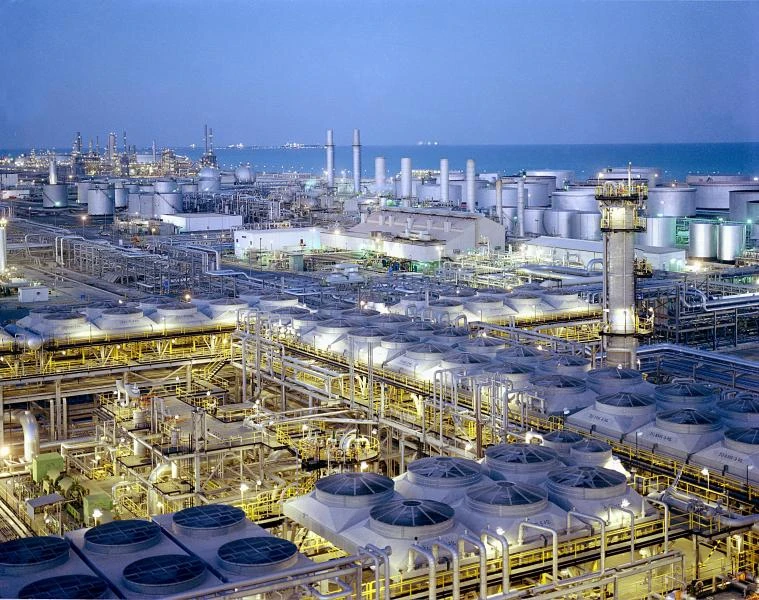
He said: “The thought of a thriving refining and petrochemical industry in the Gulf once seemed an elusive dream, given the dominance of the big American and European manufacturing hubs. Today, though, SABIC is one of the top five petrochemical companies, and Saudi Aramco and the Kuwait National Petroleum Corporation are two of the world’s top-tier refiners — ensuring that the Gulf is known for more than just oil wells, tank farms and loading terminals.”
The CEO said: “However, while we can celebrate the achievements our region has made to date in the downstream sector, we also need to recognize the huge yet-to-be-realized potential and focus on creating and extracting the maximum value from the business.”
He said: “Over the last three decades our region has continued to import technologies and primarily export lower value petrochemical bulk commodities, rather than adding greater value to our hydrocarbons through more product diversification and specialization, which in turn enables the creation of secondary and tertiary industries to produce semi-finished and finished goods for export.”
Al-Falih said: “That’s changing in front of our eyes, and today the Gulf’s downstream sector is poised to enter a new chapter: one that will be richer and more rewarding, yet also be more complex and more demanding, and which will require more significant sustained investments in talent and technology.”
In his speech, a copy of which was posted on the company website, the CEO outlined what he termed as the formula for the enormous downstream investments of Saudi Aramco.
“Globally, these investments will exceed $100 billion during this decade alone, premised on our belief in the long-term sustainability of oil demand,” he said.
The CEO said: “As a result of both global demographic growth and rising standards of living in the developing world, we see global demand for oil growing by a quarter over the next 25 years. And since raw hydrocarbons must be converted into useful products before they are consumed, we are confident that the prospects for the downstream industry are similarly bright.”
He said: “In the years to come, Saudi Aramco will have 8-10 million barrels per day of participated refining capacity, primarily in the high demand-growth markets of the Far East and Middle East.”
He added: “That will make us one of the largest downstream players on the planet by volume, but for us that’s definitely not enough.”
Al-Falih said: “As I noted earlier, our refining capacity will also be linked to robust marketing networks with strong brands, and to world-scale petrochemical plants — in fact, a growing proportion of the hydrocarbon molecules we produce will go to chemicals, given that this sector is set to grow at multiples of global GDP.”
The CEO said: “We will therefore also be developing into a top tier chemicals firm with top line profitability — and will be doubling or even tripling the range of materials we produce to drive economic growth and diversification, besides greater differentiation and delivery of performance products that add substantially more value.”
Saudi Aramco’s downstream strategy is already becoming a reality, he said.
“In addition to our existing refining and chemicals capacity, we are in the midst of building not one, not two, but three 400,000 barrel-per-day, high conversion refineries: a wholly owned refinery and terminal in Jazan and our SATORP and YASREF joint venture facilities with Total and Sinopec, respectively,” said Al-Falih.
He said: “We are also building or expanding two world-scale, world-class integrated chemicals complexes, Sadara with Dow Chemical and PetroRabigh with Sumitomo Chemical, that will take our total chemicals participated production capacity to more than 15 million tons per day. Consistent with Saudi Aramco’s industrial cluster objectives, together with our partners we are developing two value parks, one in Rabigh and the other in Jubail, which have already attracted dozens of high value-added investors.”
He said: “We are also a founding shareholder in the new Saudi Arabian Company for Industrial Investment, which has capital of SR2 billion and focuses on manufacturing and conversion industries that rely on petrochemicals, plastics, fertilizers, steel and aluminum.”
The CEO said: “Overseas, we have also upgraded the chemicals production capacity at our Korean and Chinese joint ventures and expanded our JV refinery in Port Arthur, Texas, to be the largest refinery in the US — with the promise of more international portfolio developments still to come.”
He said Saudi Aramco’s downstream portfolio would undergo exciting changes as it continued its overall strategic transformation.
“We are also positioning Saudi Aramco to be a global leader in technology development all along the value chain, and have partnered with national and international research partners to create two major research clusters: one at the King Abdullah University of Science and Technology and the other at KFUPM’s Dhahran Techno Valley,” said the CEO.
He said: “And critically, we are bringing into our work force thousands of talented young men and women and investing in their education and development, to help deliver the bright future to which we aspire. Which is why, while I am very proud of our company’s downstream progress to date, I am even more energized by the achievements and developments that are still to come.”
The CEO said: “Saudi Aramco is part of a much larger regional industry and economic ecosystem, and I am similarly upbeat and optimistic about the Gulf as a whole. The opportunities are compelling, and go well beyond just the petroleum industry.”
He said: “In fact, the region’s downstream success will be magnified as the local business community invests in these new conversion parks and secondary and tertiary industries, petrochemical companies expand their offerings of specialty products to drive those industries, and the region’s academic institutions emphasize the science and engineering disciplines which will underpin the Gulf’s sustained leadership position.
He said: “That is why in the future, I believe this region will not be just an important hub for downstream activities; rather, the Arabian Peninsula will be the hub of the global downstream industry. “
The CEO: “This region is where the global downstream race will be won — and no success factors will be more important than human expertise and ingenuity, and the creation and application of innovative technologies. I am glad to see that our region’s downstream professionals are staying the course and winning the race.”
Arabian Peninsula ‘will be hub of global downstream industry’