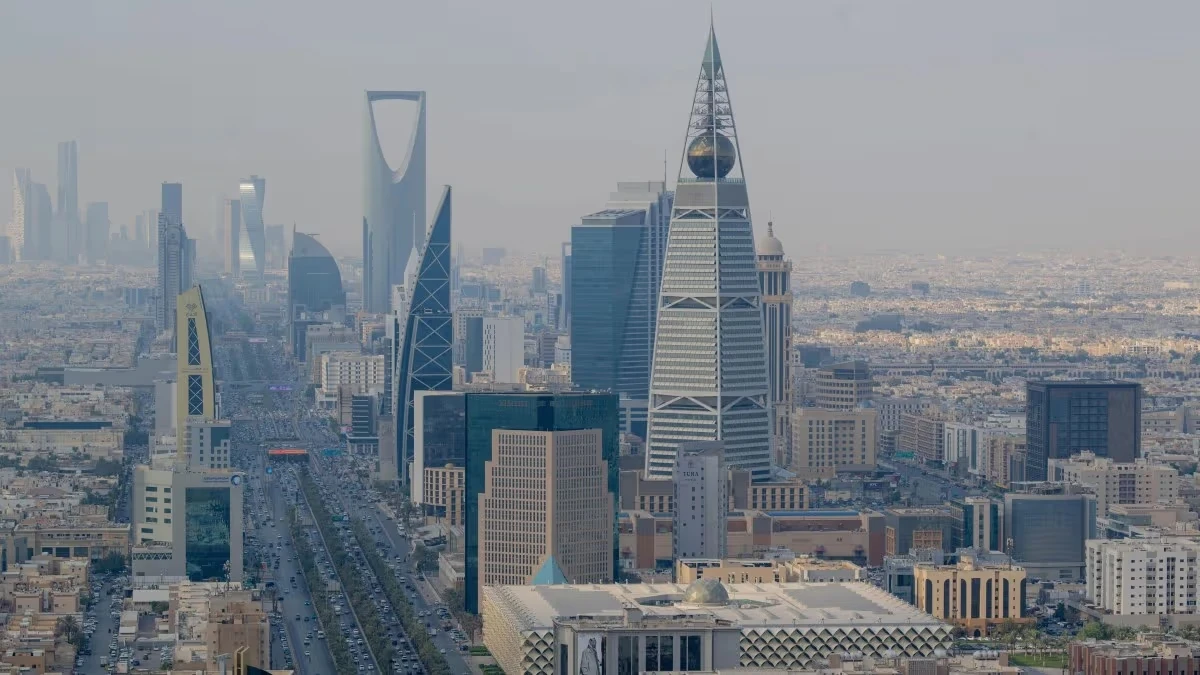
The sixth meeting of the Saudi-Austria joint committee has concluded in Riyadh with the businessmen from the two countries brainstorming on expanding bilateral cooperation.
The joint committee was headed by Muhammad bin Saleh Al-Daham, deputy minister of economy and planning, for the Kingdom and Bernadette Marianne Gierlinger, vice minister for foreign economic policy and European integration for Austria.
Commenting on the meeting, Gierlinger said: “Austria enjoys strong relations with the Kingdom and there are plenty of opportunities to expand and increase cooperation between the two countries.”
Speaking to Arab News in an exclusive interview on the sidelines of the joint business meeting, Walter Koren, director general of Advantage Austria, the Austrian Foreign Trade Promotion Organization (FTPO), affirmed that the Kingdom is a special trading partner for Austria and indeed the most important in the Middle East.
FTP facilitates Austrian companies to enter the Saudi market and assists in enhancing economic cooperation between the two countries.
“As per the latest data available for 2013-2014, our trade volume amounts to SR 5.32 billion (1.03 billion euro),” Koren, leader of the Austrian business delegation, added.
Answering a query on breakup of imports and exports, Koren said: “Austrian exports to Saudi Arabia amounted to 684.12 million euros in 2013, while Austrian imports from the Kingdom totaled 370.04 million euro for the same year.”
He said that six Austrian companies from the private sector participated in the joint committee and were able to present a memorandum for mutual cooperation.
Asked about the major areas of cooperation between the two countries, he said that the Austrian companies will strive to focus on high-end services in hi-tech infrastructure, education and health to make use of the investment opportunities across the Kingdom.
“Plenty of opportunities exist in the Kingdom, which is marked by rapid economic developments, especially metro projects in Riyadh and Jeddah, high-speed Haramain railway from Jeddah to Madinah and several financial city projects under way, where Austrian companies can contribute
handsomely,” said Koren.
When asked about the possible role of Austrian companies in these infrastructure projects, he said that Siemens Austria will provide technical know-how for the Riyadh metro project, while expertise on communications for Harmain high-speed railway is also available with the Austrian company.
He added that the lighting arrangements for the ongoing expansion project in the holy city of Makkah have also come from Austria Advantage, Austria with its office in Riyadh that endeavors to assist Austrian companies willing to enter the Saudi market.
He said: “Foreign companies need to be well informed and educated properly about the Kingdom and they will find lots of additional options available in the Saudi market; most of the companies have very narrow idea about the Kingdom, which needs to be corrected and we keep motivating our companies to invest in the stabilized market of the Kingdom”.
He said: “Moreover, we seek coordination from Saudi companies to invest in Austria, where so far only Saudi Basic Industries Corporation (SABIC) is present aside from a small hotel investment.”
On the sidelines of the joint meeting, he said that the multi-sectoral Austrian trade mission will also hold B2B talks with their Saudi counterparts to enhance cooperation.
To this end, the Austrian delegation also met Council of Saudi Chamber (CSC) Chairman Abdulrahman Al-Zamil and discussed further expansion of cooperation.
He said Austrian quality and know-how has an excellent reputation all over the world, especially in the Middle East.
“There are many small and medium sized companies specialized in niche products and solutions for some of the unique projects. We would like to capitalize on them to further enhance cooperation.”
Saudi Arabia and Austria enjoy cordial trade relations with Austrian exporters, especially of pharmaceuticals, energy drinks, fruit juice, timber, paper, special vehicles, machines for various sectors, steel, steel and plastic products, railway tracks and furniture while their imports from the Kingdom mainly comprise crude oil and petrochemicals.
Austrian companies see vast opportunities in KSA