BRUSSELS: Brussels expects to lure other financial players after convincing Lloyd’s of London, the world’s largest speciality insurance market, to make the city its post-Brexit European hub.
While Lloyd’s choice on Thursday surprised some, lower rental prices and its proximity to Britain could help other financial firms choose the multilingual home of the EU over Dublin, Frankfurt, Paris and Luxembourg.
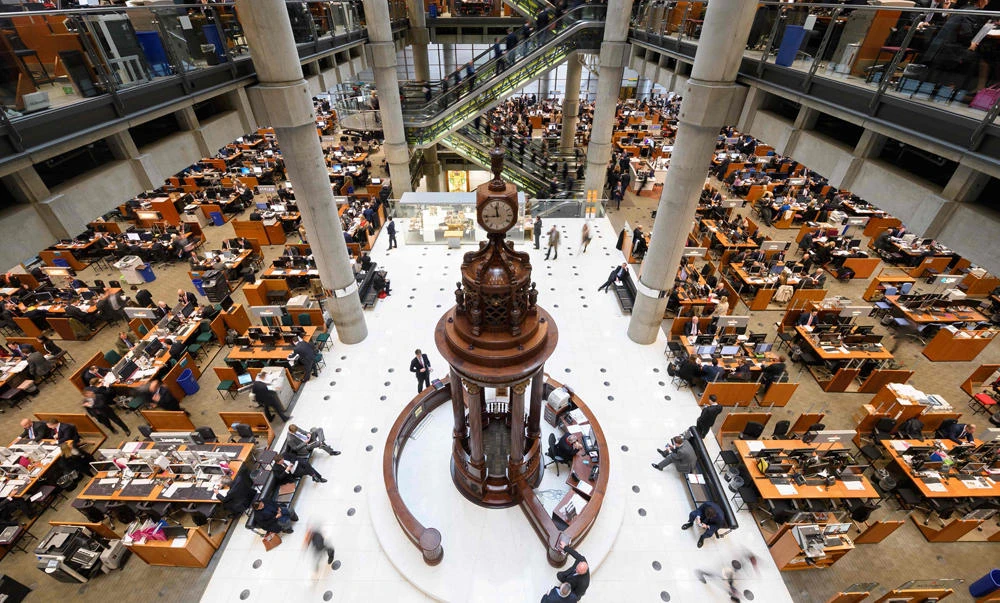
Lloyd’s is expected to move fewer than 100 people, but other insurers needing an EU subsidiary to keep access to the single market after Britain leaves the bloc may follow. Lloyd’s has long been a magnet for insurance underwriters, most of which are clustered around its landmark building in the City of London.
“From our contacts with consultancy firms we have learned that several companies are interested in Belgium,” a spokeswoman for Belgium’s financial sector federation Febelfin said, without specifying which companies or sectors had expressed an interest.
Brussels suffered as a banking center during the financial crisis in which its three largest banks required state-led bailouts from which only one has really recovered and employment in Belgium’s financial sector has been in steady decline, shrinking some 20 percent since 2007.
Fortis, once one of Europe’s largest banks, now only exists as a pared-down insurer, Ageas, after its banking operations were sold to France’s BNP Paribas.
Dexia, once the world’s largest lender to municipalities, is being wound down, with Belgium, France and Luxembourg guaranteeing 71 billion euros ($77 billion) of the group’s borrowings.
Nevertheless, Belgium still hosts the headquarters of payment messaging provider Swift and clearing house Euroclear and some 82 banks have an office in the country.
Being in the vicinity of European institutions also allows for easy access to high-level decision makers.
For employees, cosmopolitan Brussels offers rents which are about a third of those in London, high-speed rail services reaching the UK capital in less than two hours and good food.
“What people really like here is the international community that definitely is the number one reason to come here,” Edgar Hutte of the Brussels Expat Club, which helps new arrivals settle in, said.
The negatives include hefty income taxes, among the highest in the OECD group of developed countries, bureaucratic red tape and world record traffic jams.
Lloyd’s has been one of the most vocal financial services firms about the need for an EU subsidiary if Britain has no access to the single market after leaving the bloc.
Lloyd’s, which started life in Edward Lloyd’s coffee house in 1688, is a market housing over 80 syndicates in the City of London.
Its syndicates focus on specialist insurance and reinsurance in anything from offshore oil rigs to athletes’ legs.
“We are a market, we are unique, we are not like an insurance company — we needed to find a regulator with the resources and the bandwidth to regulate the Lloyd’s market,” said Chairman John Nelson.
Nelson said the Brussels subsidiary would employ dozens of staff — in areas such as compliance and information technology — unlike banks which have said they may move hundreds of staff to the EU. The regulated company will also have its own board.
Irish cry foul
An initial shortlist of locations had been whittled down to two — Brussels and Luxembourg — with the insurance market’s council making the final decision on Wednesday.
US insurer AIG said this month it was setting up an EU hub in Luxembourg, and Lloyd’s insurer Hiscox is choosing between Luxembourg and Malta.
Brussels was attractive because of its talented workforce and place at the heart of the EU, Nelson said. Lloyd’s gets around 11 percent of its business from Europe excluding Britain.
“The next question is how many of the other UK-domiciled insurers and reinsurers will follow,” said Sarj Panesar, global head of business development for insurance at Societe Generale Securities Services.
“We can expect some to join Lloyd’s in Brussels.”
The subsidiary will be able to reinsure its business back to London, on similar lines to other Lloyd’s hubs such as China, Nelson said, a model which insurance sources said made Brussels’ pitch attractive.
Dublin, initially seen as a favorite for Lloyd’s and other insurers’ EU subsidiaries, has complained to the European Commission that it is being undercut by rival centers.
Trade body Insurance Ireland this week called on its government for a review to help Ireland “convert expressions of interest into investment decisions.”
Royal London said on Thursday it was converting its Irish business into a regulated subsidiary.
Lloyd’s EU subsidiary aims to be ready to write insurance business in time for the Jan 1, 2019 renewal season, it said in a statement.
Also on Thursday, Lloyd’s of London reported pre-tax profit of £2.1 billion for 2016, steady from 2015.
But underwriting profit dropped sharply to £500 million from £2 billion, due to strong competition and large losses from natural catastrophes.
While Lloyd’s choice on Thursday surprised some, lower rental prices and its proximity to Britain could help other financial firms choose the multilingual home of the EU over Dublin, Frankfurt, Paris and Luxembourg.
Lloyd’s is expected to move fewer than 100 people, but other insurers needing an EU subsidiary to keep access to the single market after Britain leaves the bloc may follow. Lloyd’s has long been a magnet for insurance underwriters, most of which are clustered around its landmark building in the City of London.
“From our contacts with consultancy firms we have learned that several companies are interested in Belgium,” a spokeswoman for Belgium’s financial sector federation Febelfin said, without specifying which companies or sectors had expressed an interest.
Brussels suffered as a banking center during the financial crisis in which its three largest banks required state-led bailouts from which only one has really recovered and employment in Belgium’s financial sector has been in steady decline, shrinking some 20 percent since 2007.
Fortis, once one of Europe’s largest banks, now only exists as a pared-down insurer, Ageas, after its banking operations were sold to France’s BNP Paribas.
Dexia, once the world’s largest lender to municipalities, is being wound down, with Belgium, France and Luxembourg guaranteeing 71 billion euros ($77 billion) of the group’s borrowings.
Nevertheless, Belgium still hosts the headquarters of payment messaging provider Swift and clearing house Euroclear and some 82 banks have an office in the country.
Being in the vicinity of European institutions also allows for easy access to high-level decision makers.
For employees, cosmopolitan Brussels offers rents which are about a third of those in London, high-speed rail services reaching the UK capital in less than two hours and good food.
“What people really like here is the international community that definitely is the number one reason to come here,” Edgar Hutte of the Brussels Expat Club, which helps new arrivals settle in, said.
The negatives include hefty income taxes, among the highest in the OECD group of developed countries, bureaucratic red tape and world record traffic jams.
Lloyd’s has been one of the most vocal financial services firms about the need for an EU subsidiary if Britain has no access to the single market after leaving the bloc.
Lloyd’s, which started life in Edward Lloyd’s coffee house in 1688, is a market housing over 80 syndicates in the City of London.
Its syndicates focus on specialist insurance and reinsurance in anything from offshore oil rigs to athletes’ legs.
“We are a market, we are unique, we are not like an insurance company — we needed to find a regulator with the resources and the bandwidth to regulate the Lloyd’s market,” said Chairman John Nelson.
Nelson said the Brussels subsidiary would employ dozens of staff — in areas such as compliance and information technology — unlike banks which have said they may move hundreds of staff to the EU. The regulated company will also have its own board.
Irish cry foul
An initial shortlist of locations had been whittled down to two — Brussels and Luxembourg — with the insurance market’s council making the final decision on Wednesday.
US insurer AIG said this month it was setting up an EU hub in Luxembourg, and Lloyd’s insurer Hiscox is choosing between Luxembourg and Malta.
Brussels was attractive because of its talented workforce and place at the heart of the EU, Nelson said. Lloyd’s gets around 11 percent of its business from Europe excluding Britain.
“The next question is how many of the other UK-domiciled insurers and reinsurers will follow,” said Sarj Panesar, global head of business development for insurance at Societe Generale Securities Services.
“We can expect some to join Lloyd’s in Brussels.”
The subsidiary will be able to reinsure its business back to London, on similar lines to other Lloyd’s hubs such as China, Nelson said, a model which insurance sources said made Brussels’ pitch attractive.
Dublin, initially seen as a favorite for Lloyd’s and other insurers’ EU subsidiaries, has complained to the European Commission that it is being undercut by rival centers.
Trade body Insurance Ireland this week called on its government for a review to help Ireland “convert expressions of interest into investment decisions.”
Royal London said on Thursday it was converting its Irish business into a regulated subsidiary.
Lloyd’s EU subsidiary aims to be ready to write insurance business in time for the Jan 1, 2019 renewal season, it said in a statement.
Also on Thursday, Lloyd’s of London reported pre-tax profit of £2.1 billion for 2016, steady from 2015.
But underwriting profit dropped sharply to £500 million from £2 billion, due to strong competition and large losses from natural catastrophes.