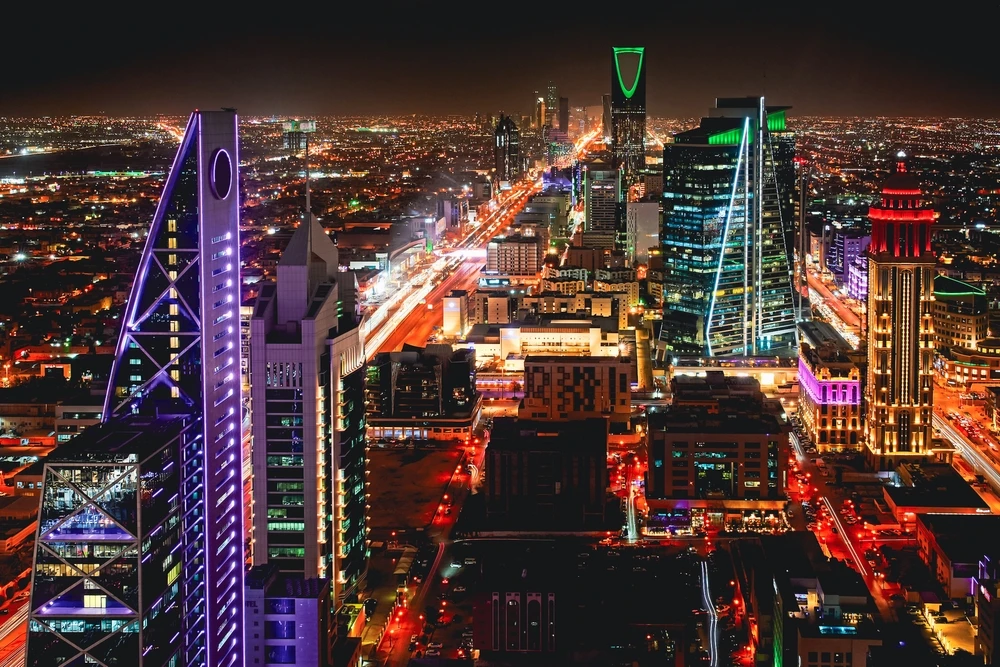
RIYADH: Flexible office occupancy in Riyadh is approaching 90 percent in the Olaya district, supported by international companies and new business formations, according to a JLL report.
Occupancy in King Abdullah Financial District remained in the mid-80 percent range, while Olaya and KAFD together accounted for 45 percent of the capital’s flexible workspace supply.
JLL said international companies account for 50 to 60 percent of flexible-office occupiers in Riyadh, the highest proportion in the Middle East and Africa. New company setups generate between 55 and 60 percent of inquiries.
“As it becomes increasingly difficult for CEOs to predict what effective working habits will look like in three to five years, for corporate occupiers, flexibility becomes a core strategic tool for mitigating risk,” said Dana Williamson, JLL’s head of offices, business space and retail for the Middle East and Africa.
Market development
Most of Riyadh’s existing flexible workspace stock has been delivered since 2022, as Saudi Arabia’s corporate-relocation policies and wider economic reforms encouraged multinational companies to establish operations in the capital.
The report said KAFD has a relatively high allocation of fixed desks, at approximately 55 percent, alongside a substantial stock of private offices.
Olaya offers a more varied mix, with a higher share of hot desks and roughly equal proportions of fixed desks and private offices.
JLL expects private offices to account for a larger share of the market as operators shift their focus from rapid expansion across customer segments toward revenue growth.
The consultancy said operators are investing in meeting rooms and technology to support hybrid work, while using design and hospitality-oriented services to distinguish premium locations.
For landlords and developers, JLL recommended management agreements and revenue-sharing partnerships over direct operation of flexible offices.
These models would allow property owners to retain control of their assets while sharing in workspace revenues.
Wider office market
The growth of flexible workspace comes amid tight conditions across Riyadh’s broader office market.
Knight Frank reported in September that citywide office occupancy stood at 96 percent during the second quarter of 2026, with Grade A rents rising 3.4 percent year on year.
The consultancy estimated the capital’s office stock at 6.1 million sq. meters and said announced projects could increase it by about 74 percent to 10.6 million sq. meters by 2028.
It added that 9,018 foreign investment licenses were issued in the second quarter, up 252 percent from a year earlier, although such licenses do not automatically create office demand.
Across the wider Middle East and Africa market, more than 90 percent of corporate real estate portfolios remain tied to traditional long-term leases, JLL said.
Fewer than 5 percent of global companies allocate more than 10 percent of their portfolios to flexible space, while over 40 percent allocate 1 percent or less, indicating that the format remains a relatively small part of corporate property strategies.