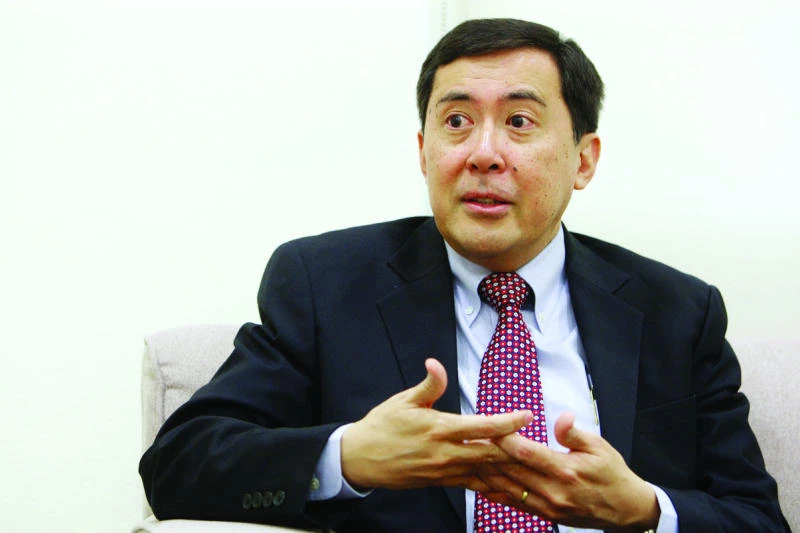
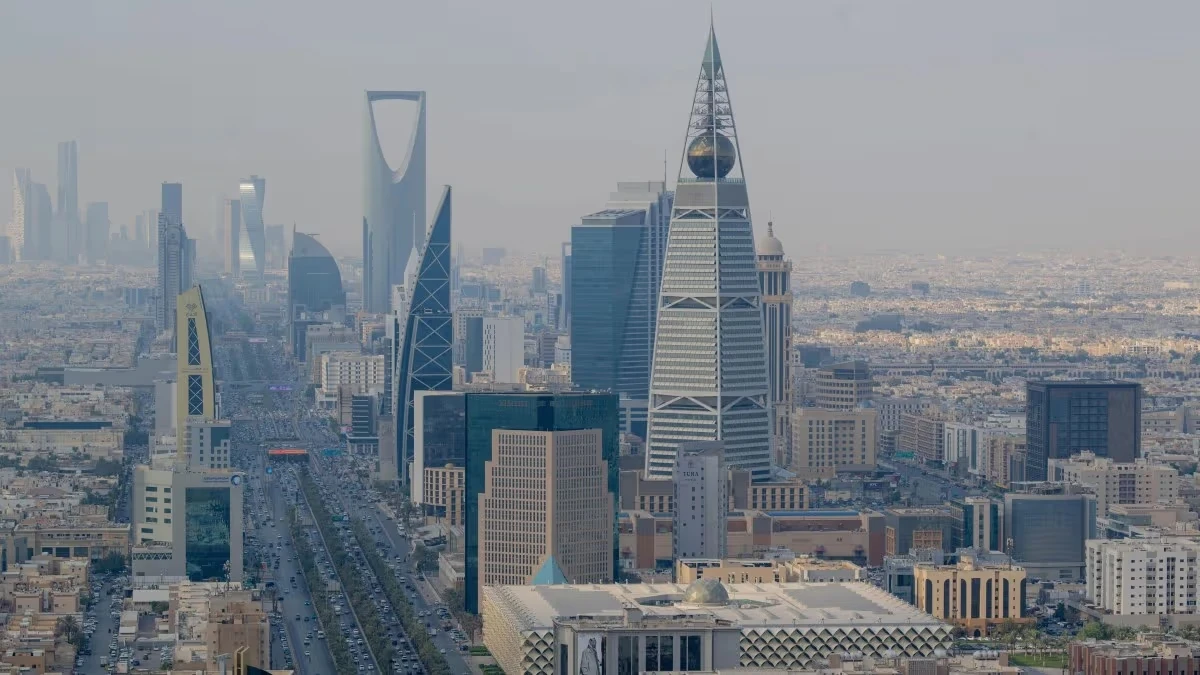
Saudi Arabia is the third largest source of investments from the Middle East to Singapore. The number of Saudi companies with a presence in Singapore has been growing steadily over the years. Now there are close to 40 such companies, Singapore’s Ambassador Lawrence Anderson told Arab News in an interview.
Following is the text of the interview:
Can you tell us about Saudi investments in Singapore?
Saudi Arabia is the third largest source of investments from the Middle East to Singapore. The number of Saudi companies that have a presence in Singapore has been growing steadily over the years. Now there are close to 40 such companies. These include Saudi Basic Industries Corporation (SABIC), Saudi Aramco, Zamil Steel, Al-Rajhi Investment Corporation, National Commercial Bank and Riyad Bank.
The Saudi-Singapore Business Council has been active in promoting trade and business cooperation through convening regular meetings in both Singapore and Saudi Arabia. In addition, Lee Yi Shyan, senior minister of state for trade and industry, is planning to lead a business delegation comprising Singapore companies that are interested to explore business opportunities in Riyadh and Jeddah in early May 2014.
Do you have any joint project in Saudi Arabia and what is its status?
Singaporean companies have established a sound reputation for their services in Saudi Arabia. A SR2 billion project for the expansion of the King Abdulaziz Port in Dammam was awarded to PSA International in 2012 to construct and operate the new second container terminal. Changi Airport International, another Singapore company, is managing the operations of the King Fahd International Airport in Dammam. The company has done exceptionally well and achieved its best-ever passenger traffic record of 7.5 million in 2013. At the same time, some of our companies are actively exploring opportunities to invest in key infrastructure projects in the Kingdom being spearheaded by Saudi Aramco.
Singapore’s Free Trade Agreement (GSFTA) with the Gulf Cooperation Council (GCC) that came into force on Sept. 1, 2013 marked a major milestone in our relations with Saudi Arabia as well as with other GCC countries. Singapore is the first non-Middle East country to have concluded an FTA with Gulf states. The GSFTA is a comprehensive agreement covering trade in goods and services, investments, rules of origin, customs procedures, government procurement, electronic commerce and economic cooperation. We are excited with this development, and confident that the GSFTA will help to spur bilateral trade between Singapore and Saudi Arabia to greater heights. I also strongly believe that for the bilateral relationship to grow and strengthen, it must be anchored in the mutual understanding and appreciation of each other’s history and culture. To achieve this meaningfully, we need to promote greater people-to-people exchanges, including student exchanges.
What are the bilateral trade figures?
The trade volume between Saudi Arabia and Singapore in 2013 stood at SR52.5 billion. According to 2012 global trade figures, Singapore is Saudi Arabia’s seventh largest trading partner in the world and its top trading partner in South East Asia. Singapore’s total trade volume with all six GCC countries in 2013 was SR189.5 billion. With the implementation of the GSFTA, I expect our trade with Saudi Arabia to rise considerably.
Tell us about the current economic situation in your country. Where does it rank in the international market?
The Singapore economy fared relatively well in 2013, registering a 4.1 percent GDP growth. As a trading and financial hub, our growth is very much tied to the global economy. Against the backdrop of a sustained but slow recovery in the US and euro zone economies, and moderated growth in China, our growth outlook for 2014 is a positive but modest range of between 2 and 4 percent.
Singapore has a very pro-business environment. According to the World Economic Forum’s ranking of the burden of government regulation on businesses, Singapore has ranked top as the least burdensome for the past eight years.
Similarly, according to the World Bank, Singapore has emerged as the easiest place to do business in the world for the eighth consecutive year.
We would like to share our experience in this field with our Saudi friends so that useful lessons can be learnt by both sides.
Furthermore, Singapore serves as a convenient springboard for Saudi companies and businessmen who want to tap into the fast-growing Southeast Asian markets. Given our geographical location and longstanding cultural and economic ties with China and India, many foreign businesses have benefited from locating in Singapore and partnering our companies to venture into these high-growth Asian markets. A study by the Frontier strategy group in 2010 found that 44 percent of global companies’ Asian headquarters were based in Singapore, compared to 17 percent in Hong Kong and 13 percent in Shanghai.
While we are developing our services sector, we have tried to ensure that the manufacturing base of our economy remains competitive.
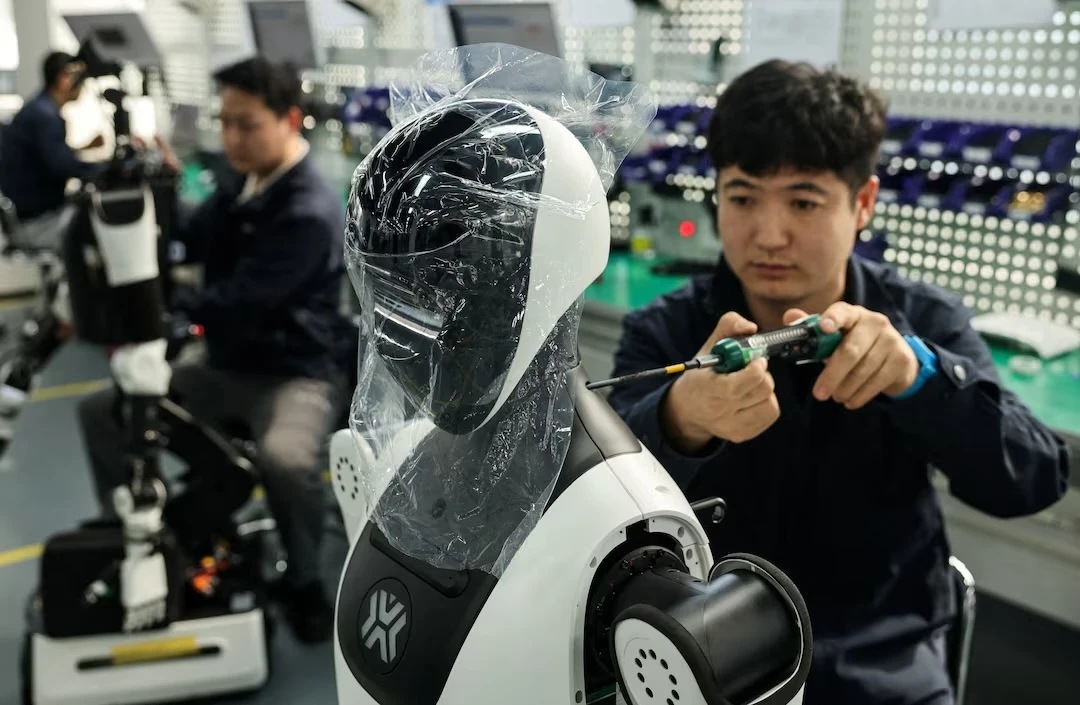
We are seriously exploring innovative technologies like 3D printing, biologics, automation and robotics.
Instead of courting multinationals that want to employ mainly low-cost workers, Singapore continues to attract more companies for their cutting-edge production.
Procter & Gamble (P&G) and Rolls Royce have set up research facilities in Singapore. P&G recently opened a SR745 million research center and has signed a research agreement with the Singapore Agency for Science, Technology and Research (ASTAR). Manufacturing accounts for 20 percent of Singapore’s GDP and we are happy to explore with our Saudi friends any potential synergy between our two countries in this field.
What are the areas having room for further growth?
Besides having more exchanges at the leaders’ and people-to-people levels, as well as encouraging more bilateral investments and trade, Saudi Arabia and Singapore are strengthening their cooperation in the crucial area of security.
Deputy Prime Minister Teo Chee Hean, who is also our coordinating minister for national security and minister for home affairs, signed a memorandum of intent on security cooperation with Interior Minister Prince Mohammed bin Naif during his visit to the Kingdom in December 2012.
The memorandum covers bilateral cooperation in many areas, including combating terrorism, organized crime, money laundering, drug trafficking and cybercrime.
Since then, there have been several concrete and mutually beneficial exchanges between our security agencies. Education is another area in which stronger collaboration will benefit our two countries.
We want to encourage enterprising Saudi students at undergraduate and postgraduate levels who wish to understand why Asia is the world’s fastest growing area and to experience the best of what Western and Asian countries have to offer, to seriously consider Singapore’s world-class tertiary institutions and technical colleges.
As firm practitioners of life-long learning, we are also involved in education within the Kingdom.
Singapore’s National Institute of Education (NIE) has been actively working with prominent Saudi institutions. Ranked second in Asia and 13th in the world by the QS World University Rankings on the subject of education in 2013, NIE is responsible for the training of school teachers in Singapore.
In 2013, NIE formalized a MoU with Tatweer Education Holding Company to promote school leadership development in Saudi Arabia. NIE will train 3,000 Saudi school principals in Singapore over the next few years. We are confident that the Saudi principals will be able to impart the lessons learned to their colleagues here in the Kingdom. NIE has a longstanding collaboration with the esteemed King Saud University (KSU) in Riyadh since 2007. In January 2014, NIE and KSU signed a wide-ranging MoU on academic and scientific cooperation, which involves training of staff and students by NIE, and providing support for the Saudi Educational Center for Educational and Professional Development at the KSU. Through these and other initiatives, we hope that Singapore can contribute positively to the education reforms initiated by the Saudi Ministry of Education.
Companies ‘must excel in cutting-edge production’