- King Fahd International Airport in Dammam is expanding its annual passenger capacity to over 19.3 million by 2030, with a future target of 32 million.
- In 2025, Dammam Airport handled 13.7 million passengers, making it the third busiest airport in Saudi Arabia.
- A design contract has been signed to develop new passenger terminals and improve airport facilities as part of the expansion.
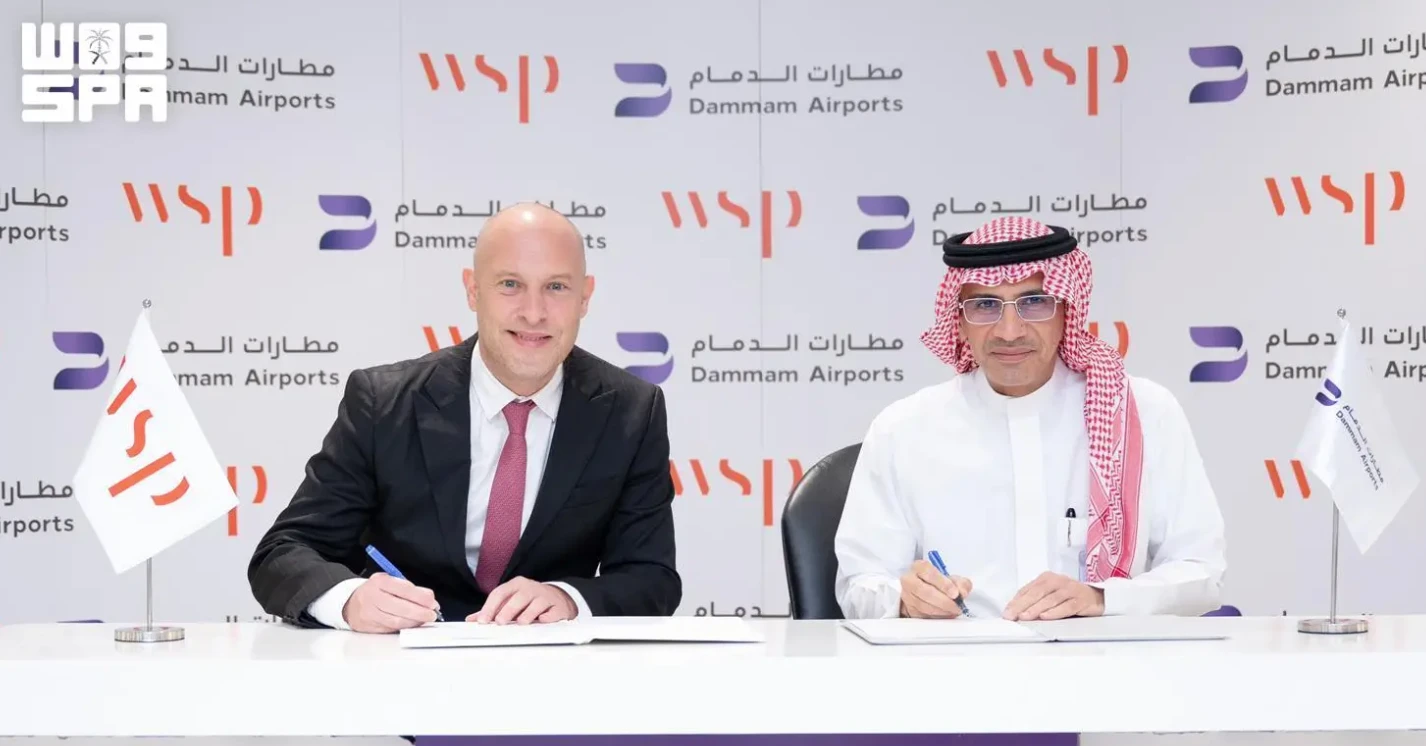
JEDDAH: Dammam Airports Co. has signed a design contract with WSP to develop King Fahd International under its approved master plan, paving the way for an expansion to 32 million passengers a year.
The design project includes the expansion of passenger terminals, upgrades to airport facilities, entrances and access roads, as well as baggage-handling systems, digital services and signage within the terminals, according to the Saudi Press Agency.
The master plan, unveiled in July 2025, targets more than 19.3 million passengers annually by 2030, more than double the number served in 2022. Longer term, passenger capacity is expected to reach 32 million annually.
The development is part of Dammam Airports’ broader efforts to strengthen the Eastern Province’s air transport infrastructure, support the goals of Saudi Vision 2030 and the National Transport and Logistics Strategy.
The project comes as Saudi Arabia targets 150 million annual tourist visits by 2030, including 70 million international tourists, as the Kingdom seeks to establish itself as a leading global tourism destination.
The agreement was signed by Dammam Airports CEO Mohammed Al-Hassany and Dean McGrail, president of WSP for the Middle East and Asia.
Al-Hassany said the signing “marks an important step in the development journey of King Fahd International Airport.”
He added that the project aims to provide “a smoother, higher-quality travel experience” through modern design solutions and smart technologies that address passengers’ needs and support the future growth of air travel and cargo.
“This aims to strengthen the airport's position as an international gateway linking the Eastern Province to the world,” the release added.
The expansion also targets air-cargo capacity of more than 600,000 tonnes a year and the ability to handle 77 aircraft movements per hour.
Dammam Airports said the design project will also incorporate sustainability measures, including greater energy and resource efficiency, lower environmental impact and stronger infrastructure resilience.
Investment pipeline
The latest design contract follows more than SR1.2 billion ($320 million) of agreements signed by Dammam Airports in June as part of a broader package of transportation-sector deals worth more than SR3 billion.
The airport-related agreements included construction of a new power station and medium-voltage distribution network at King Fahd International Airport, upgrades to its existing electrical grid and rehabilitation of the northern road linking the airport to Safwa Bridge.
The airport handled 13.7 million passengers in 2025, ranking third among Saudi Arabia's airports by passenger traffic, behind King Abdulaziz International Airport in Jeddah with 53.5 million and King Khalid International Airport in Riyadh with 40.8 million, according to the General Authority for Statistics.
The company recently received six international accreditations from Airports Council International during the 2026 ACI World Airport Experience Summit in Istanbul.
King Fahd International Airport received Level 1 accessibility accreditation and a health and safety accreditation, while Al-Ahsa and Al-Qaisumah airports each received Level 1 accessibility and customer-experience accreditations.