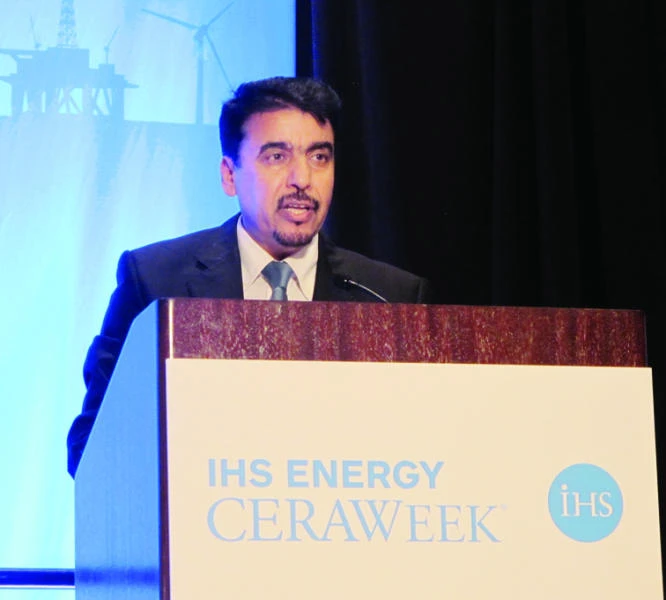
Thousands of senior energy industry executives, leaders, and government officials gathered in Houston to attend the IHS CERAWeek 2014 Energy conference, widely regarded as the world’s leading forum on energy policy.
On Tuesday, conference attendees experienced a special address on world oil demand by Abdallah Al-Saadan, senior vice president of finance, strategy, and development at Saudi Aramco.
In addition to his current role as senior vice president, Al-Saadan currently serves as director of the Fujian Refining and Petrochemical Company, and previously as chairman of Saudi Aramco Mobil Refinery Company.
Al-Saadan has held various executive positions in the company over his more than 30 year career with Saudi Aramco.
According to Al-Saadan, global markets will continue to be supplied by petroleum and hydrocarbon-based fuels, with a peak in oil demand unlikely to occur in the near future.
Abundant hydrocarbon supplies and increasing population growth are primary reasons to anticipate a future increase in oil demand, according to the Aramco executive.
Demand for crude oil by developed countries reached levels of around 50 million barrels per day in 2005, and today stands at approximately 46 million barrels per day, according to IHS Energy, an energy research firm and host of the conference.
Al-Saadan attributes the decrease in oil demand over this period to cyclical market conditions and a slowing global economy, as well as gains in energy efficiency.
In order to experience a peak in oil demand, Al-Saadan argues, an absolute contraction of end-user consumption would have to occur, as well as a substantial replacement of oil as a transport fuel by other energy sources. Growth in oil demand is primarily linked to the transport sector, with over 95 percent of transport fuels supplied from petroleum-based energy resources.
Al-Saadan cites the rising demand for oil in growing economies such as China and India as drivers for increased future demand, with over 3 billion inhabitants estimated to populate these two countries alone by 2050.
Global oil demand is anticipated to grow at 1 percent – 2 percent per annum, rising from current levels of approximately 46 million barrels of oil equivalent per day to over 100 million barrels of oil equivalent per day by 2050, Al-Saadan predicts.
While demand for oil in developing countries is expected to decline in the coming years due to advances in energy efficiencies, the increase in demand from developing nations will offset these declines and result in a net increase in global oil demand for the foreseeable future.
The competitive advantages offered by petroleum-based products and its heavy dependence by end-users makes the transition away from oil and its substantial replacement as a transport fuel an unlikely occurrence.
Efforts to move petroleum away from transport fuels will be driven by policy and regulatory interventions, Al-Saadan asserts, only to be defeated by technical challenges, weak economics, and a lack of infrastructure.
As seen in the aftermath of the world financial crisis, Al-Saadan points out, many countries have rolled back alternative energy initiatives and cut subsidies due to economic pressures.
“Alternatives that rely on incentives engineered by global policy makers are unlikely to be sustainable over the long-term,” Al-Saadan argues.
Electric vehicles and hydrogen fuel cells face technological and economic challenges, limiting their ability to achieve significant market penetration as a source for transport fuel.
Concerns over the supply requirements of the incremental electricity and vast hydrogen quantities needed to replace oil as a significant source of energy further decreases this likelihood.
Biofuels as a source of alternative energy will be concentrated by food security concerns and weak comparative economics of non-food biofuels over the coming decades, Al-Saadan concludes.
“We believe there will be no peak in oil demand for the foreseeable future given the structural drivers of large population growth, global economic expansion, growing urbanization, and more energy-intensive living standards throughout the developing world.” Al-Saadan asserts.
“As such, Saudi Aramco is pursuing a growth-oriented global downstream strategy to complement our upstream leadership position, leading to a tightly-integrated global portfolio suitably covering the petroleum value chain”
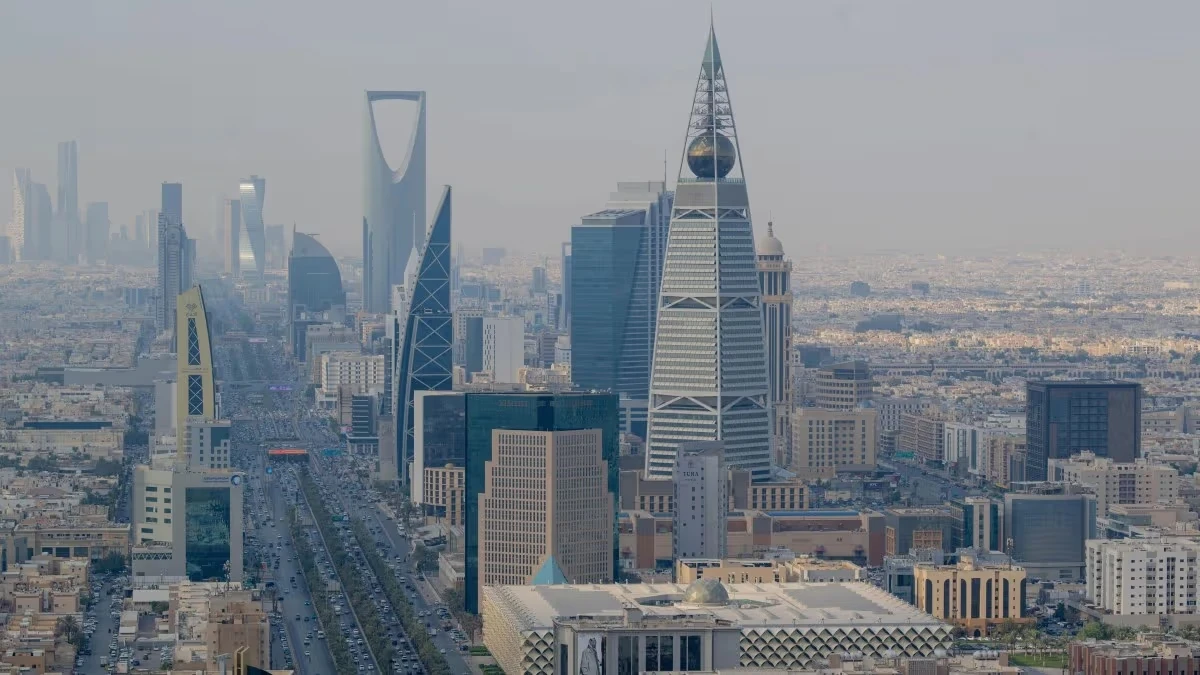
In addition to sharing his outlook on the global petroleum industry, Al-Saadan also addressed critical energy issues within Saudi Arabia.
In response to a rising demand for domestic energy consumption within the Kingdom, Saudi Aramco is pursuing an aggressive gas program, targeting both conventional and unconventional gas resources and shifting its power generation facilities from oil resources toward natural gas.
In 2013 alone, crude oil burning as a source for power generation was reduced by 8 percent, largely attributable to an increased supply of gas as a power source and improvements in energy efficiency.
As the global energy climate continues to change and new technologies are required to bring additional production to the market, further steps are required to prepare the next generation of energy leaders.
Al-Saadan highlighted the measures that Saudi Aramco is taking to ensure that it attracts new talent and maintains existing talent, including expanding its training programs and benefits offered to employees.
Additionally, the company is developing satellite labs in countries outside the US with the intention of attracting talent from those countries to Aramco’s workforce.
So far, these steps have proved successful, Al-Saadan points out.
Although a decline in oil demand is not anticipated, new challenges will be faced with increased demand and the technological and personnel changes that are required to address them. The future of world energy demand relies heavily on hydrocarbons and will continue to do so over the long-term.
“While uncertainties remain, and more extreme scenarios do exist, in our view, there will be no peak in oil demand on our horizon, driven primarily by transportation growth combined with other oil users and in light of oil’s competitive position, further strengthened by ample supplies.” Al-Saadan reassures.
“Total global demand for refined products will continue to rise.”
Demand for refined oil products ‘to stay high’