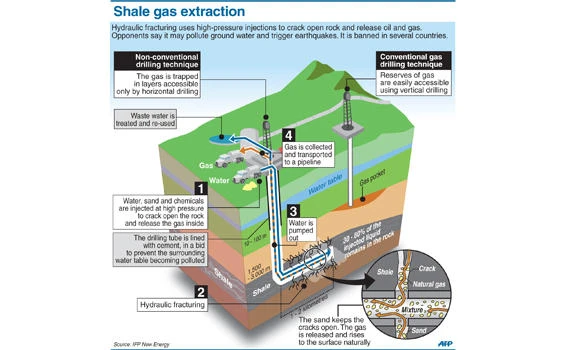
RIYADH: Saudi Arabia’s oil minister and the head of the International Energy Agency have met in the Kingdom to discuss the effects of growing US shale oil production on global oil prices.
The Saudi Press Agency says Petroleum and Mineral Resources Minister Ali Al-Naimi met IEA Executive Director Maria van der Hoeven in Riyadh on Thursday.
Earlier this week, Al-Naimi was quoted by the Saudi Press Agency as saying that the Kingdom welcomes the new source of energy to keep up with global demand.
He made his comments after meeting with US Energy Secretary Ernest Moniz on Sunday.
The International Energy Agency says that as a result of new exploration technologies, the US will become the world’s largest oil producer by around 2020, temporarily overtaking Saudi Arabia.
Brent crude has lost 4.3 percent in the past year.
Saudi Arabia boosted output by 75,000 barrels a day to 9.82 million a day last month, the agency said in a recent report.
IEA said global oil demand will increase more this year than previously forecast, and a ban on US crude exports may crimp output growth.
World consumption will climb by 1.3 million barrels a day, or 1.4 percent, to 92.5 million barrels a day, Paris-based IEA said this week in its Oil Market Report.
The increase of 90,000 barrels a day from last month is the first year of annual demand growth in developed nations since 2010, it said. US restrictions on exports may mean its surging domestic production hits a “crude wall” that curbs further expansion.
“Upside risks to oil demand growth are much more relevant this year than the same period last year, where concerns were for downside risks to materialize,” Miswin Mahesh, an analyst at Barclays Plc in London, said by e-mail.
“Demand- supply metrics in the oil market are moving toward a relatively better equilibrium this year as further North American production gets on board.”
Higher forecasts for global fuel demand prompted the IEA to increase estimates for the amount of crude needed from the Organization of Petroleum Exporting Countries.
OPEC’s 12 members, responsible for about 40 percent of global oil supplies, will need to provide an average of 29.4 million barrels a day in 2014, or about 200,000 a day more than the IEA had forecast in last month’s report.
OPEC’s production was about 400,000 barrels a day higher than the demand for its crude in December, according to the IEA. The group’s supply rose for the first time in five months, increasing by 310,000 barrels a day to 29.82 million a day because of higher output from Saudi Arabia, and the UAE.
OPEC will next meet on June 11 in Vienna.
Impact of US shale on oil price focus of Saudi talks