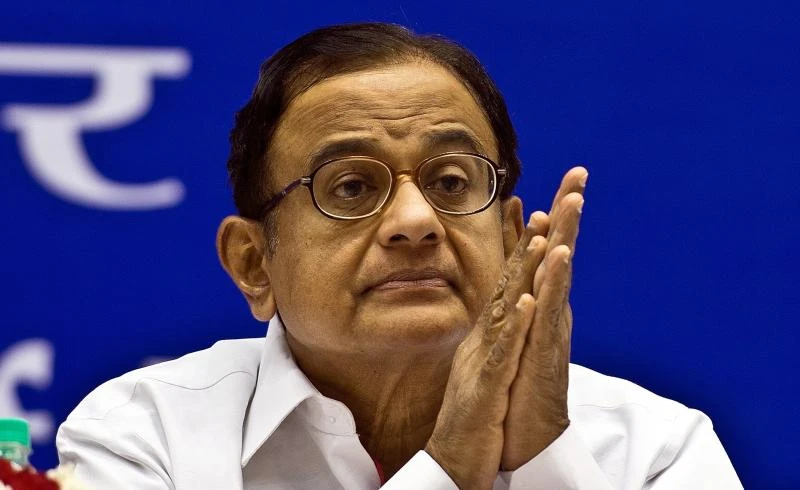
MUMBAI: The Reserve Bank of India has advised banks not to encourage customers to buy gold, the country’s finance minister said, as part of efforts to ease pressure on the growing current account deficit.
The move came one day after Finance Minister P. Chidambaram raised gold import duty to try to lower demand for the precious metal.
“I think the RBI has advised banks that they should not be selling gold coins,” Chidambaram said at a banking conference in the financial city of Mumbai.
“Banks have a role to play in dampening the enthusiasm for gold... I would urge all banks to please advise their branches that they should not encourage their customers to invest in or buy gold,” he said.
Gold purchases are one of the biggest contributors to India’s current account deficit — the broadest measure of trade — which widened to just under five percent from 4.2 percent the previous year as imports outpaced exports.
India has long been the world’s biggest buyer of gold with purchases strongest during the religious festival and wedding seasons.
Many Indians — especially in rural areas where there are few banks — buy gold in the form of jewelry, bars and coins as a hedge against inflation.
On Wednesday, the government hiked the import duty on gold to eight percent from an earlier six percent, to discourage rising gold imports.
Gold imports into India jumped to 162 tons in May, twice the customary amount, after a slide in global prices.
“How can we finance these gold imports? Therefore both the RBI and government have no option but to take strong measures” to curb imports, Chi-dambaram said.
The rupee meanwhile recovered after touching the key psychological level of 57 to the dollar, helped by dollar selling by some foreign and custodian banks, but sentiment remains cautious ahead of key US data.
The initial fall pushed the rupee frighteningly close to a record low hit nearly a year earlier as fears of an end to the US Federal Reserve’s monetary stimulus sent the dollar higher.
The rupee is not far off the record low of 57.32 hit in late June last year, raising the prospect of a potential intervention from the Reserve Bank of India, although most analysts do not expect bold actions given that the rupee weakness is tracking global factors.
Still, further falls are bound to revive concerns about funding India’s current account deficit.
“The psychological level of 57 has been hit and thus it invites fears of some intervention. The market is a bit cautious at these levels,” said Paresh Nayar, head of fixed income and foreign exchange trading at First Rand Bank.
The partially convertible rupee closed at 56.84/85 per dollar, after earlier touching 57, its weakest since June 28, 2012.
The rupee had closed at 56.7250/7350 on Wednesday.
Domestic shares fell on worries about the Fed stimulus program, tracking Asian indexes that slipped to new 2013 lows. The benchmark BSE index closed down 0.25 percent.
Traders also cited heavy dollar demand from oil refiners, the largest buyers of the greenback in the domestic currency market in early trade but dollar selling by foreign and custodian banks helped the unit recover. Comments from a senior government official hurt the rupee as well.
Propping up the rupee “artificially” is not the right thing to do, said Montek Singh Ahluwalia, the deputy chairman of the country’s Planning Commission.
The rupee is expected to hold in a 56.70-57.10 range until the US non-farm payroll data, traders said. The data is due after India market close on Friday and the reaction would be seen on Monday.
India tells banks to douse gold demand